
17 October 2026, 13:09
Loading...
Gas turbine maker voices concerns over Germany’s ambitious plans to build backup power plants

David Vobořil
17 March 2025, 09:50
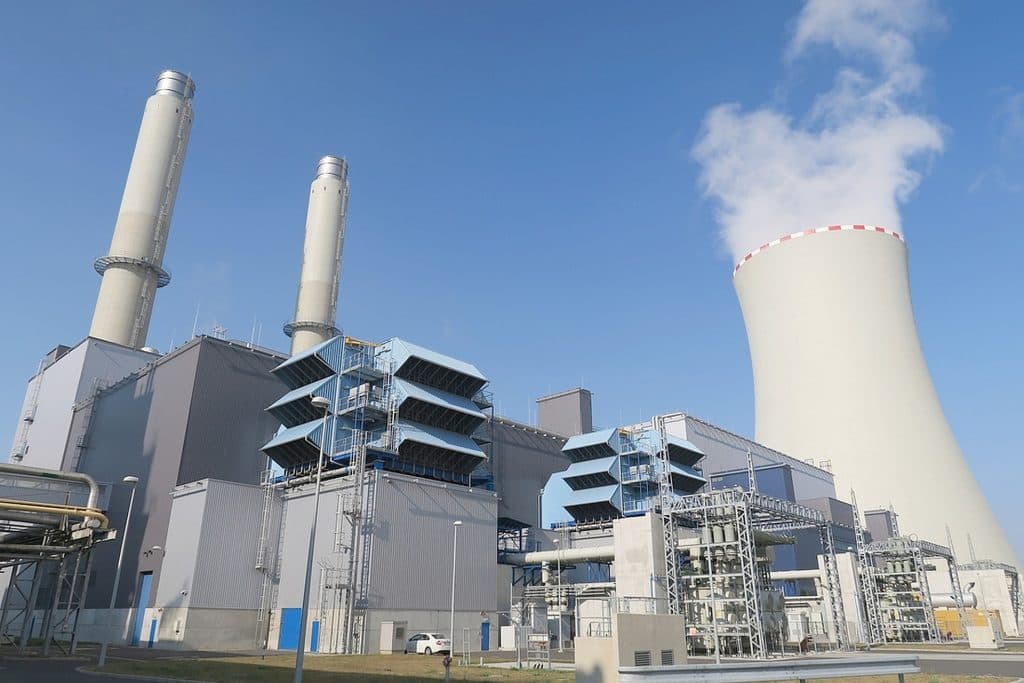
US gas turbine manufacturer GE Vernova has expressed doubts about plans by Germany’s likely future government to bring 20 GW of new gas-fired power plants online by 2030. The company says the target is “very ambitious” and faces a number of obstacles.
In a document summarising the results of talks between the likely future German governing coalition, the conservative CDU/CSU alliance and the Social Democrats (SPD) said they plan to build substantially more new gas-fired power plants than the outgoing coalition government, which had sought to build 12.5 GW by 2030. The incoming government wants to use the plants not only as backup power plants, but also to stabilise prices.
“As part of a revised power plant strategy, we want to support the construction of up to 20 GW of installed gas-fired power plant capacity by 2030. These plants are to be built primarily at existing power plant sites,” the document states.
Markus Becker, director of business development at US gas turbine manufacturer GE Vernova, said the permitting process must be accelerated to make the planned expansion possible, and clarity must be provided quickly on the framework conditions under which the plants are to be built and operated.
An early agreement with the European Commission on state aid rules will also be needed, he added. He cited high global demand for gas turbines as another challenge.
To ensure that gas-fired power plants can continue operating after 2045, when Germany aims to be climate-neutral, they must either switch to hydrogen or use carbon capture and storage (CCS) technology. The CDU and CSU have expressed openness to the latter option. The incoming government said it intends to reach a swift decision on legislation that would enable CCS in Germany.
In the United Kingdom, GE Vernova is supplying turbines for the world’s first gas-fired power plant to use technology that captures some of its emissions. According to Becker, this is possible because it is clear how the carbon will be transported from the power plant to its permanent storage site and who will be responsible for it.
“These responsibilities must also be clarified in Germany,” he said.
Translation disclaimer
This article is a machine translation of the Czech original and has not yet been fully reviewed. In case of any doubt, please refer to the Czech version.
Sdílejte článek prostřednictvím:
You might also like




16 October 2026, 10:16