
9 October 2026, 13:47
Loading...
German renewable energy support reform could threaten a key element in increasing flexibility

David Vobořil
25 August 2026, 15:48
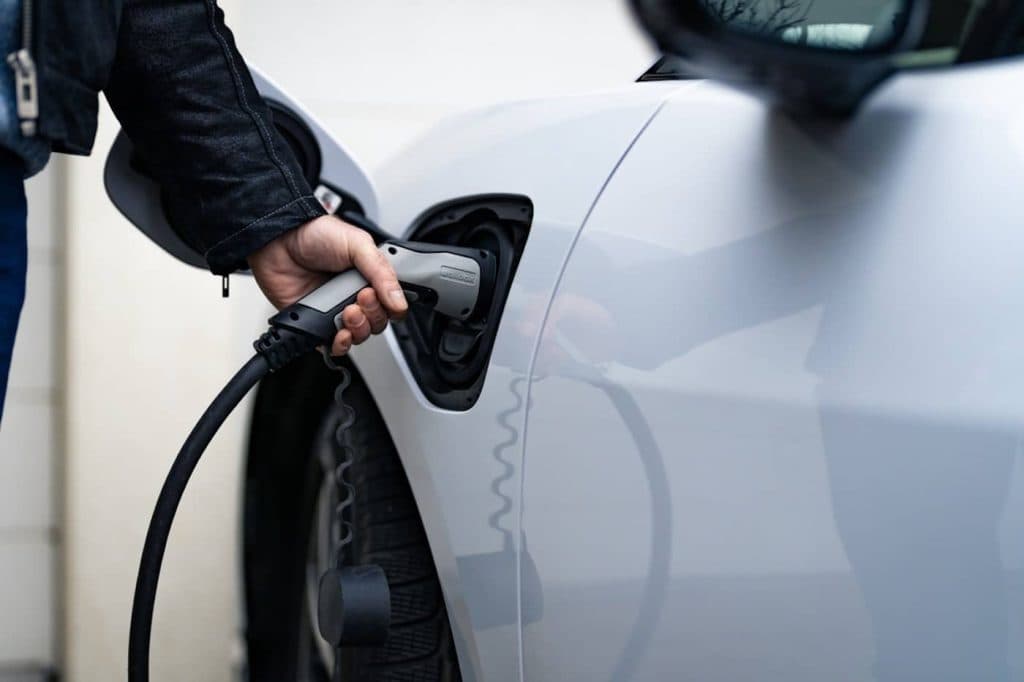
The planned reform of Germany’s renewable energy support rules could unintentionally complicate the development of bidirectional electric vehicle charging, according to the automotive industry. Automakers and energy companies warn that such a rule would undermine the economics of a technology that could serve as a major source of flexibility for Germany’s power system.
The German government is preparing a major reform of renewable energy support, aimed, among other things, at reducing the cost of the energy transition and better aligning electricity generation with the capabilities of the power grid. However, one of the proposed measures has drawn criticism from the automotive industry over its possible impact on so-called bidirectional electric vehicle charging, or Vehicle-to-Grid (V2G).
Bidirectional charging allows an electric vehicle not only to draw electricity from the grid but also to feed it back when needed. The car’s battery can thus function like a stationary storage system. For example, a vehicle can store surplus electricity from rooftop solar panels during the day and later use it in the home or feed it into the public grid when demand is higher. Germany’s Federal Ministry for Economic Affairs describes the technology as an important tool for increasing the flexibility of the energy system.
The contested part of the reform concerns new small photovoltaic systems with a capacity of up to 100 kW. From 2027, the government proposes lowering the maximum instantaneous output these systems can feed into the public grid from the current 60% to 50% of their installed capacity. The current 60% limit applies to photovoltaic systems without a smart meter, while households equipped with a smart meter can feed more power into the grid under the existing rules. This condition is now set to be removed.
The government aims to limit grid congestion when solar power generation is high, while also encouraging households to install battery storage systems that could store surplus electricity and feed it into the grid later.
The automotive industry warns that the rule could be interpreted as applying the limit to the entire grid connection point, and therefore also to electricity supplied by an electric vehicle’s battery. This would mean, for example, that a car connected to a home solar system might not be able to feed more than the specified limit into the grid, even when the solar panels are not generating electricity.
According to energy sector representatives, such an amendment could undermine the economics of V2G just as the technology is beginning to reach the market. Volkswagen, through its energy company Elli, launched an offering this year that combines a compatible electric vehicle, a bidirectional charger, an electricity tariff and an app that allows the car’s battery to be used in the energy market. The Volkswagen Group says around one million of its electric vehicles in Europe are already technically ready for bidirectional charging.
The importance of V2G could grow further as electric vehicle adoption increases. The batteries of millions of cars could provide a vast distributed store of electricity. They could help balance differences between renewable energy generation and consumption, while also reducing the need to build some stationary storage facilities.
In May this year, Germany’s Federal Ministry for Economic Affairs said that the automotive, energy and digital industries agreed on the need to remove regulatory barriers to bidirectional charging and create a unified European market for the technology.
The technology’s development still faces other obstacles, including the limited deployment of smart metering systems, standardisation, metering and settlement rules, and the economics of flexibility services themselves. According to the German research institute FfE, the technical feasibility of bidirectional charging has already been proven; the main barriers to wider adoption lie instead in regulation, markets and standardisation.
The German parliament will now decide on the form of the reform and may still amend individual provisions.
Translation disclaimer
This article is a machine translation of the Czech original and has not yet been fully reviewed. In case of any doubt, please refer to the Czech version.
Sdílejte článek prostřednictvím:
You might also like


9 October 2026, 06:22