10 October 2026, 07:37
Loading...
Insolvency of German nuclear plant operator raises questions over decommissioning funding

David Vobořil
6 October 2025, 15:13
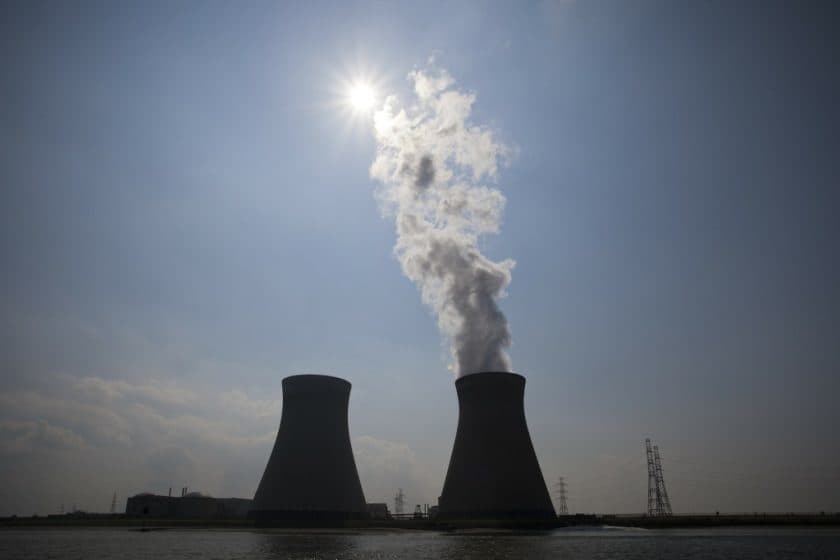
German company HKG, owner of the decommissioned Hamm-Uentrop nuclear power plant and responsible for its dismantling, is insolvent. This raises questions about financial responsibility for dismantling the reactor and disposing of radioactive materials, the weekly WirtschaftsWoche reported.
HKG, owner of the Hamm-Uentrop nuclear power plant, which began operating in 1983 and was shut down just six years later, is now insolvent.
HKG is owned by RWE (around 39%), E.ON subsidiary Preussen Elektra (around 39%) and an association of municipal energy suppliers (AGV, around 22%). HKG initially sought around 350 million euros from the federal and state governments to cover the costs of dismantling and disposal. The demand led to a court case in 2024.
The Düsseldorf court dismissed HKG’s lawsuit in June this year, prompting the company to declare insolvency. The company is now under the administration of an insolvency administrator, whose task is to ensure that the so-called “safe enclosure” of the nuclear reactor continues and that dismantling of the THTR can begin in 2030.
“At the start of the preliminary proceedings, we will gain a comprehensive overview of the company’s overall financial situation and focus on stabilising its operations,” explains insolvency administrator David Bunzel.
The aim is then to seek a solution with all the parties involved. Employees’ wages and salaries are guaranteed. The state and federal governments, meanwhile, have reason to fear that they will ultimately be left with the costs, despite winning the court case.
Enclosing and dismantling the reactor could cost up to one billion euros
The reactor was placed in safe enclosure in 1997 and will remain that way until at least 2030, allowing radioactive contamination to decrease before dismantling work can begin. The dismantling process is expected to take around ten years.
According to estimates made by the government of the state of North Rhine-Westphalia in 2021, the total cost of enclosing and dismantling the reactor will be around 750 million euros. However, taking inflation into account, costs could rise to as much as one billion euros.
The costs of safely enclosing the reactor to date amount to 441 million euros. Of this, the German federal government has paid 133 million euros, the state of North Rhine-Westphalia 152 million euros and HKG 156 million euros.
“HKG continues to face an unchanged situation, with no clarity on how the remaining dismantling work will be funded,” the company’s CEO Volker Dannert said.
RWE said HKG’s shareholders have no legal responsibility for financing dismantling work beyond the payments they have already made. Dannert said talks with the federal and state governments had failed to produce a result, meaning dismantling is now the responsibility of the relevant authorities at federal level and in North Rhine-Westphalia.
The reactor’s short history
Construction of the THTR-300, a prototype thorium-based high-temperature reactor (THTR), in Hamm-Uentrop took 15 years and cost around 2 billion euros. The reactor began trial operation in 1983, and its first connection to the grid took place in November 1985.
The reactor was seen as a source of hope for Germany’s nuclear industry. Its innovative design was intended to generate electricity more efficiently and cheaply than the conventional light-water reactors of the time. But the THTR not only failed to deliver on those promises; it became notorious for malfunctions and the huge losses it caused.
On 4 May 1986, shortly after the Chernobyl nuclear accident, an incident also occurred at Hamm-Uentrop that reportedly resulted in a radiation leak. The incident was not initially made public, but subsequent independent measurements reportedly confirmed it.
The reactor was finally shut down in September 1989 after just 423 days of full operation, for technical, safety and economic reasons.
Nuclear phase-out
Germany is in the process of dismantling its nuclear power plants after shutting down its last three reactors in 2023 as part of its gradual phase-out of nuclear energy. Dismantling nuclear power plants and safely storing radioactive waste will cost Germany tens of billions of euros and take many decades.
In 2017, Germany’s four largest nuclear plant operators—E.ON, EnBW, RWE and Vattenfall—transferred the funds set aside for nuclear waste disposal to a state fund for nuclear waste management, shifting all responsibility to the state.
In 2025, more than half of the German environment ministry’s budget will be spent on managing the country’s nuclear waste, including finding a site for a permanent nuclear waste repository.
Translation disclaimer
This article is a machine translation of the Czech original and has not yet been fully reviewed. In case of any doubt, please refer to the Czech version.
Sdílejte článek prostřednictvím:
You might also like

10 October 2026, 07:02
9 October 2026, 13:47