21 September 2026, 10:11
Loading...
IRENA assesses Czech August energy sector battered by drought
Erik Novotný
21 September 2026, 10:11
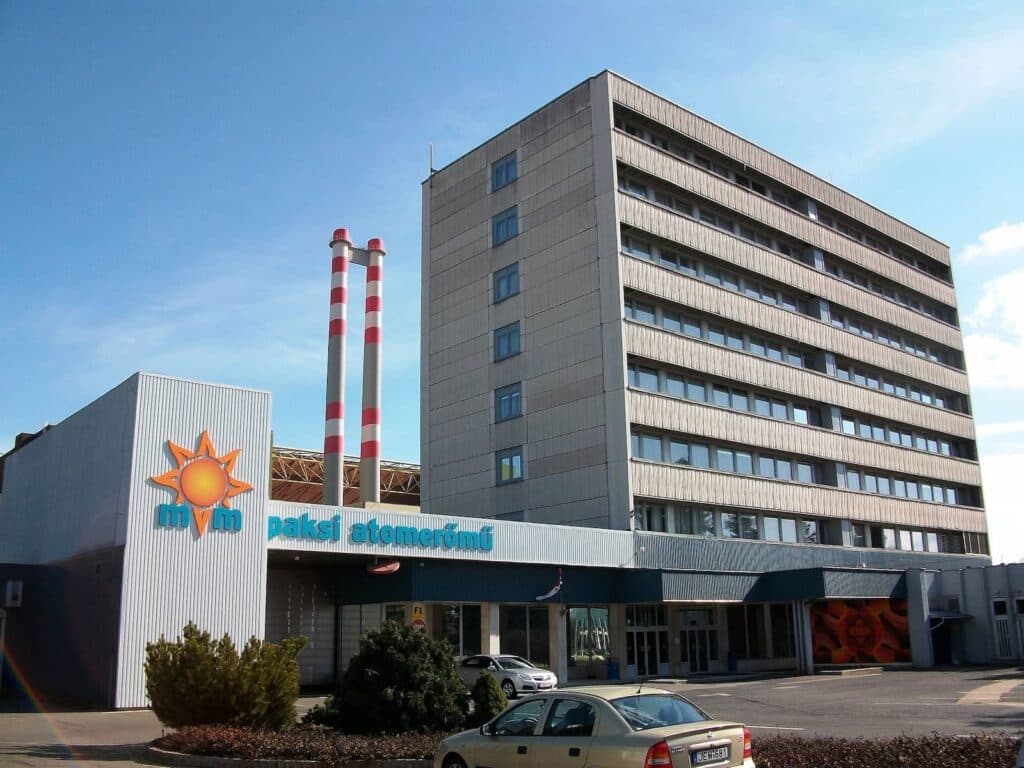
This year’s August heatwave on the Danube showed what happens when an energy mix relies too heavily on a single source. According to a new analysis by the International Renewable Energy Agency (IRENA), output at Hungary’s Paks nuclear power plant fell to as little as nine percent of installed capacity due to a lack of cooling water, while Romania’s Cernavodă was completely shut down for one day.
Most thermal power plants – nuclear, coal-fired and combined-cycle gas – operate on the principle of a steam cycle, which requires a cooling circuit. Once-through cooling draws large volumes of water from rivers, lakes or the sea. During droughts, water levels and flows decline, while the water also warms up, and legislation then limits how much heat a power plant may discharge back into the watercourse.
IRENA identified 207 inland thermal power plants in Europe with a combined capacity of 154 GW, located within ten kilometres of a major river. Nearly a third of these are nuclear facilities. Twenty-seven of them are located on the Danube.
In France this August, a large swarm of jellyfish clogged the cooling filters at a coastal nuclear power plant, shutting down three reactors. The cause was different, but the result was the same: a source dependent on water cooling was suddenly unavailable to the grid.
The Hungarian case in figures
Data from the ENTSO-E platform show how the system responded. Between the two compared weeks, Paks’ output fell by 90%, from 1,826 MW to 178 MW. Diversification came to the rescue: Hungary has more than eight gigawatts of installed solar capacity, and solar generation covered up to 81% of consumption at noon.
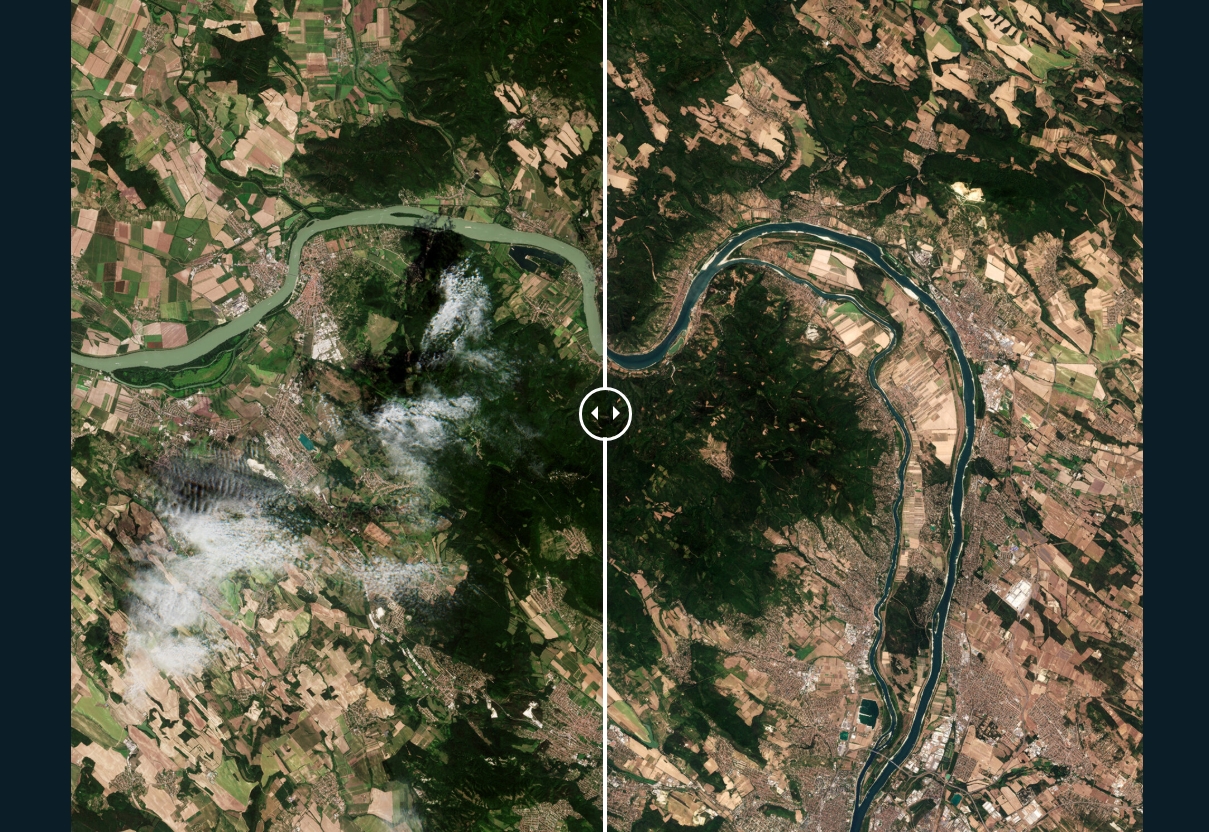
Comparison of the same stretch of the Danube north of Budapest: on the left, 9 August 2025; on the right, 4 August 2026, with record-low water levels. Source: Creative Commons / CC BY-SA 3.0 IGO / ESA
After sunset, however, demand remained high, with imports rising to 60% and gas’s share to 20%, which was also reflected in prices: the evening spot price rose between the periods monitored from EUR 170 to EUR 282 per MWh, compared with an increase from EUR 34 to EUR 60 per MWh at noon.
The Czech experience is different
For Czechia, the technological difference is particularly important. Neither Dukovany nor Temelín relies on once-through cooling from rivers. Both plants use cooling towers and their own water supply systems. Dukovany is supplied with process water from the Dalešice waterworks on the Jihlava River, while Temelín primarily uses water from the Hněvkovice reservoir on the Vltava River.
This year’s heat and drought therefore had almost no impact on Czech nuclear power plants. According to the State Office for Nuclear Safety (SÚJB), there was only a slight decline in electrical output, rather than any restriction on reactor output. Nevertheless, water remains essential to their operation, and its availability forms part of long-term operational risk management.
Diversity as insurance against a hot summer
The warmer and drier the climate becomes, the more frequently the scenario seen this August will recur. The answer is not to move away from either nuclear or hydropower, but to broaden the range of sources, strengthen grids and increase demand-side flexibility. A system capable of combining different technologies is proving more resilient than one that bets on a single card – whether it is called uranium, water or sunshine.
IRENA points to the potential for linking solar PV with battery storage, which can shift part of daytime generation into the evening peak. In locations with high solar potential, it cites costs of USD 54–82/MWh at a target supply reliability of 95%.
Translation disclaimer
This article is a machine translation of the Czech original and has not yet been fully reviewed. In case of any doubt, please refer to the Czech version.
Sdílejte článek prostřednictvím:
You might also like
21 September 2026, 06:14
20 September 2026, 18:56
20 September 2026, 12:55
20 September 2026, 08:36