4 October 2026, 21:07
Loading...
Mexico's president is a climate scientist—is she planning to frack anyway?
Vojtěch Kříž
13 April 2026, 06:19
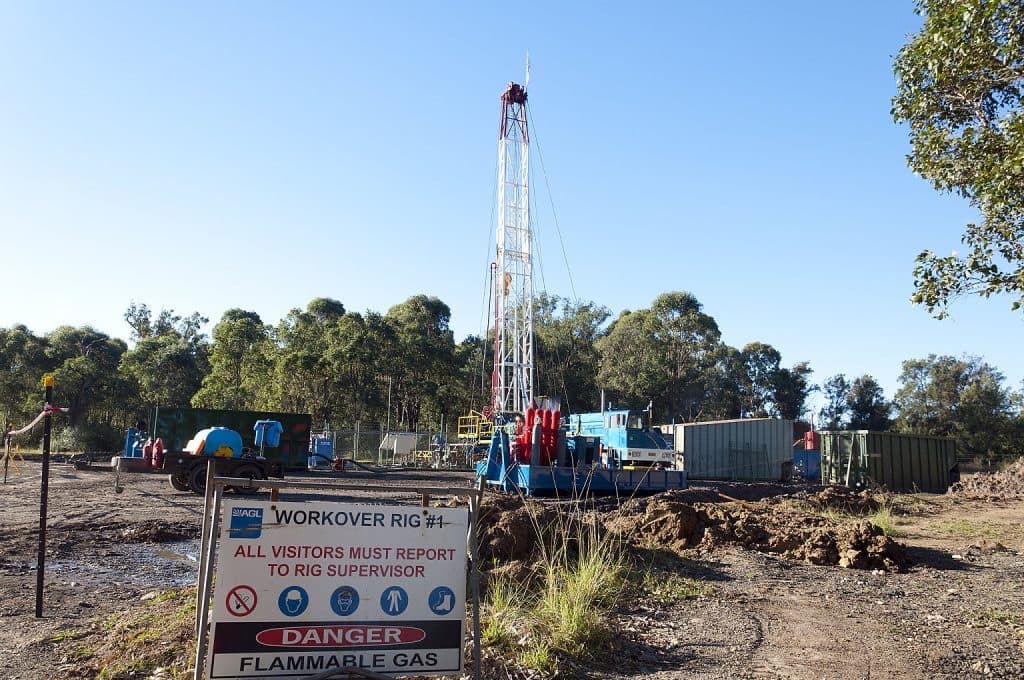
Mexico is proposing a plan that would allow it to increase natural gas production. This would involve tapping into just under four trillion cubic meters of reserves, which the country has so far avoided mainly for environmental reasons. Another concern is that extraction would likely be carried out using fracking.
President Claudia Sheinbaum announced the plan on Saturday, setting it in the context of current turbulence in global markets.
“If we do nothing, we will import more and more… What is the problem with importing? Just look at how many countries around the world are suffering because of what happened in Iran. … We need to be open to new technologies to strengthen national sovereignty.” the president said.
Mexico's position
Mexico has a domestic fossil fuel industry, whose backbone is state-owned Pemex. However, around three quarters of the gas consumed in Mexico is imported. This makes Mexico one of the world's largest natural gas importers.
Gas is used in Mexico mainly to generate electricity. According to the International Energy Agency, just under 62 % of Mexican electricity is generated by gas-fired power plants. The remaining sources each account for a few percent: coal and oil each exceed 7 %, hydropower and solar each account for around 6 %, and wind for around 5 %. Gas is also a source Mexico has bet on, with its share of electricity generation rising sharply over the past 20 years.
Mexico subsidizes retail electricity prices based on consumption. The lowest levels of consumption are heavily subsidized, with subsidies gradually decreasing as consumption rises. Prices for industry are therefore significantly higher. Although Sheinbaum framed the shift in the context of recent volatility in energy markets, it is likely also an effort to reduce dependence on the United States, from which Mexico imports most of its gas.
According to Sheinbaum, movements in oil and gas prices over the past few weeks were a signal that accelerated her decision. Some members of her cabinet had reportedly proposed expanding natural gas extraction last year. The president also says that an environmental commission will examine the issue and look for the most sustainable way to carry out extraction, as well as determine how much investment it would require. The project therefore does not yet have the full green light.
Sheinbaum also added that the government will look for other ways to achieve energy independence, such as developing solar and geothermal power plants.
Politics and industry
Mexico's political leadership has been relatively hostile to new gas extraction projects involving fracking. The left-wing party Morena, from which both current president Sheinbaum and her predecessor Andrés Manuel López Obrador (AMLO) come, is strongly rooted in social and environmental justice. AMLO even tried to enshrine a ban on fracking in the constitution, citing its well-known negative environmental impacts.
In many respects, Sheinbaum represents a continuation of AMLO's policies, but with a greater emphasis on a technocratic approach and more diplomatic communication. Despite having trained as a climate scientist, she is relatively pragmatic.
Media point out the interesting fact that in her statement she avoided the terms “fracking” and “hydraulic fracturing,” and tried to emphasize aspects that would ensure the project's sustainability. Although there are ways to extract shale fossil fuels “more sustainably,” risks such as water contamination cannot be avoided, and any such effort will inevitably make the project more expensive.
The Mexican Alliance Against Fracking, a network of non-governmental organizations, had previously said that if Sheinbaum expanded this form of extraction, it would be “a betrayal of the people who elected her.” This is therefore a highly sensitive issue for the left-wing president.
Mexico's fossil fuel industry is built around the state-owned company Pemex, whose role has grown further in recent years. The company is the backbone of Mexico's oil industry. Unlike gas, oil is exported by the North American country, including to Cuba.
According to the Financial Times, which spoke to Paul Alejandro Sanchez, a researcher at a Mexican university, expanding extraction would help Mexico's energy industry. However, he said, more private capital would need to be allowed into the projects.
How the project would be structured remains very unclear. Pemex will certainly play some role. The state-owned company, however, has several problems that are precisely why many industry representatives are calling for changes and the entry of private capital.
Pemex is one of the world's most indebted energy companies. Its production has declined in recent years, and it has struggled to reinvest and develop. The company does have some experience with shale extraction, as it uses it in some parts of the country. It is not yet clear, however, whether it will have the room and capacity to expand extraction and make it sufficiently “green.”
Translation disclaimer
This article is a machine translation of the Czech original and has not yet been fully reviewed. In case of any doubt, please refer to the Czech version.
Sdílejte článek prostřednictvím:
You might also like
3 October 2026, 13:01
3 October 2026, 07:43

2 October 2026, 21:55