
9 October 2026, 06:22
Loading...
Czech city centres suffer in heatwaves. Heritage protection hampers faster climate action
Ekonews.cz
8 July 2024, 10:46
Should heritage protection or the environment take priority? A shift in case law in the conflict between climate protection and heritage conservation came with a November 2022 ruling by the Regional Court in Plzeň, which examined the possibility of installing photovoltaic panels on the roof of a house in the Plzeň-Lobzy heritage zone.
At the heart of the dispute was the plan of a resident of an outlying part of Plzeň, who wanted to place fourteen photovoltaic panels on his roof. As the house stands in a rural heritage zone, the man approached Plzeň City Hall. Heritage authorities refused to approve the installation, saying it was unacceptable from the perspective of heritage conservation.
The Regional Court in Plzeň concluded at the time that heritage protection could not automatically be given priority in such a case without further justification. This April, the Supreme Administrative Court (SAC) ruled on the appeal lodged.

The heritage authority's main objections were that the installation of renewable energy sources, including photovoltaic panels, could not be deemed a public interest without further justification. Likewise, it argued that the unlawful installation of photovoltaics on nearby properties could not be taken into account. The heritage authority maintained that it could not weigh the interest in heritage protection against other public interests because it was not authorised to do so. Such assessments should be made, for example, by environmental protection authorities.
The Supreme Administrative Court did not agree with the heritage authorities' arguments. Instead, it upheld the regional court's conclusions, stating that previous SAC decisions (such as ruling No. 2 As 207/2016) already show that the deployment of renewable energy sources is also a public interest, and that conflicts with heritage protection must also be assessed by the relevant heritage authority.
This could set a precedent
“Heritage authorities cannot view the public interest in heritage protection in isolation; rather, they must perceive and weigh it in the context of other values protected by law, with the interest in generating energy from renewable sources, and thus achieving a higher level of environmental protection, being one such public interest,” the SAC judges stated.
“Certainly, the SAC's decision cannot be seen as a shift in the perception of public interest. It is merely a correction of decision-making by the relevant heritage protection authorities. However, it may serve as a precedent for other similar disputes concerning the conflict between heritage protection and the installation of PV panels in heritage-protected areas. The SAC does not say that PV installations will take precedence. On the contrary, each case must always be assessed individually – there will thus be a difference between locating PV installations in a historic centre and on a house that is merely situated in a heritage zone and does not itself have greater historical value,” says Adam Novák of the Centre for Climate Law and Sustainability (CLASS) at the Czech Academy of Sciences.
Germany recently approved a package of laws to support solar energy, known as Solarpaket I. It aims to simplify the installation and grid connection of even small photovoltaic systems, including units placed, for example, on apartment-building balconies. However, Solarpaket I cannot be expected to significantly come at the expense of stronger heritage protection, especially in historic centres.
In Prague, neither City Hall nor heritage authorities want panels in the centre
Heritage authorities cannot yet envisage photovoltaic panels in Prague's historic centre. In a heritage zone, they say, the main concern is preserving the character of the area, which is incompatible with fitting solar panels on the pitched roofs of houses. The type of roof covering must be retained in a form corresponding to the materials used when the house was built. This is why even alternatives to solar panels, such as solar tiles, do not pass heritage scrutiny.
This is also confirmed by the heritage conservation department of Prague City Hall, which considers solar panels on the roofs of historic buildings undesirable. In its view, they are visually disruptive and diminish the authenticity of the area. Moreover, there is no methodology for installing photovoltaic panels at the City of Prague level, and both heritage authorities and City Hall assess each case individually. Predictability for potential applicants is therefore low.
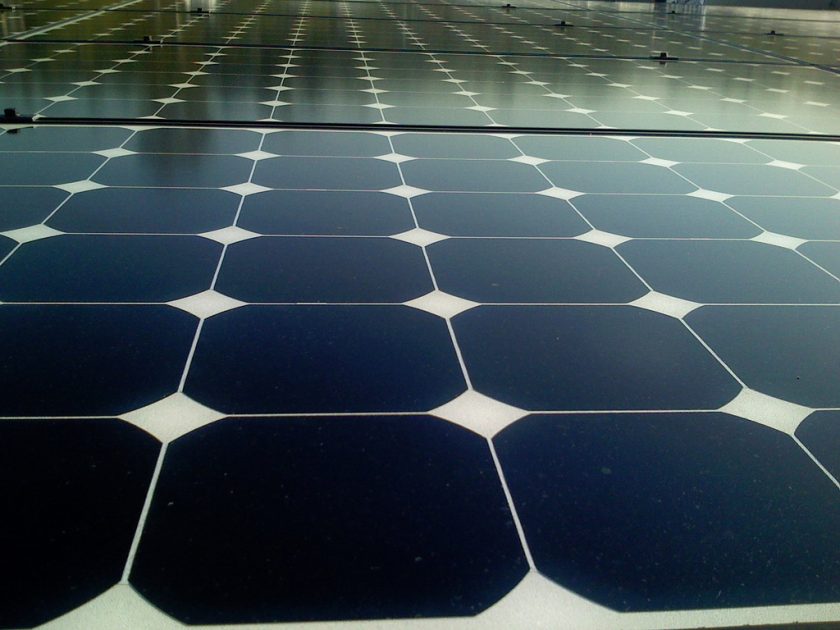
Some residents of historic centres address their inability to install photovoltaic panels on “their” houses by buying into community projects, where panels are located on land outside the city. In that case, however, Adam Novák says there may be issues with the transmission system's capacity, as well as with the use of land that could otherwise serve, for example, agricultural purposes.
When locating photovoltaic panels, already developed areas should be given priority. In Austria, some federal states allow panels to be installed in undeveloped areas only once capacity in developed areas has been exhausted.
“In smaller local government units, the issue is often not so much heritage protection as spatial planning. Yet economic development and construction are still preferred over adaptation measures,” says Adam Novák.
Republished from the online portal EkoNews.cz, a website covering business and sustainability.
Translation disclaimer
This article is a machine translation of the Czech original and has not yet been fully reviewed. In case of any doubt, please refer to the Czech version.
Sdílejte článek prostřednictvím:
You might also like

8 October 2026, 10:05