Czech engineers breathe new life into hydropower plants worldwide
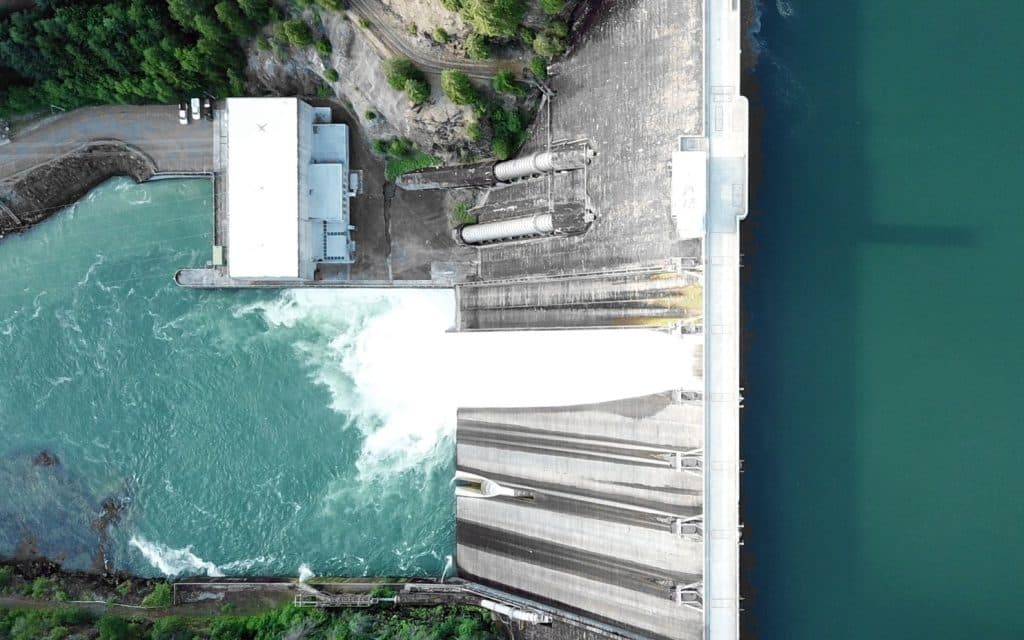
In 1907, US President Theodore Roosevelt signed legislation authorising the construction of the Lay hydroelectric plant on the Coosa River. With this first hydropower project, Alabama Power ushered in an era of harnessing the energy potential of rivers. Engineers from Blansko in Moravia are now involved in modernising the Lay plant and other hydropower assets in dozens of countries around the world. In effect, they are breathing new life into them – the role of hydropower plants is changing fundamentally in the era of the climate crisis.
Litostroj Engineering, a company based in Blansko, has continued the legacy of the former ČKD, focusing on the development, design and construction of modern hydro machinery. Its engineers have strong support from a research and development department that not only develops in-house know-how over the long term, but also collaborates with Czech universities on new solutions, above all Brno University of Technology. Water turbines are then manufactured by Litostroj Power in Ljubljana, Slovenia. Litostroj is part of the multinational Energo-Pro Group, which is headquartered in Prague.
Most of the contracts Litostroj is currently working on do not involve building new plants, but rather the rehabilitation and modernisation of hydropower plants. “In our approach, modernisation brings customers a number of benefits. Put simply, we design, manufacture and install new modern equipment within the existing structural framework of a power plant. This means the customer avoids having to build a new hydropower facility or plant, does not need to obtain construction permits and does not have to address potential risks of adverse environmental impacts,” says Václav Černý, CEO of Litostroj Group. Moreover, in Europe, the energy potential of rivers has already been largely exhausted.
NOT A SIMPLE REPLACEMENT
Usually, turbine runners need to be replaced. The ambition of the engineers in Blansko is not to replace individual parts with identical new ones. “Anyone could do that,” Václav Černý remarks. The goals are set much higher: a modernised turbine must achieve greater efficiency than before, withstand wear better through higher cavitation resistance, and be able to operate across a much wider output range. This is absolutely crucial today: hydropower plants are increasingly expected to actively participate in power grid regulation and, among other things, balance generation from solar and wind sources, which depend on current weather conditions. A modernised hydropower plant can start up virtually instantly when needed.
EACH ONE UNIQUE
The head of Litostroj Group points out that every solution is unique, tailored to the customer’s requirements and to the specific plants, which usually “grew up” many decades ago. The stated goals can be achieved, for example, by suitably changing the hydraulic shape and number of runner blades and creating a new mechanical design. Each project begins with a thorough study of how the given hydropower plant has operated to date, followed by ideas from researchers and engineers. Numerical calculations using state-of-the-art software follow, and finally everything is verified in Blansko using scaled turbine models in the company’s own hydraulic laboratory. “The modern laboratory is a jewel of Litostroj and ranks among the best in the world. But the key is our own know-how, which we have built up over decades,” Václav Černý stresses proudly.
Major contracts for Litostroj Engineering include pumped-storage plants in Austria, which serve specifically as “batteries” for the transmission system. Engineers from Blansko have been involved, for example, in refurbishing turbines at Austria’s Häusling, Limberg and Rosshag plants. The Häusling plant boasts the world’s highest head achieved by a Francis turbine – a full 744 metres from the Zillegründl reservoir in Tyrol.
A POWER PLANT INSIDE A MOUNTAIN
The new Reisseck 2Plus pumped-storage plant in Austria’s Carinthia will also bear a significant Czech imprint. The project aims to further increase the capacity of the existing Reisseck 2 pumped-storage hydropower plant – a “large water battery” that has been in operation since 2016. Litostroj’s hydraulic design will make it possible to harness the previously unused energy potential between two high-altitude Mühldorfer reservoirs. “Our unique solution, a double-inlet reversible variable-speed turbine, is an example of genuine engineering skill. The new plant will be built inside a mountain as a cavern power plant,” Václav Černý adds.
Another specialised field, according to Václav Černý, is designing and replacing a turbine where, in addition to greater efficiency, the customer requires a significant increase in the volume of water flowing through it. Litostroj specialists are working on such contracts, for example, in Sweden.
The article was originally published on the Czech Ministry of Foreign Affairs’ Modern Economic Diplomacy website, export.cz.Translation disclaimer
This article is a machine translation of the Czech original and has not yet been fully reviewed. In case of any doubt, please refer to the Czech version.