Czech parliament approves zones to ease renewable energy development

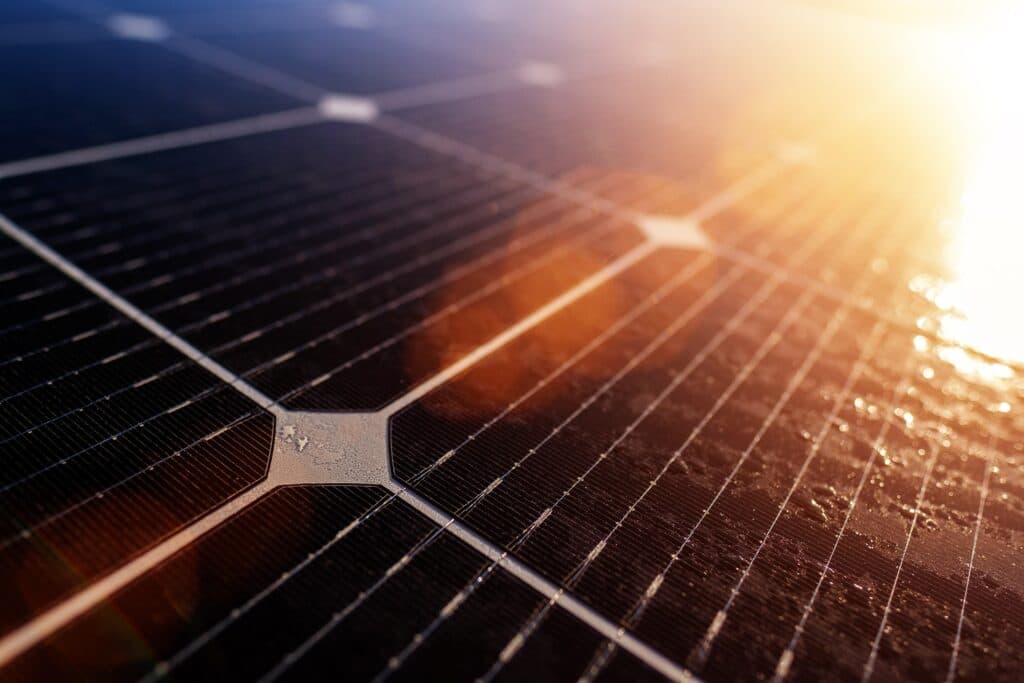
The introduction of areas where authorities will approve projects under a simplified regime is intended to make it easier to build solar and wind power plants. This is provided for in a bill to accelerate the use of certain renewable energy sources, which the Chamber of Deputies approved today in an expedited first reading. So-called acceleration zones for solar power plants should be established mainly on former industrial sites, while the government will hold further talks with the regions about locations for wind power plants. The law also introduces a levy on wind power plants for municipalities.
According to the Ministry of the Environment, the changes are intended to increase self-sufficiency in energy production. In view of expected growth in industrial electricity consumption, strengthening domestic generation—particularly through the construction of nuclear and renewable energy sources—is in the country’s security interests, the ministry says.
Approval of the law is an important step towards strengthening Czech competitiveness and energy security, said the Modern Energy Union, which brings together organisations and associations focused on renewable energy. The changes will help reduce the Czech Republic’s dependence on natural gas imports, could contribute to lower wholesale electricity prices and help the country remain an electricity exporter, the union said.
The permitting process for wind power plants in acceleration zones should be shortened from the current ten years or more to as little as one year, noted Jan Bakule of the Frank Bold expert group. “A challenge for the future, by contrast, will be to better account for the capacity of the existing energy grid to connect new sources,” he added.
The levy on wind power plants is introduced through an amendment to the Act on Supported Energy Sources. It will be based on the amount of electricity generated, less the plant’s own technological consumption. Operators will pay 50 koruna for each megawatt-hour of electricity generated on this basis, multiplied by a local coefficient. The law sets the coefficient at one, but municipalities will be able to reduce it to zero. The levy rate and the coefficient must then remain unchanged throughout the wind power plant’s operating life.
Ninety-eight per cent of the levy revenue will go to the municipality where the plant is located. The remaining two per cent will go to the levy administrator, which will be the office of the municipality with extended powers in whose area the plant is located.
The approved bill introduces so-called acceleration areas, where renewable energy sources will be approved under a simplified regime. According to the Ministry of the Environment, the conditions defined in advance for these so-called acceleration zones are intended to reduce the administrative burden on investors. Projects that comply with the EU directive will not be subject to an environmental impact assessment (EIA). Simplified approval will apply not only to the power plants themselves, but also to associated infrastructure such as transformers, power lines and storage facilities.
The boundaries of acceleration areas will be set by the authorities at three levels: in municipal land-use plans, in regional spatial development principles, and at the national level through the national spatial development plan. Conflicts between the creation of acceleration zones and municipalities’ development plans are not expected, since areas for renewable energy sources will have to be located at least 500 metres from built-up areas.
Renewable energy advocates have long called for acceleration zones to be established. They say the Czech Republic has long lagged behind in building large solar parks, which are expected to become an important part of the energy sector in the future.
The state plans to significantly increase the share of renewable energy sources in the future. They currently account for around one-fifth of the total. Under the National Energy and Climate Plan approved last year, the share of renewables should rise to at least 30 per cent by 2030.
Translation disclaimer
This article is a machine translation of the Czech original and has not yet been fully reviewed. In case of any doubt, please refer to the Czech version.




