
25 September 2026, 09:51
Loading...
Czech Republic sees fewer new solar installations, battery demand surges

oEnergetice.cz, ČTK
15 July 2026, 11:17
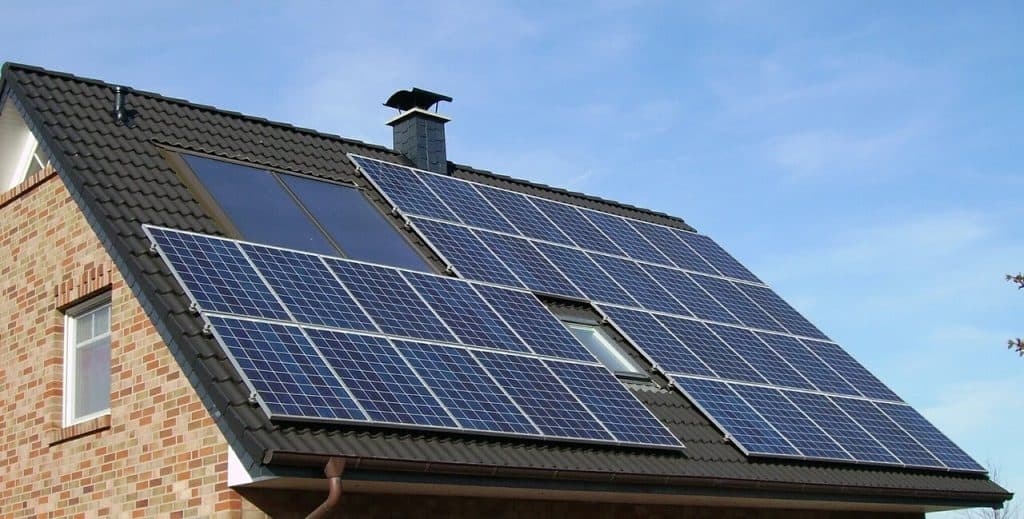
The development of solar power plants in the Czech Republic continues to slow. In the first half of this year, 9364 photovoltaic power plants were connected to domestic grids, around 28 percent fewer year on year. Their installed capacity also fell to 295 megawatts (MW). By contrast, battery installations increased significantly, with storage systems totalling 318 megawatt-hours (MWh) of capacity connected, 83 percent more year on year. Representatives of the Solar Association announced this at today’s press conference. There are now 248.346 solar power plants in the Czech Republic with a total capacity of 5,36 GW.
The trend from the previous year, when fewer systems were installed, thus continued in the first half of the year. Installation companies are already feeling the decline, with some having ceased operations in recent months.
According to the association, the main cause of the decline is falling demand from households, which accounted for the overwhelming majority of installations in previous years. This year’s 6191 installations are half the number recorded a year ago. According to the association, the sharp drop is due to the suspension of state support.
"We support the transition away from traditional subsidies, but applicants who are unable to obtain an interest-free loan should be able to carry out an installation without restrictions. It is therefore necessary to find another form of support, such as a VAT reduction for photovoltaics, as in neighbouring countries. The Czech market can no longer afford another similar several-month interruption in new installations," said Jan Krčmář, executive director of the Solar Association.

Batteries at Tušimice power plant, Source: ČEPS, a.s
The sector is therefore increasingly reliant on corporate photovoltaic installations, with this year’s 3173 new installations roughly matching the previous year. The construction of solar parks is also gradually accelerating. As a result, the average size of new projects is increasing. While the average new photovoltaic installation had a capacity of 11,7 kW in 2023, this year it is 31,5 kW.
Domestic electricity storage deployment, by contrast, is accelerating significantly. Alongside 8079 photovoltaic installations equipped with battery storage, standalone battery energy storage systems (BESS) are also expanding rapidly, with 12 connected in the first half of the year, totalling 108 MWh of capacity.
"The Czech market has shown that, less than a year after the Lex OZE III amendment took effect, there is enormous interest in battery storage. Further development will logically be limited by the constrained capacity of distribution grids and the transmission system. The regulatory framework and tariffs will have a particularly significant impact on investor appetite. They will determine whether batteries are used where they deliver the greatest value – to households, industry and the entire electricity system," said Jan Fousek, chairman of the Solar Association’s board and director of the AKU-BAT Association.
Translation disclaimer
This article is a machine translation of the Czech original and has not yet been fully reviewed. In case of any doubt, please refer to the Czech version.
Sdílejte článek prostřednictvím:
You might also like

24 September 2026, 11:23

24 September 2026, 10:30
24 September 2026, 06:56