9 October 2026, 06:22
Loading...
Czechs can succeed if they focus on making equipment for the green transition and learn English
Ekonews.cz
1 July 2024, 17:31
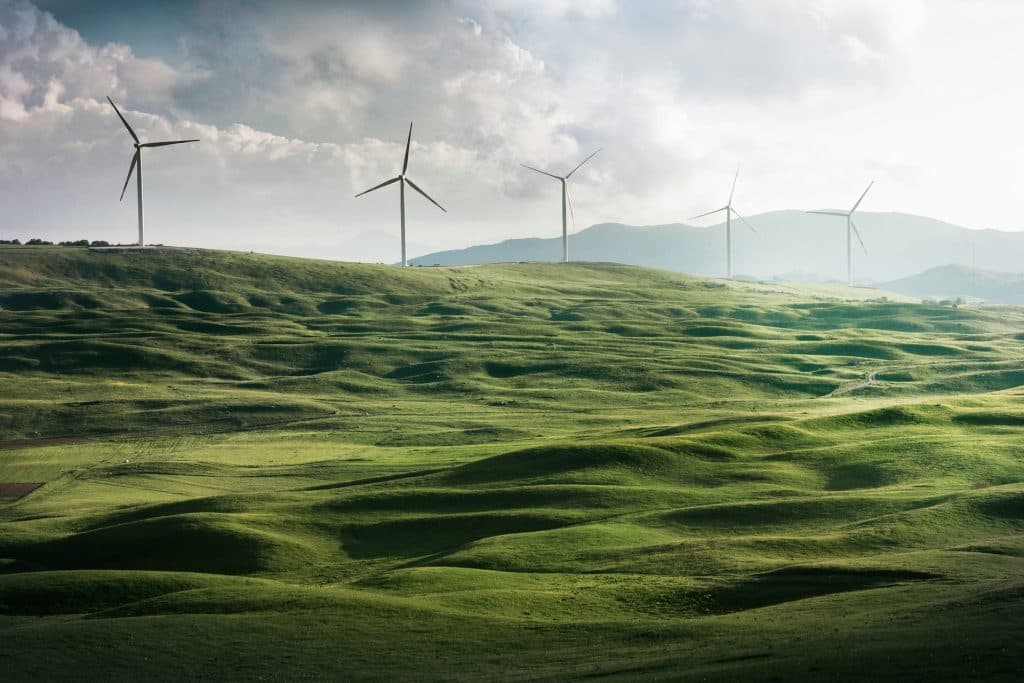
Czechia has a chance to succeed in international competition if companies focus on the technologies and equipment needed for the green transition. And improve the language skills of their people, participants heard at a debate held by the Alliance for a Zero-Emission Future.
According to Jakub Živanský, a partner at consultancy McKinsey & Company, Czechia has a major opportunity to establish itself as a supplier of product components that will be needed for the green transition. Companies should therefore identify products in their portfolios that will be needed for the green transition and will be in demand. They should build on their existing capabilities and production facilities.
Experts addressed technologies and PPAs as drivers of change at the Alliance for a Zero-Emission Future's June panel debate.
“What we are good at is the ability to produce complex industrial equipment. According to a Harvard University survey, we rank seventh in the world, Živanský said, adding that this was good news because there will also be demand for these products as part of the green transition.
He cited the Net-Zero Industry Act, for example. The regulation contains measures aimed at increasing the production of technologies that are key to achieving climate neutrality and sets a target for at least 40% of the EU's annual needs for strategic net-zero technologies to be manufactured in the EU by 2030. He said that 50% of equipment for renewable energy technologies should also be made in the European Union.
However, one problem in international competition is the reputation and standing of technical professions domestically, which is causing a shortage of experts in this field. A specific issue is the low number of girls and women in the sector.
Jiří Háze of the Czech Technical University in Prague recalled that when the “Engineering is for girls” campaign was held several years ago, the university immediately saw twice as many female applicants. But the numbers subsequently fell again.
Language barrier
The McKinsey expert sees poor English proficiency as a major obstacle to Czechia's success in international competition. “Only 25% of Czechs speak it at the level needed for business negotiations, while the Baltic states have 60 to 70%. If we do not change this, we will keep supplying only low-value-added components,” he warned.
He said this is also how Czech companies lose out on profits. “We are a fantastic assembly plant. It is a source of potential, but we also have to sell it ourselves, because 70-80% of the profit lies in what we do not do. We have to learn English so we can do that,” he concluded.
According to Tomáš Holinka, head of the S3 strategy department at the Ministry of Industry and Trade, sufficient funding has now been earmarked for the green transition. This includes both European and national funds.
“It is easy money, but coordination and prioritisation are important. The problem with subsidy policy is that it gets fragmented into a great many small areas and has no effect, he said.
Czech industry does not have an easy position in international competition. The Czech economy is twice as energy-intensive per unit of GDP as the EU average. At the same time, conditions for solar and wind power are not ideal.
PPA development in its infancy
Another obstacle is that the development of solar and wind energy remains slow in Czechia, despite thousands of photovoltaic installations, mostly smaller systems on family homes. According to experts, the number of PPAs, or Power Purchase Agreements, can likewise be counted on the fingers of one hand. These are long-term contracts linking an offtaker to a specific renewable energy generation source. The most typical example is the purchase of electricity from a solar or wind power plant.
The expert debate showed that several factors are holding back the development of PPAs in Czechia. According to Jaroslav Kindl of ČEZ ESCO, one is the current market situation, in which energy prices have fallen, along with customers' motivation to address their future energy situation. The long-term nature of PPAs means they are contracts for ten or even twenty years.
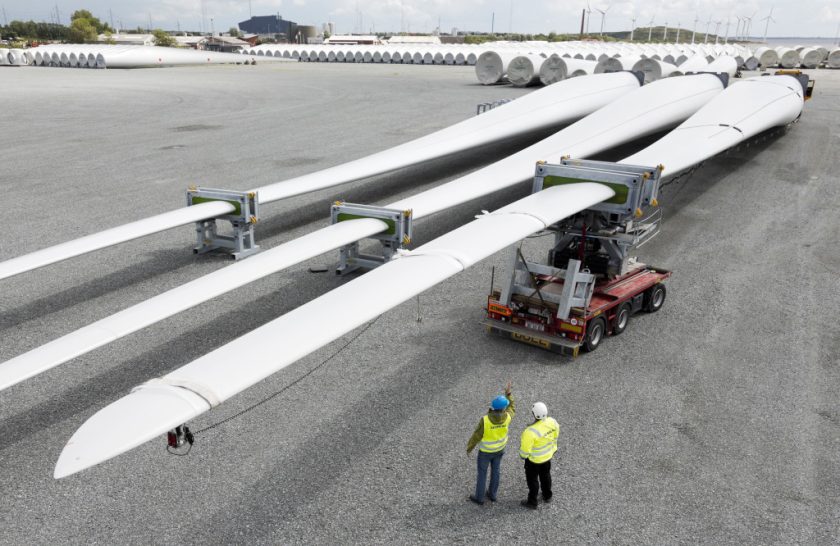
According to him, development is also not helped by insufficient pressure to meet ESG targets and to favour companies that address this agenda and are fully committed to decarbonisation.
Representatives of Orlen Unipetrol and Denso outlined how large companies that need to address the shift to green energy as part of their decarbonisation view PPAs.
Examples from practice
According to Tereza Nislerová, the petrochemical company's director for European funds, Unipetrol will need PPAs for the production of RFNBO hydrogen in a few years' time (note: hydrogen produced by water electrolysis using surplus energy from renewable energy sources, previously referred to as green hydrogen). For now, however, it is focusing on generating its own solar energy from panels, for which it has space within its plant site.
Jan Brázda, a PwC partner who moderated the debate, recalled in this context that Orlen Unipetrol is to produce 20 thousand tonnes of green hydrogen, meaning it will need 1.5 GW of renewable capacity in Czechia. “That is a huge figure, and the question is whether it can be achieved without PPAs,” Brázda said.
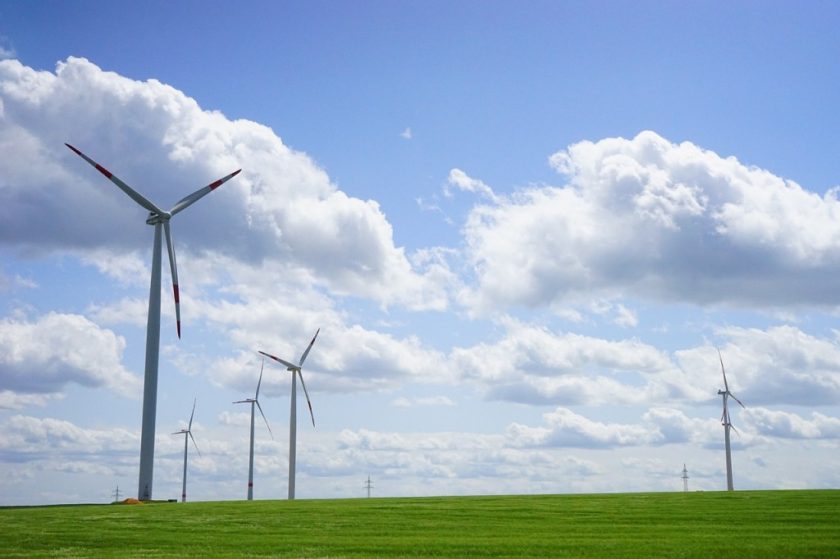
“It is still too early to conclude a PPA contract, but we are intensively mapping the market in this area and looking for the most suitable solution,” she said. However, she added that prices that are economically viable for Unipetrol and the offers for PPA contracts have so far diverged.
A major problem in the Czech Republic holding back the development of PPAs is also the insufficient diversity of renewable sources. The most common source that can be contracted under a PPA is a photovoltaic power plant.
Unipetrol also sees this as problematic. “For the production of RFNBO hydrogen, we cannot conclude a PPA with someone who has offshore wind farms,” Nislerová added. This situation may result in an increase in the production cost of hydrogen.
Other companies can, however, conclude similar virtual PPA contracts, for example for cheap wind power from Romania, added Jan Brázda of PwC.
PPAs in practice
Tomáš Švagerka of Denso, part of the Toyota group, described a more optimistic example of PPA use in practice. In its corporate vision, the company has set a target of achieving carbon neutrality in manufacturing and replacing all fossil fuel sources. Denso's Liberec plant is scheduled to achieve this target by 2030.
A few months ago, a 1.7 MWp photovoltaic plant was built on the grounds of this heat exchanger manufacturer, acquired through a PPA contract concluded with ČEZ ESCO. It is one of the largest corporate solar installations in the Czech Republic and helps Denso save 656 tonnes of CO2e emissions annually. The contractual relationship is designed for ten years, after which the PV plant will become Denso's property for a symbolic one koruna.
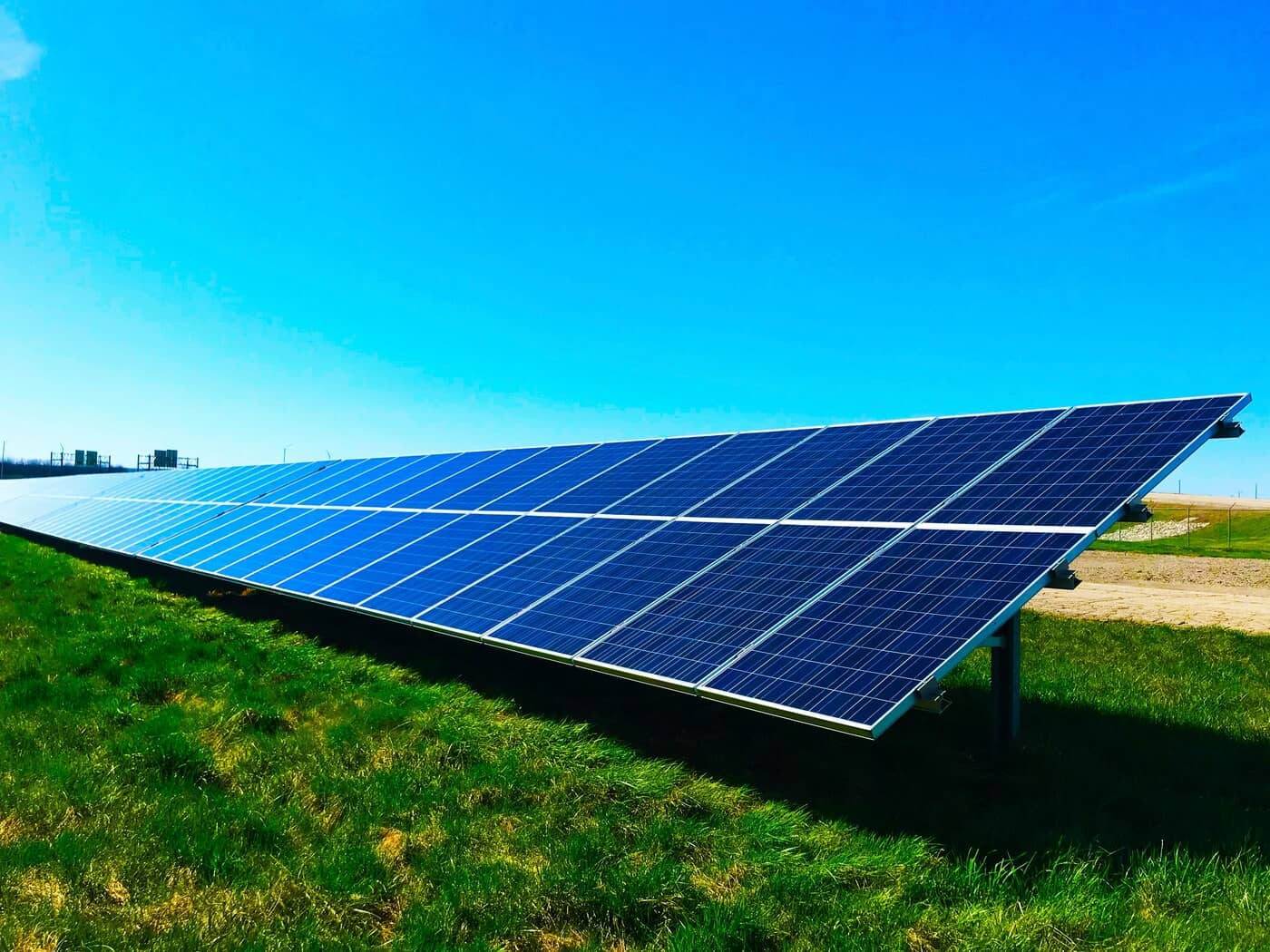
Solar power plant. Source: Unsplash
“We carefully considered whether to finance the construction of the solar power plant from our own resources or use the PPA model,” Švagerka explained. “We chose a PPA also because we can make better use of our own funds by investing in other projects, such as those related to transforming production towards clean mobility,” he said.
Operational support needed
Participants in the debate agreed that extending operational support to photovoltaic power plants would contribute to the development of photovoltaics and PPA contracts.
In Germany, operational support for solar sources is implemented in the form of a “Contract-for-Difference”. In Czechia, it is available only for wind and hydropower sources.
Miloslav Keltner, director of the strategy and economic decarbonisation department at the Ministry of the Environment, indicated that this is a direction they are considering.
“Operational support will enable projects to become bankable. Large construction projects are even being abandoned because, without guaranteed offtake, they are too risky for banks to provide financing, he explained.
According to him, operational support is a crucial issue for the further development of renewable energy sources in the Czech Republic in order to meet the target of building 10 GW of renewable capacity, as set out in the National Energy and Climate Plan. Thousands of PV installations have been completed so far, but these are primarily small sources with a total installed capacity of around 1 GW.
The partner of this article is the Alliance for a Zero-Emission Future.Republished from the online portal EkoNews.cz, a website covering business and sustainability.
Translation disclaimer
This article is a machine translation of the Czech original and has not yet been fully reviewed. In case of any doubt, please refer to the Czech version.
Sdílejte článek prostřednictvím:
You might also like

8 October 2026, 10:05