How much did hydropower and geothermal plants cost in 2025?
While the costs of generating electricity from wind and solar power plants continued to fall in 2025, hydropower, geothermal power and bioenergy moved in the opposite direction. According to IRENA’s latest report, the increase in costs was driven primarily by more expensive financing for new projects and, in some cases, lower capacity factors. Despite this, these technologies remain an important part of modern energy systems thanks to their ability to provide a stable electricity supply and contribute to the secure operation of power grids.
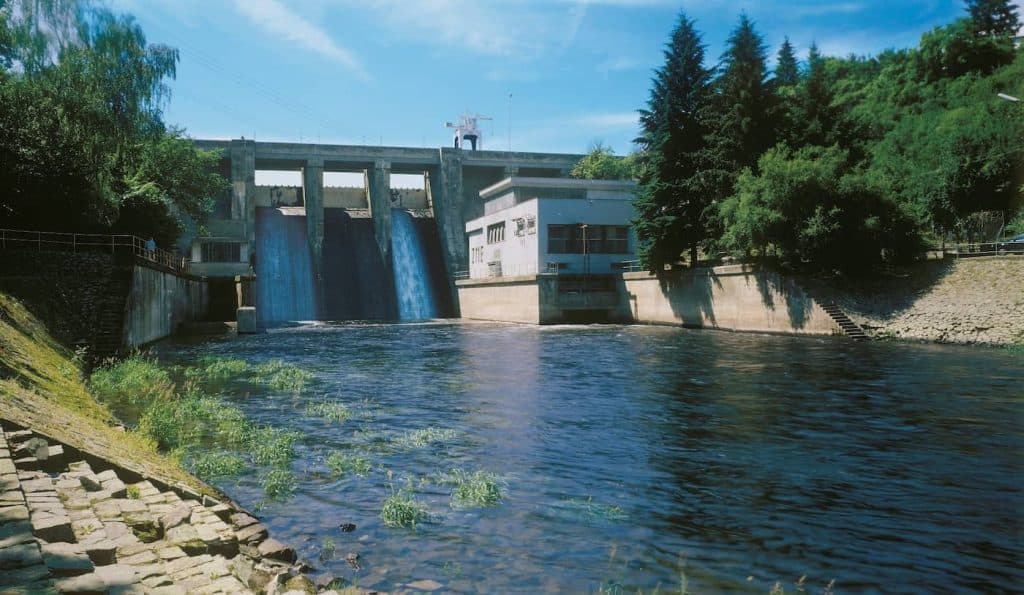
Hydropower continued to focus primarily on modernising existing plants and expanding generating capacity. A total of 18.4 GW of new hydropower capacity was commissioned worldwide in 2025, representing a significant year-on-year increase. The completion or reaching of the final stage of several large projects, including Ethiopia’s Grand Ethiopian Renaissance Dam, played a significant part in this result.
In geothermal energy, technological development continued particularly in the area of Enhanced Geothermal Systems (EGS), which could gradually expand the potential for using geothermal energy beyond traditional locations.
Bioenergy maintained a stable technological base. Further development of the sector was influenced primarily by fuel availability and the regional conditions of individual markets.
Investment costs
Investment costs for hydropower plants fell by 10% year on year to an average of 2 079 USD/kW. However, trends varied by project size: while large hydropower plants became less expensive, investment costs for small hydropower plants increased.
Geothermal power plants saw a significant 46% increase in investment costs, to an average of 5 997 USD/kW. Differences between individual projects remain considerable and primarily reflect the geological conditions of each location.
Plants burning biomass or biofuels also became more expensive. Average investment costs rose by 9% to 3 606 USD/kW, with significant differences persisting between regions.
Capacity factor
Hydropower plants had an average capacity factor of 43% in 2025. Geothermal plants maintained a very high capacity factor of 85%, while bioenergy sources reached 78%.
The higher capacity factor helped improve the economics of bioenergy projects.
Levelized cost of electricity (LCOE)
The LCOE (Levelized Cost of Electricity) is the average cost of generating one megawatt-hour of electricity over a power plant’s entire lifetime. It includes investment, operation, maintenance and financing costs, allowing the economics of different technologies to be compared objectively.
The cost of generating electricity (LCOE) from hydropower plants rose to 62 USD/MWh, a year-on-year increase of 9%. Geothermal plants saw an even more pronounced increase, to 89 USD/MWh, primarily as a result of higher investment costs and rising financing costs for new projects.
Bioenergy was the exception. Although investment costs increased, the higher capacity factor brought the global weighted LCOE down to 86 USD/MWh.
Emerging technologies
The IRENA report also highlights the long-term potential of less widely deployed renewable technologies. Ocean energy, including tidal and wave power plants, still has high electricity generation costs, but these can be expected to gradually decline as more projects are completed. These technologies therefore represent a promising addition to the future energy mix, even though they are still at an earlier stage of commercial development.
Developments in 2025 showed that the economics of renewables are not determined solely by the fastest-growing technologies, such as solar power and wind power plants. Hydropower, geothermal sources and bioenergy continue to play an important role thanks to their ability to provide stable electricity generation. Although investment and generation costs have risen for some of these technologies, they remain an important part of the transition to low-emission energy and complement variable generation from wind and solar.
Translation disclaimer
This article is a machine translation of the Czech original and has not yet been fully reviewed. In case of any doubt, please refer to the Czech version.