17 October 2026, 13:09
Loading...
How often is there no wind or sunshine in Czechia?
Jakub Musil
21 November 2024, 10:30

Europe, including Germany, experienced a so-called Dunkelflaute period at the beginning of November, when renewable generation fell sharply. This highlighted the need for dispatchable sources, such as coal- or gas-fired power plants, to stabilise the grid. Such prolonged periods are rare in Czechia, but their frequency and impact may be affected by climate change or technological progress.
Germany, along with other parts of Europe, experienced a so-called Dunkelflaute at the beginning of November, a period of reduced generation from solar and wind power plants due to unfavourable weather. From 4. 11. to 16. 11., German wind power plants generated on average at just 6,7 % of their maximum installed capacity, while solar power plants generated at only 2,2 %. During such periods, other, often fossil-fuelled, sources currently come into play to compensate for the decline in renewable generation. However, to decarbonise the power sector and ensure stable grid operation, alternative sources will need to be found to replace fossil-fuelled power plants in this role.
This phenomenon is one of the frequent reasons for scepticism about the deployment of renewable sources in public debate. But how often do periods when there is no wind or sunshine in Czechia occur, and how long do they last?
Data in this chart is also available in 15-minute resolution60min15min
Dunkelflaute in Czechia
According to a model, the fleet of wind power plants operating in Czechia in 2016 would have had an average capacity factor of 0,197 between 1980 and 2019. This means that in every hour during this period, these plants would have operated on average at 20 % of their installed capacity. For solar power plants, the average capacity factor was 0,132 (although this also includes nighttime).
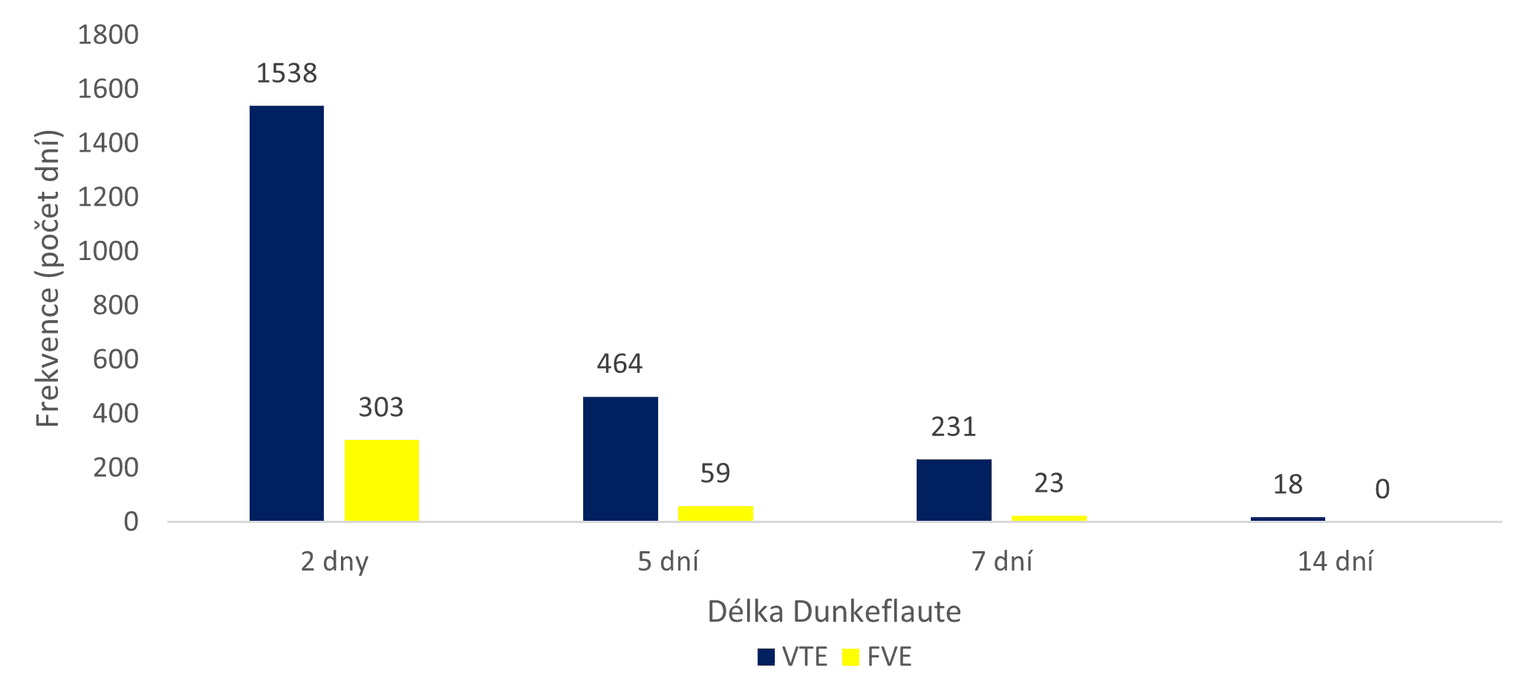
Number of days when the rolling average of solar PV and wind power capacity factors in Czechia between 1980 and 2019 over the preceding 2–14 days was lower than during the German Dunkelflaute at the beginning of November 2024. Own analysis, data source: Staffell and Pfenninger (2016)
Dunkelflaute events in Czechia lasting more than a week and with capacity factors like those seen in Germany at the beginning of this month would be relatively rare. During the modelled period, there were on average only 6 days per year when the rolling average capacity factor of wind power plants was equal to or lower than at the beginning of November in Germany. For solar PV plants, there were 0,6 such days per year.
The frequency of Dunkelflaute events of different durations may change over time
However, the above data on Dunkelflaute may not accurately represent the future. The data are based on an analysis of model output that uses technologies operating in 2016 and historical weather data.
As the climate gradually changes, the duration and frequency of Dunkelflaute may also change. Technological development may also have an impact. New solar and wind power technologies have higher capacity factors under the same conditions than older technologies. New technologies therefore generate more electricity in less favourable weather than older technologies, and repowering existing plants and building new ones could reduce the frequency of Dunkelflaute.
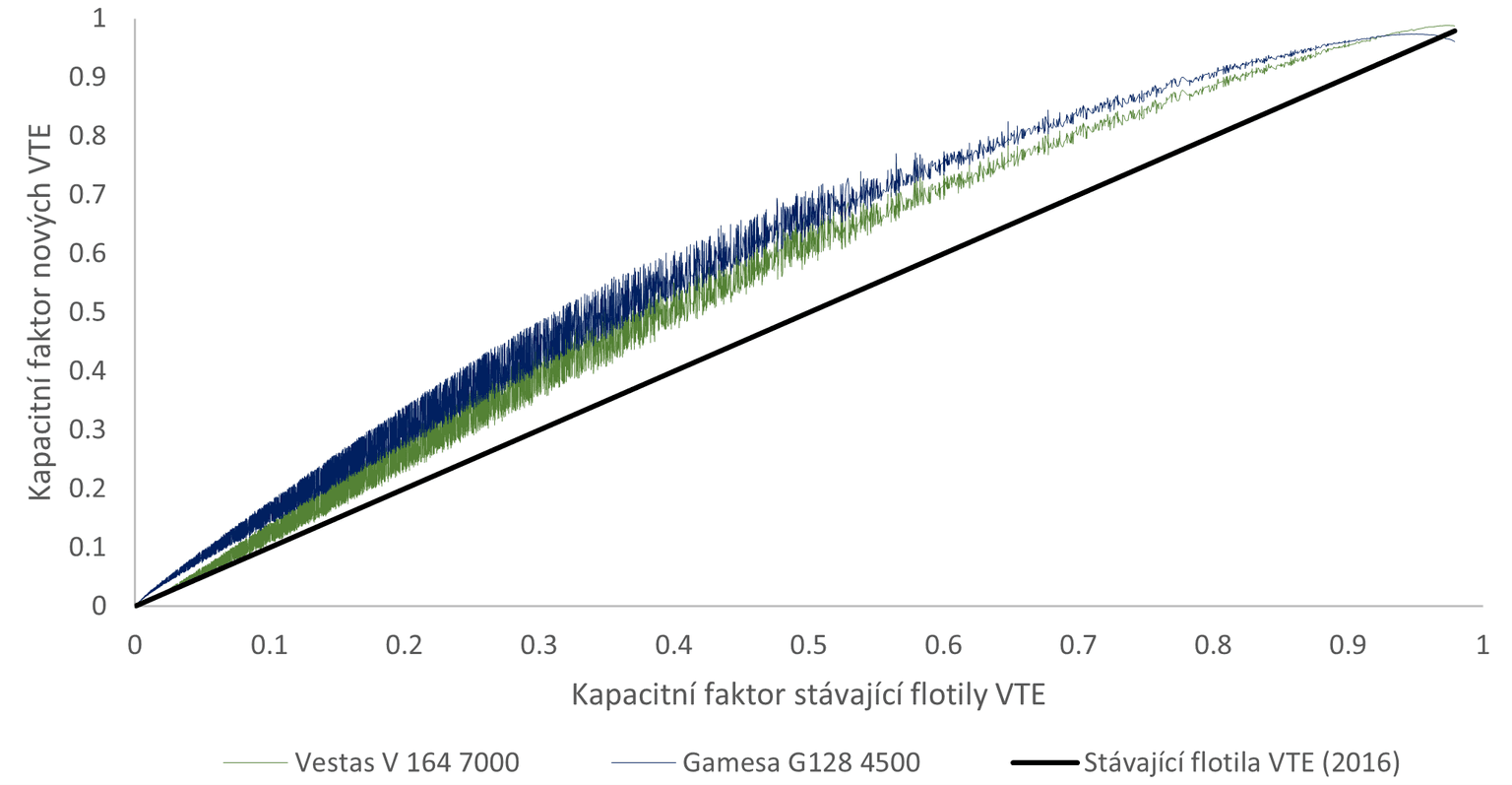
Capacity factors of modern wind power plants with higher hub heights corresponding to the capacity factors of the Czech wind power fleet from 2016. Own analysis, data sources: Staffell and Pfenninger (2016) and CSVE
Translation disclaimer
This article is a machine translation of the Czech original and has not yet been fully reviewed. In case of any doubt, please refer to the Czech version.
Sdílejte článek prostřednictvím:
You might also like

16 October 2026, 10:16