Practical experience with a small PV system: what to do with exports amid increasingly frequent negative prices
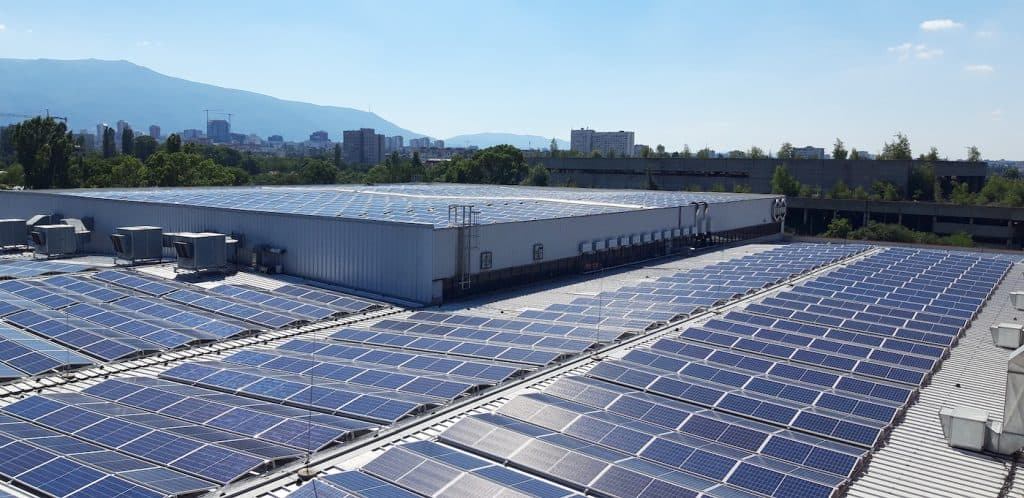
As the number of negative prices on the spot market rises, there are increasingly frequent cases in which owners of small photovoltaic (PV) systems buy appliances, most often air conditioners, to reduce their surplus generation during peak output periods. However, the situation can be addressed much more elegantly, even without making an investment.
If you are considering what to do with PV surplus generation, it is first important to establish whether the owner of the connection point is a household or a self-employed person/company. Some tariffs may apply to households but not to businesses. It is then important to estimate, or determine from billing history over a one-year period, how many MWh of surplus generation can be expected annually.
As a rule of thumb, 1 kWp can be assumed to generate approximately 1 MWh per year. Therefore, if we have a PV system with a capacity of 10 kWp, annual generation will be around 10 MWh. The amount of surplus generation then depends on the appliances in use. The model example assumes an air-to-water heat pump and low-temperature underfloor heating. Other appliances include an electric oven, a battery storage system with a capacity of 10 kWh, an electric vehicle charger and others. Total household electricity consumption is between 10-11 MWh/year. The PV system can supply approximately half of this, i.e. 5-6 MWh/year.
The remainder is surplus generation. And this very often occurs when spot-market prices are negative. There have already been 232 such instances in the first 6 months of this year. If we sold on the spot market, the fee charged by the supplier would also have to be deducted from these prices. This can easily be as much as 500 Kč/MWh. Once the fee is applied, there have already been 519 negative-price instances for generators.
Looking at the hourly profile of PV deliveries into the distribution grid (this can be downloaded, for example, from the ČEZD distribution portal; you need to request access to the PND, the measured-data portal, and everything is free), the PV system in question delivered energy to the grid on 512 occasions. The weighted average export price for the first half of the year would have been 443 CZK/MWh, without curtailing generation. If consumption were also on the spot market, with the same supplier fee, the weighted average price would have been 3 348 Kč/MWh. So how can this situation be resolved simply?
Virtual battery
The concept of a virtual battery is not new, but not everyone knows about it, and it has also been changing recently. It sometimes includes new, “inconspicuous” fees. The principle is that you export electricity from your PV system to the grid, for example in summer, but do not draw it until winter, and then receive a discount on the commodity price (the discount applies to the same volume that you exported to the grid).
However, you will still pay the regulated part of the price (charges related to electricity transmission and distribution). The discount can be very attractive—amounting to several thousand CZK—but watch out for the fees. These may depend on how many MWh you export to the grid. And you will pay this fee at a fixed rate throughout the year—which may no longer be so advantageous. However, products with favourable terms can be found on the market, although this is an individual matter.
Fixed export price
Suppliers are willing to buy electricity from your PV system at a fixed price if they also supply your electricity (you have consumption with them). This is also necessarily the case with a virtual battery.
In general, it is advisable to arrange consumption and generation at the same time and use the services of just one supplier. The price for surplus generation can be around 1000 Kč/MWh. However, prices are highly variable.
Smart control
Given that negative prices during periods when PV systems generate and export electricity to the distribution grid are nothing new, there are several products on the market that can control PV systems to a certain extent and deliberately limit exports. Colloquially, this equipment is called a “smart box”, which can, before curtailing PV generation, overheat water in the boiler, heat up hot-water storage for space heating, and more.
Expect the price of this smart box to be around 15 thousand Kč excluding VAT. However, it can often also be rented for a few hundred crowns a month. You will then export less electricity to the grid, but get paid more.
Translation disclaimer
This article is a machine translation of the Czech original and has not yet been fully reviewed. In case of any doubt, please refer to the Czech version.