Since January, farmers have been able to combine electricity generation with crop cultivation. So far, this has only been possible above orchards, vineyards and other permanent crops. From November, arable land growing vegetables should be added to the list.
Agrivoltaics were given the green light last year by an amendment to the Act on the Protection of Agricultural Land Resources. In January, a decree by the Ministry of the Environment and the Ministry of Agriculture stipulated that solar panels could be installed above vineyards, hop fields, orchards, nurseries, areas with potted plants or truffles.
Less than a year has passed and the decree has been amended. Most likely from November, photovoltaic panels will also be allowed above very high- and high-labour-intensity vegetables. This category includes virtually all commonly grown varieties.
Brassica vegetables, such as cabbage, kale and broccoli, as well as root and fruit vegetables, including tomatoes and cucumbers, will be able to be grown alongside photovoltaics. The same applies to bulb and leafy vegetables.
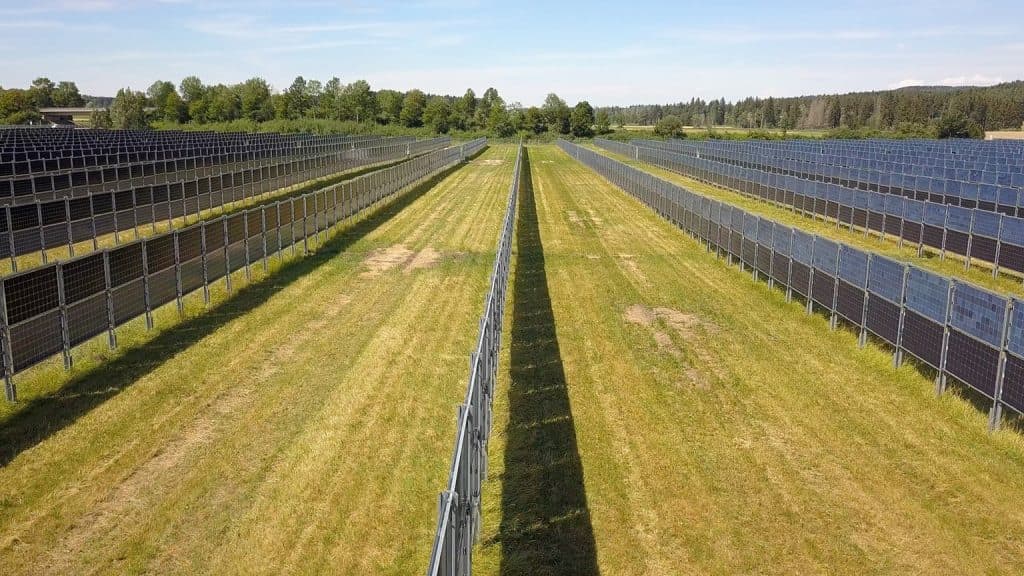
Vegetables can also newly be combined with vertical panels, which are still rarely seen in the Czech Republic. These are oriented east and west and generate electricity outside peak periods, when there is no surplus. Another advantage is that agricultural machinery can move across arable land between them.
Positive results in Austria
There are still only a few agrivoltaic installations in the Czech Republic, mostly small trial sites. Their purpose is to show how panels affect crops in local climate conditions.
This year, research began at the Valečov farm in the Vysočina region. “The aim is to investigate how agrivoltaic systems can help increase the resilience of crops, specifically potatoes and soybeans, to climate change, particularly drought and temperature fluctuations,” explains Pavel Kasal of the Havlíčkův Brod Potato Research Institute.
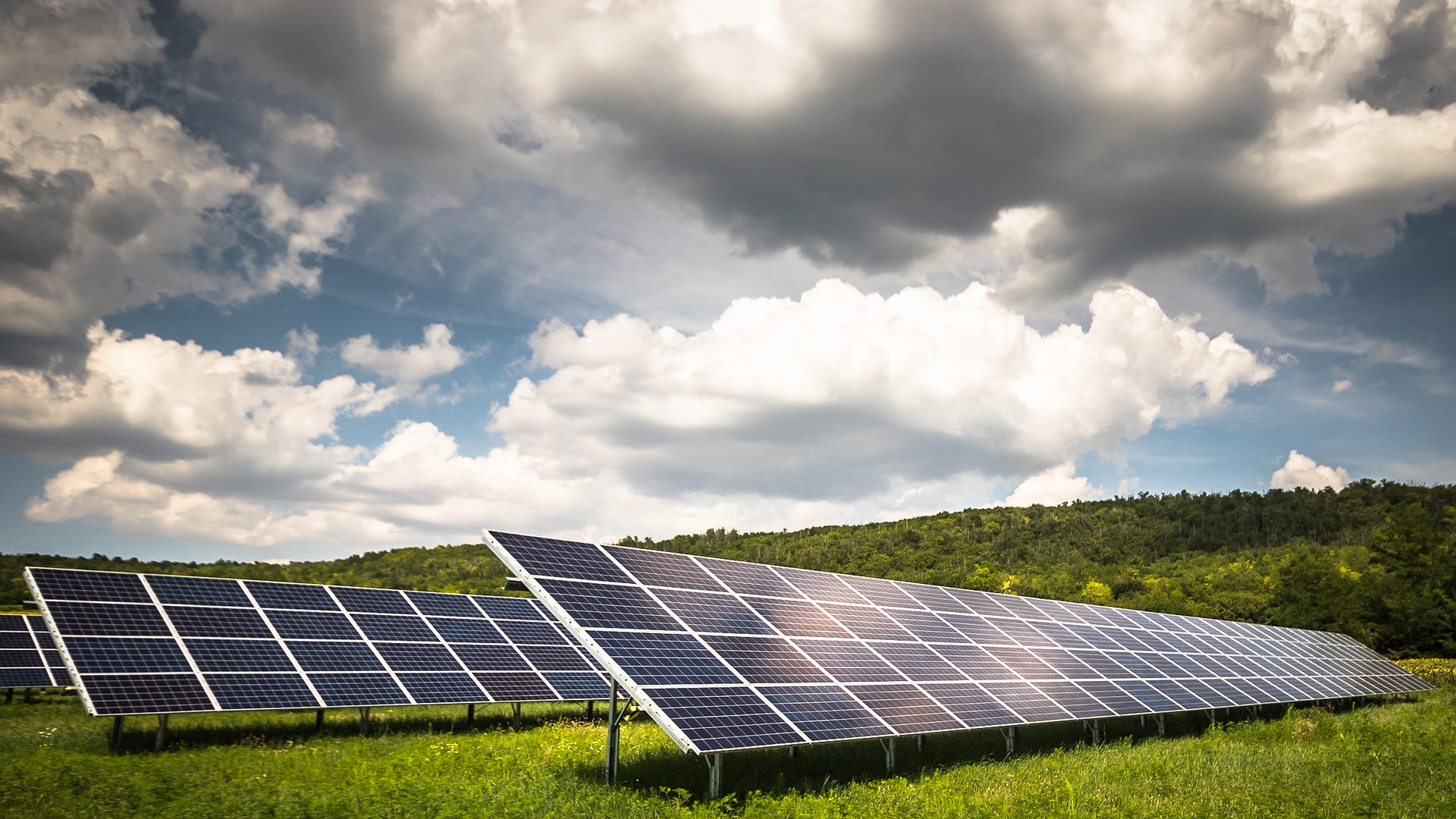
On fields covering half a hectare, they are growing the Antonie and Adéla potato varieties and the Adessa and Acassa soybean varieties. However, neither potatoes nor soybeans are among the crops permitted under the current amendment. The test plot is divided by three rows of vertical panels, 30 metres long, with 12-metre gaps between them. Crops grow without solar panels on an equally large control plot.
For now, this is a model of the panels; the planned photovoltaic installation has not been built. According to Kasal, however, it should have a comparable impact on the environment as real panels.
Researchers are measuring temperature and humidity. They are observing the physical properties of the soil and nitrogen fixation by soybean plants, as well as comparing growth between and outside the panels. All this will continue over the next three years. The project also focuses on efficient water management. Drip irrigation is therefore used on part of the site, while the other remains without it.
The testing is part of cross-border cooperation with Upper Austria within the European INTERREG project. Observations have been under way for longer in the neighbouring country, with positive results.
“Our assumption is that panels can improve growing conditions by reducing water evaporation and mitigating temperature stress on plants. The shading results in smaller fluctuations, creating a more stable microclimate,” Kasal says. However, specific results from Valečov will have to wait.
The aim is to motivate farmers
More farms of this kind could emerge thanks to the amendment. “There is no doubt that this will contribute to increased interest in agrivoltaics, which was also one of the purposes of the changes,” says Karla Mráčková, acting spokesperson for the Ministry of Agriculture.
According to the spokesperson, the ministries adopted the changes primarily on the basis of proposals from agricultural non-governmental organisations during the consultation process. “The addition is intended to motivate farmers to produce these sensitive, high-value commodities,” adds Veronika Krejčí, spokesperson for the Ministry of the Environment.
“It is a compromise proposal that will expand the area of agricultural land eligible for agrivoltaic installations while ensuring the true purpose of agrivoltaics, namely the dual use of agricultural land with food production as the priority,” Mráčková of the Ministry of Agriculture explains.
Mráčková says the amendment should enter into force in November or December this year. “The ministry has now submitted the draft amendment to the decree to the Government Legislative Council,” she adds.
Subsidies will follow the amendment
Jiří Bím, head of the permitting and agrivoltaics section at the Solar Association, views the changes positively. “Several other fundamental changes beyond the added crops were incorporated into the final version. Above all, this concerns the possibility of applying for permission for agrivoltaics together with the installation of battery storage,” he adds.
The decree also adjusts rules for fallow land, meaning uncultivated land. Under the new rules, this will no longer have to be documented at the start of the procedure, but only when the project is implemented, removing previous ambiguities.
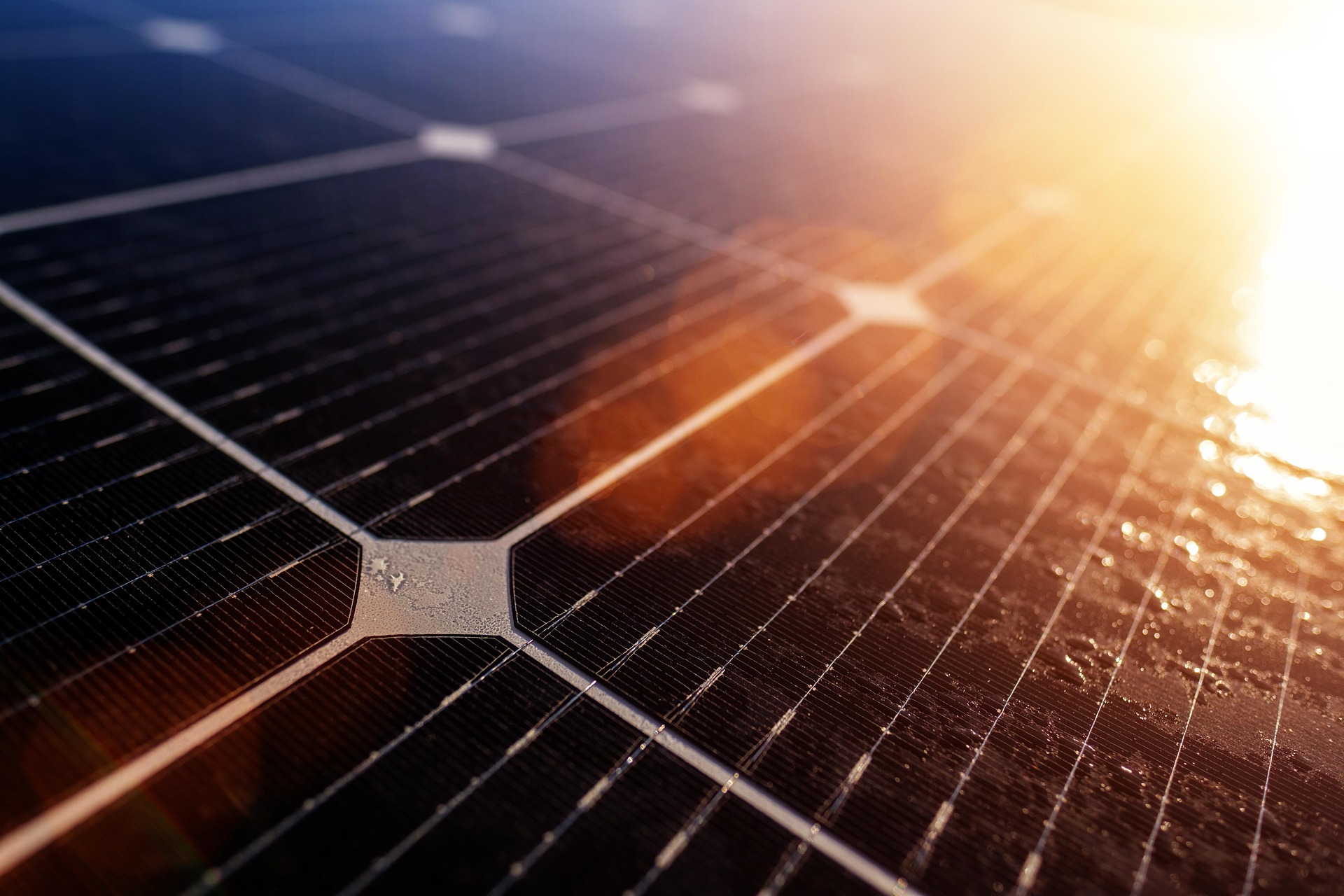
Bím points out that agrivoltaics with a capacity of up to 100 kilowatts will not require a building permit. In his view, this could provide a major boost. “It will newly be classified as a minor structure, so smaller farmers will be able to build agrivoltaics next to their premises under exactly the same regime as rooftop photovoltaics,” he adds.
However, the development of agrivoltaics depends on subsidy support. “Unfortunately, these projects are not competitive without it; it simply cannot be done without it,” Bím adds.
The State Environmental Fund of the Czech Republic (SFŽP) confirmed to Ekonews that subsidy programmes are being prepared. “We are planning to launch a call, following the update of the decree on agrivoltaic electricity generation facilities, which is being prepared by the relevant ministries,” said Stanislava Beyerová, head of the SFŽP press department.
The list could be expanded
Jiří Bím considers the forthcoming decree an important step. In the future, the Solar Association would like to see the list expanded to include other crops, including permanent grassland and pastures, which farmers themselves are interested in, he says.
The Czech Agrarian Chamber welcomes the link between energy production and agriculture. Chamber president Jan Doležal points out that farmers should primarily use the electricity generated for their own consumption, for example in the energy-intensive storage of agricultural products.
“As regards expanding to other crops, the process must proceed following discussions with the professional agricultural community and an assessment of experience to date with linking agrivoltaics to permanent crops. At the same time, expanding opportunities for agrivoltaics should be tied to the production of vegetables and other crops,” Doležal adds.
“These projects should primarily serve active farmers; otherwise, there is a risk of abuse and of certain groups or speculators maximising their profits,” he believes.