Solar power is changing hydropower operations in Czechia. Pumped-storage plants no longer mainly pump at night

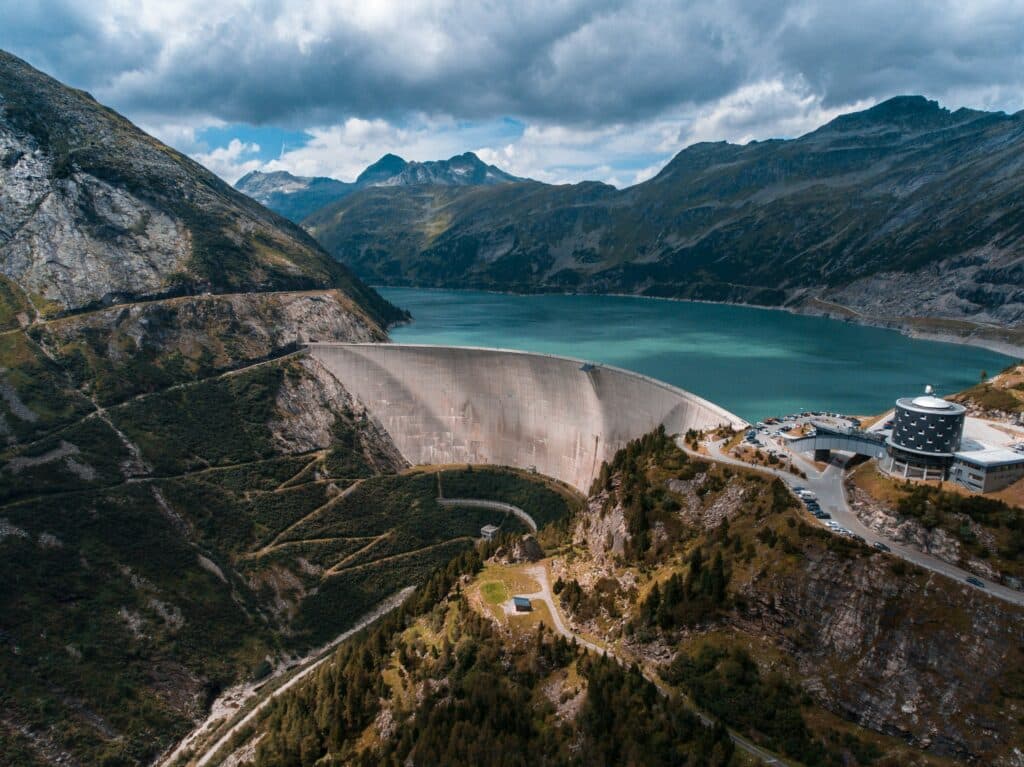
European hydropower plants faced very poor hydrological conditions this summer. In a sample of ten European power systems, their generation between early June and mid-August was even lower than during the dry year of 2022. However, the much higher output from solar power plants more than offset this decline in terms of overall generation. Even more striking is the change in how pumped-storage plants operate: they are increasingly pumping water during midday hours instead of during the traditional overnight period.
An analysis by WSP published on the pv magazine website shows that hydropower generation in the ten European power systems with complete data available reached just 31.65 TWh between 1 June and 15 August this year. This was the lowest figure in the seven years covered and about 6% less than during the dry summer of 2022. In that year, the same systems generated 33.69 TWh of electricity from hydropower.
However, the situation varied significantly across different parts of Europe. While the 2022 drought mainly affected the Iberian Peninsula, this year conditions were worse particularly in France, the Alps and the Danube region. Reservoir levels in the countries monitored were approximately 7.7% below the 2015–2025 median in week 31 of the year. In some weeks, French reservoir levels even fell below the lowest levels recorded during the previous eleven years.
Weaker hydrological conditions also affected generation. Output from reservoir hydropower plants between early June and mid-August was 43% below the 2020–2025 average in Austria, 38% lower in Italy, 29% lower in Romania and 26% lower in France. The decline was even more pronounced for run-of-river hydropower plants, whose output cannot be shifted in time to reflect market conditions. A significant decline in hydropower generation is also evident in the Czech Republic.
Solar generation rose by tens of TWh
Over the same period, however, solar power generation rose dramatically. Across the ten systems monitored, output increased from 45.27 TWh in 2022 to 84.44 TWh this year. Despite poor hydrological conditions, combined generation from hydropower and solar therefore rose from 78.96 TWh in 2022 to 116.09 TWh, an increase of almost half.
Compared with the 2020–2025 average, hydropower generation this summer was about 12.6 TWh lower, while solar power plants generated 34.7 TWh more. In purely energy terms, the increase in solar generation therefore more than doubled the shortfall in hydropower output.
This does not mean the two sources are interchangeable. Solar power is generated mainly during a few hours around midday, while water stored in reservoirs represents an energy reserve that can be used when demand is high or other sources are producing less. Solar power plants can therefore reduce the need to use reservoir water during the day, but they cannot replenish seasonal water reserves.
Pumped-storage plants are shifting their pumping to midday
Hourly data reveal one of the most significant changes in Europe’s power sector in recent years. Reservoir hydropower plants are increasingly reducing generation during midday hours, when solar electricity is plentiful on the market, and saving water for the evening peak.
The change has been even more pronounced at pumped-storage plants. An analysis of Austria, Germany, Spain and Portugal shows that their traditional operating model, based on cheap electricity at night, has been almost completely reversed in just a few years.
In Austria, the share of pumping between 10:00 and 16:00 rose from just under 29% in 2020 to almost 72% this year. In Germany, it increased from 22% to 72%, reaching 63% in Spain and 64% in Portugal. By contrast, the amount of energy used for pumping between midnight and 6 a.m. fell sharply in all four countries.
The hour of peak pumping has also shifted. In 2020, it fell at around 3 or 4 a.m.; today, the peak occurs at around 1 or 2 p.m., precisely when solar generation is at its highest. The total amount of energy used by pumped-storage plants in the four systems monitored rose from 3.99 TWh in 2020 to 7.71 TWh this year.
While the timing of pumping has changed significantly, generation from pumped-storage plants remains concentrated mainly in the evening hours. This is creating an increasingly clear pattern of “solar generation during the day – storage – generation during the evening peak”.
A similar trend is relevant to Czechia
The Czech Republic has a considerable amount of installed capacity in pumped-storage hydropower plants. Dlouhé stráně has an installed capacity of 650 MW, Dalešice 475 MW and Štěchovice II 45 MW. Their combined installed capacity is therefore approximately 1.17 GW.
As the share of solar power grows, the role of these plants could gradually change in a similar way to that of plants in neighbouring Germany and Austria. ČEZ announced this year that it is preparing another major pumped-storage project at Orlík. Modernising two of the four generating units there is expected to make it possible to store up to 750 MWh of electricity. The project is scheduled for completion in 2033.
This summer’s developments illustrate two distinct roles for storage. During the summer months, solar power can already offset significant shortfalls from other sources in energy terms, and together with short-term storage it is changing the power system’s daily operations. But it cannot address seasonal energy shortages. The greater the share of weather-dependent generation, the more valuable technologies will become that can shift electricity not only from midday to evening, but eventually also between days and over longer periods.
Translation disclaimer
This article is a machine translation of the Czech original and has not yet been fully reviewed. In case of any doubt, please refer to the Czech version.