
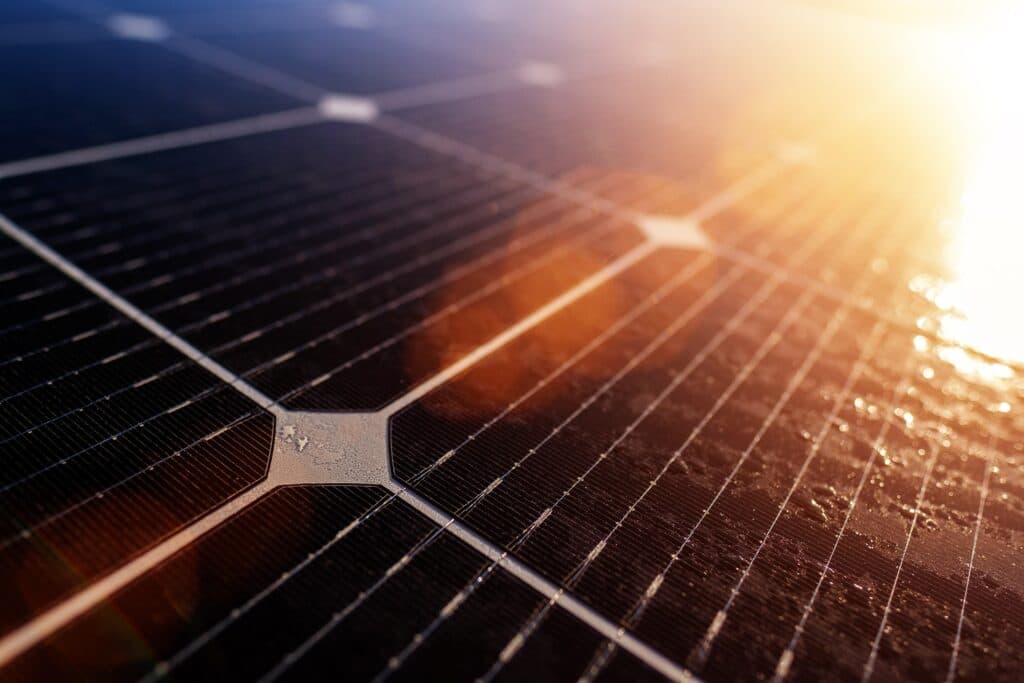
A Swiss start-up has come up with a way to install a photovoltaic power plant between railway tracks. Trains can travel over it at speeds of up to 150 kilometres per hour. The first hundred metres are set to be tested in operation in Switzerland for three years, although other countries are already interested in the technology.
Five years ago, Joseph Scuderi was waiting for a train one day in Renens, Switzerland, west of Lausanne, when he had an idea: Why not do something with the unused space between railway tracks? At the end of April, Scuderi and his start-up Sun-Ways officially commissioned the first hundred metres of solar panels on railway tracks in Buttes, a small village in the canton of Neuchâtel in the west of the country, the swissinfo.ch website reported.
“We installed the solar panels just like you would on a house roof,” Scuderi told the Swiss website at the project’s unveiling on 24 April. The persistent rain made it less than an ideal day to open a solar power plant, but Scuderi was pleased.
It is not the first project of its kind. Solar panels between railway tracks are already being tested in Germany, Italy, France and Japan. However, the Swiss start-up is the first to have designed a removable system that can be placed on tracks used by trains in normal operation.
More than five thousand kilometres covered with panels
The installation near Buttes consists of 48 solar panels attached to the railway sleepers between the rails. The panel-laying machine was built for Sun-Ways by Swiss company Scheuchzer and can cover about 300 metres of track per hour. The fact that the panels can be removed is essential, as it allows track operators to carry out maintenance.
Trains can travel over the panels at speeds of 150 kilometres per hour. A cylindrical brush can also be fitted to trains to remove dirt from the panels.
Sun-Ways received a grant for the project from the Swiss Innovation Promotion Agency (Innosuisse). The budget for the initial trial phase in Buttes was 585 thousand Swiss francs, or about 15.5 million Czech crowns.
The electricity generated by the panels is fed into the local power grid. The railway power plant can generate up to 16 thousand kilowatt-hours of electricity a year, the average consumption of four to six households.
Sun-Ways says that 5.3 thousand kilometres of Switzerland’s railway network—excluding sections in tunnels or with insufficient sunlight—could produce around one billion kilowatt-hours of solar energy a year. That is equivalent to the consumption of 300 thousand households and two per cent of the electricity consumed in Switzerland.
Another project planned in South Korea
“It is good to see railway and public transport companies innovating, including in the production of renewable energy,” Florence Pictet, a spokesperson for the Swiss Federal Office of Transport, told swissinfo.ch.
The roofs and façades of operational buildings, such as stations and platform shelters, are particularly suitable for solar panels. According to the office, public transport companies could cover 20 to 30 per cent of their own electricity consumption using their buildings and facilities.
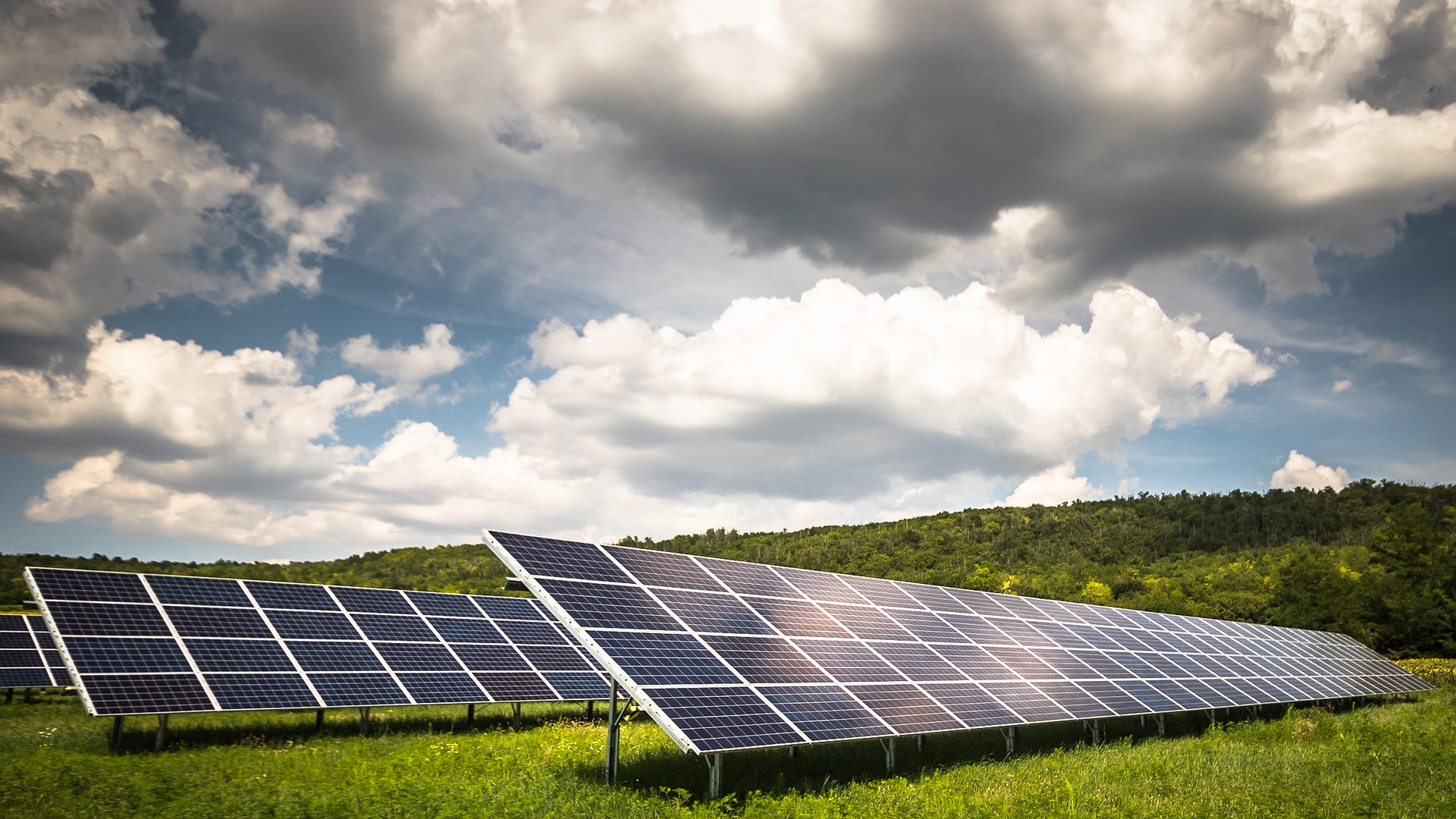
However, the transport regulator is more cautious about using solar panels between railway tracks. It approved the trial operation in Buttes because trains there run at a maximum speed of 70 km/h. It also stipulated that the trial phase must last at least three years, rather than the six months Sun-Ways had originally planned.
Sun-Ways believes solar panels could cover up to half of the world’s railway tracks. The start-up is already working on similar projects in South Korea, Spain and Romania, and has held exploratory talks with potential partners in China and the United States.
Taebon Park, chief executive of South Korea’s Korean Rail Solar Power Generation Project Company, would like to use Sun-Ways’ technology on around 6.6 thousand kilometres of his country’s railway network. “We looked at other similar systems. We chose Sun-Ways because it is an advanced technology suitable for railway maintenance and operations,” he told swissinfo.ch. A pilot project is expected to start in South Korea as soon as this year.




