Czech wind sector treads water. It lags badly in two key areas

Martin Voříšek
Martin Voříšek
2 September 2026, 07:07
ceska-vetrna-energetika-preslapuje-na-miste-ve-dvou-klicovych-oblastech-silne-zaostava

Europe commissioned 8.8 GW of new wind capacity in the first half of this year. Germany added the most new capacity, followed by the United Kingdom and Spain. Czechia, however, sits at the opposite end of the ranking. It ranks among the weakest in two metrics. Lengthy permitting processes and disinformation targeting wind farms are to blame.

Europe’s wind sector continued to grow in the first half of 2026. According to WindEurope, 8.8 GW of new capacity was added, including 6.5 GW onshore and 2.3 GW offshore. In the EU-27 alone, 7.1 GW was commissioned, and Europe’s total installed wind capacity exceeded 311 GW.

Germany recorded the largest increase, with 3.4 GW, followed by the United Kingdom with 789 MW, Spain with 612 MW and France with 556 MW. WindEurope expects a record 24.1 GW of new capacity this year and a further 148 GW by 2030.

How does Czechia compare? Czech figures stand out in the European comparison. Negatively. According to statistics from the Energy Regulatory Office (ERÚ), not a single wind turbine has been added in Czechia this year. Yet auction prices are up to twice as high as in neighbouring countries.

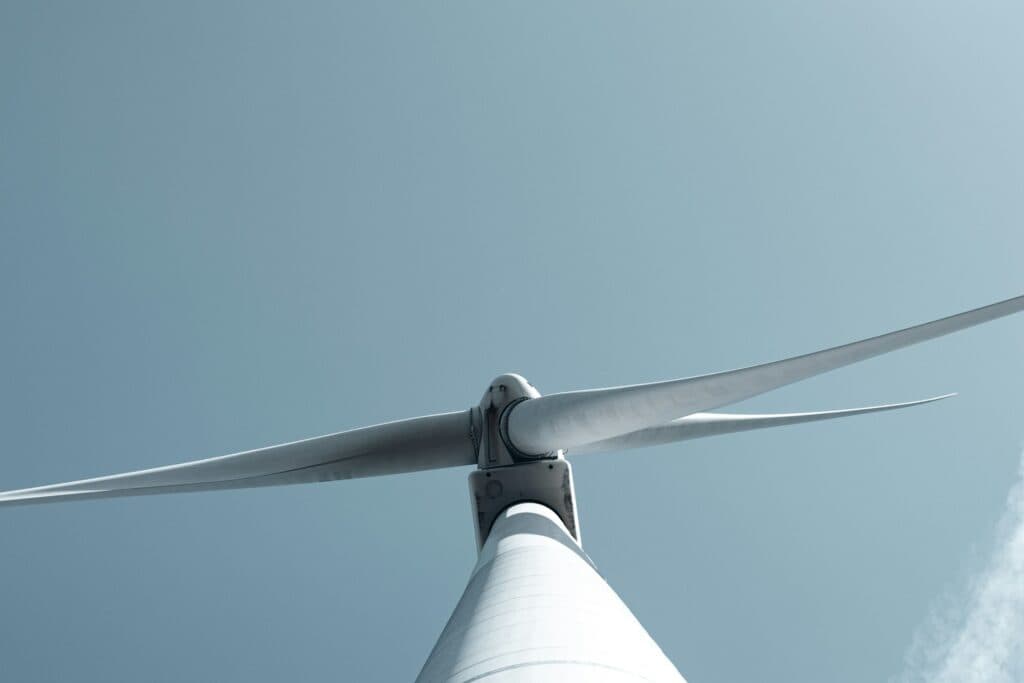
wind turbine, větrná elektrárna
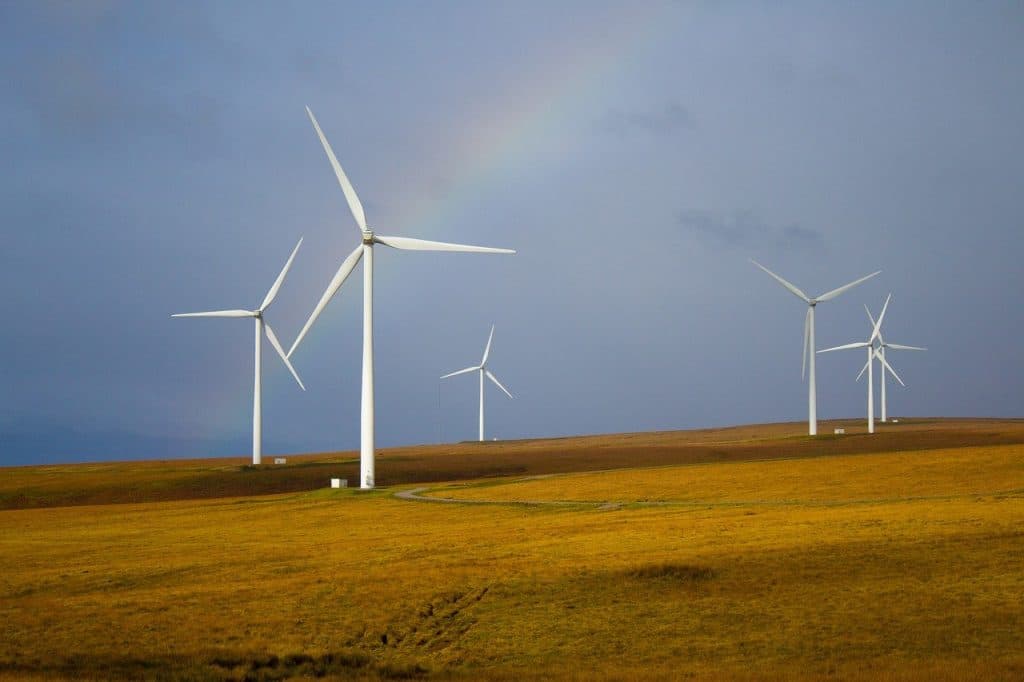
Wind turbine. Source: Unsplash

Auctions delivered record-expensive support

WindEurope included the Czech auction concluded in the first half of this year among the six main European auctions for onshore wind farms. Of the 360 MW offered, 242.5 MW was awarded, or 67% of the volume. Successful projects received a 20-year two-way contract for difference with a strike price of 129.8 EUR/MWh.

This is the highest price among the onshore wind auctions compared by WindEurope for the first half of the year. By comparison, the Greek auction concluded at 67.4 EUR/MWh, the French one at 77.1 EUR/MWh, the British one at 85.6 EUR/MWh, and German auctions with a sliding premium at 50.6 to 55.4 EUR/MWh.

wind turbine, větrná elektrárna
Wind turbine. Source: Unsplash

Such a comparison has its limits. Individual countries use different mechanisms, support durations, inflation indexation and grid-connection rules. WindEurope itself notes that strike prices are determined not only by the costs of wind projects, but also by the specific markets in which support is auctioned. However, the difference between the Czech price and most of the compared markets is so marked that it can hardly be ignored.

The price of uncertainty and lengthy development

The high auction price is, at least partly, a consequence of the risks that investors factor into project economics before construction even begins. The Czech market has long been burdened by uncertainty surrounding permitting, spatial planning, opposition from some municipalities and grid connection. The wind market was also held back for a long time by uncertainty over support – operating support for wind farms was introduced after almost ten years in the second half of 2022.

The market’s sensitivity to the terms was already demonstrated by auctions in 2025. In the first call, only one 4.2 MW project succeeded out of the 180 MW allocated, with one reason being the requirement for an already issued building permit. After this requirement was relaxed, 23 bids totalling 242.5 MW succeeded in the second call.

wind turbine, větrná elektrárna
Wind turbine. Source: Unsplash

Auctions can therefore create a sufficient pipeline of viable projects for the coming years, but they alone will not resolve the lack of sites for wind farm construction. In this environment, the higher requested support price is also the price of lengthy project development, financing costs and the risk that legal or local disputes will disrupt the construction schedule.

Czechia secured its second negative distinction in the volume of wind capacity commissioned this year. According to WindEurope statistics, no wind farm was commissioned. This is also confirmed by statistics from the Energy Regulatory Office. According to these, no licence for electricity generation from wind farms has yet been issued this year.

The 1.5 GW target remains distant

WindEurope expects Czechia to add a total of 400 MW of onshore wind capacity between 2026 and 2030, reaching 770 MW of installed capacity in 2030. The National Energy and Climate Plan, meanwhile, envisages 1,500 MW of wind capacity by 2030.

Even if the current outlook is met, around 730 MW would still be missing to reach the domestic target. Czechia would have to significantly accelerate project preparation, the designation of suitable sites and permitting processes within a short period.

Acceleration zones offer little optimism so far

Even WindEurope’s current outlook cannot be taken for granted. State measures intended to speed up the preparation of new projects have so far not sent a particularly favourable signal to investors. This is most apparent in the preparation of so-called acceleration zones, areas where permitting for renewable energy sources was meant to be simpler and faster.

The original proposal envisaged 94 areas. Following an opinion from the Ministry of the Environment, their number was to be cut to 61, while a further 15 areas were also to be reduced in size. More significant than the reduction in area itself, however, are the additional conditions that projects within the zones will have to meet. These include, for example, requirements for bird and bat detection or deterrence systems, monitoring of their mortality, or in some areas restrictions on wind farm operation during bat migration.

Přeprava lopatky větrné elektrárny
Transport of a wind turbine blade. Source: ShellAsp / Creative Commons / CC-BY-SA-4.0

According to industry representatives, this creates the risk of a paradoxical situation in which it will be more difficult in some respects to build a wind farm within an acceleration zone than outside one. For example, for projects on the highest-quality agricultural land, an investor would have to demonstrate that no more suitable alternative exists for construction. According to legal experts, this obligation may mean that projects in acceleration areas will be subject to a stricter regime than some projects outside them.

Objections to such arrangements have also come from the Ministry of Industry and Trade. The ministry points, for example, to overly broad bird and bat protection measures and height limits that may prevent the use of modern turbines. Rather than clearly speeding up permitting, the current form of the acceleration zones thus shows how difficult it will be to genuinely remove the current barriers facing Czech wind energy.

Wind development is also held back by disinformation

Alongside administrative obstacles, new projects also face opposition from part of the public, which is amplified by the spread of false and misleading claims, according to a WindEurope analysis. The analysis tracked around 43,000 posts on major online platforms, which together generated millions of interactions. Czechia is not among the countries where the most such content is produced, but according to the analysis, its impact is more pronounced here than in other European countries.

Wind farms, illustrative photo. Source: Pixabay

Common claims include alleged significant health impacts from wind farms or mass bird deaths. Industry representatives point out that the problem is chiefly that individual pieces of information are taken out of context, and that similar arguments are subsequently carried over into local debates on specific projects.

Czech wind energy therefore faces several obstacles at once: slow permitting, uncertain conditions for new projects and opposition from part of the public. Unless these barriers are significantly eased, it may be difficult to meet not only the 1.5 GW target by 2030, but also WindEurope’s substantially lower outlook of 770 MW.

Translation disclaimer

This article is a machine translation of the Czech original and has not yet been fully reviewed. In case of any doubt, please refer to the Czech version.

OM Solutions s.r.o.
Kpt. Nálepky 620/7, Nové Dvory, 674 01
Třebíč
Company registration No.: 02682516