9 October 2026, 06:22
Loading...
Ørsted sues US over halt to wind project

David Vobořil
5 January 2026, 14:18
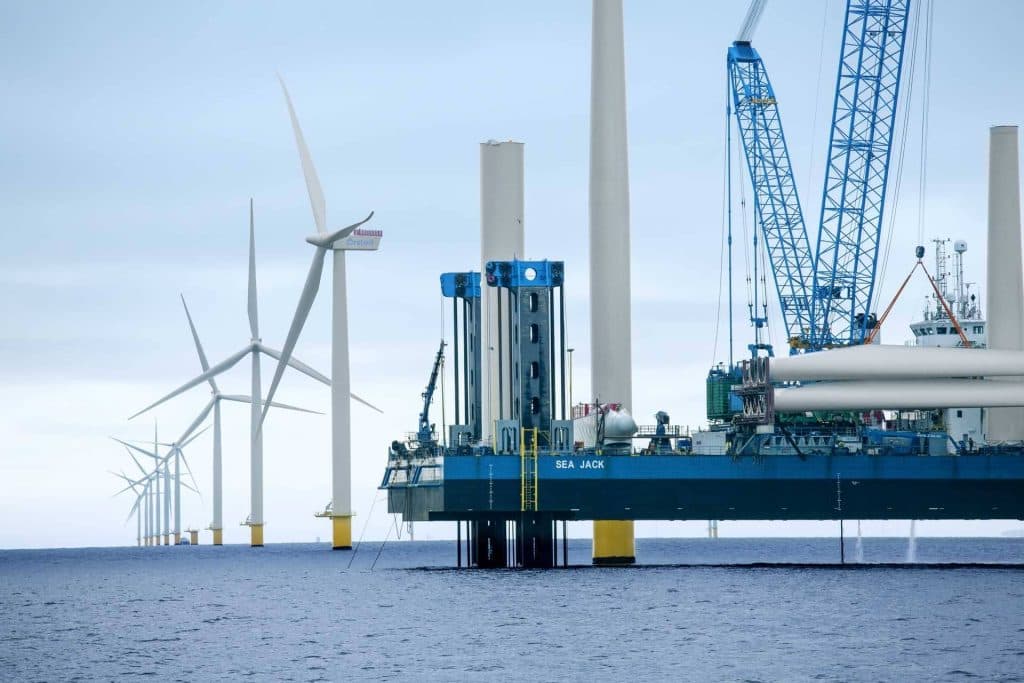
Danish energy company Ørsted has filed a lawsuit challenging a decision by President Donald Trump’s administration, which ordered work to stop on several major offshore wind projects in the US at the end of 2025. Among them is the nearly completed 704 MW Revolution Wind project. The dispute has reopened questions about legal certainty for renewable energy investors and the future of offshore wind power in the United States.
Danish developer Ørsted and its partner Global Infrastructure Partners (GIP) have filed a lawsuit in federal court in Washington against the Trump administration’s decision to suspend construction of several offshore wind farms in December 2025. The company says the decision is causing significant and irreparable harm to the Revolution Wind project, making legal action necessary to protect investors’ rights.
The Revolution Wind project, located off the coasts of Rhode Island and Connecticut, is around 87% complete and was due to start generating electricity in early 2026. Ørsted said the stop-work order threatens not only the investment itself but also long-term power supply contracts. The project has a 20-year PPA for 400 MW with Rhode Island and a separate 25-year contract for 304 MW with Connecticut.
The US Department of the Interior, under the Trump administration, issued the construction halt order, citing “national security concerns”. The order did not apply only to the Revolution Wind project, but to a total of five offshore wind projects, including Sunrise Wind, with a total installed capacity of 924 MW, in which Ørsted is also involved. The company has not yet said whether it will take separate legal action against the suspension of Sunrise Wind.
Ørsted has experience with a similar dispute. In 2025, the company succeeded in overturning an earlier stop-work order in court, also issued by the Trump administration.
Analysts say the current case is more sensitive than previous disputes because it involves projects at an advanced stage of construction with long-term power sales secured. The administration’s intervention therefore represents not only a regulatory risk for future projects, but also affects investments already under way and contracts already signed, increasing uncertainty across the offshore wind sector.
President Trump’s administration has long been critical of wind power. The president and members of his cabinet have repeatedly questioned the contribution offshore wind power can make to the US energy mix. Interior Secretary Doug Burgum, for example, said at the Gastech energy conference in Milan in 2025 that offshore wind power had no future under the current administration.
The administration’s actions have created uncertainty across the sector. Norwegian company Equinor has filed a similar lawsuit over the suspension of the Empire Wind project. Investors warn that repeated government interventions could significantly worsen the investment climate for renewables in the US and lead to higher costs of capital.
Translation disclaimer
This article is a machine translation of the Czech original and has not yet been fully reviewed. In case of any doubt, please refer to the Czech version.
Sdílejte článek prostřednictvím:
You might also like


8 October 2026, 10:05