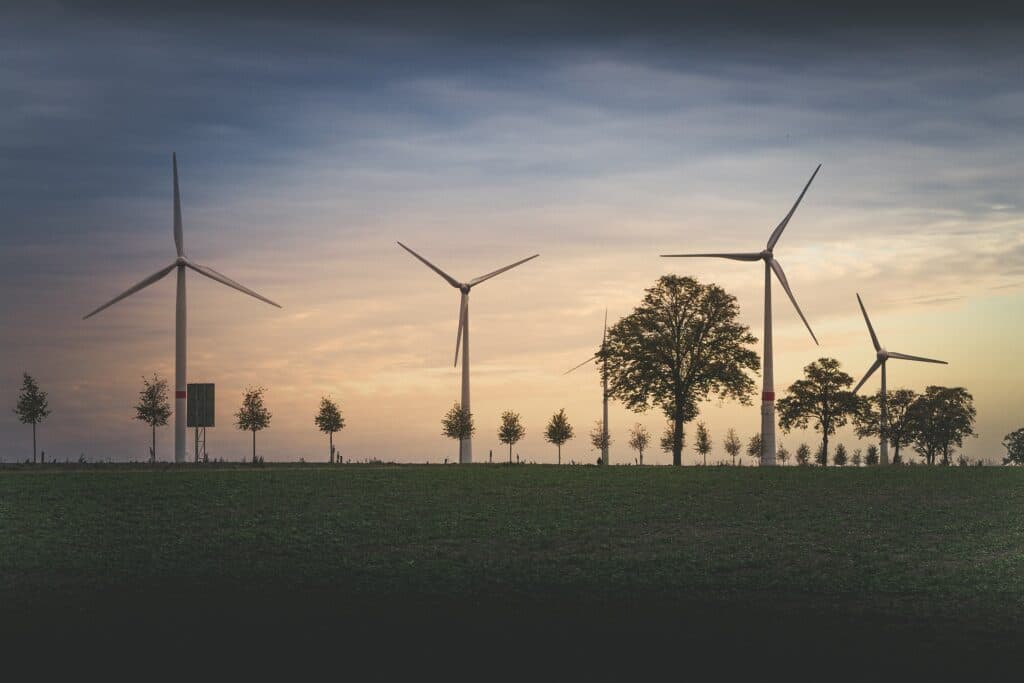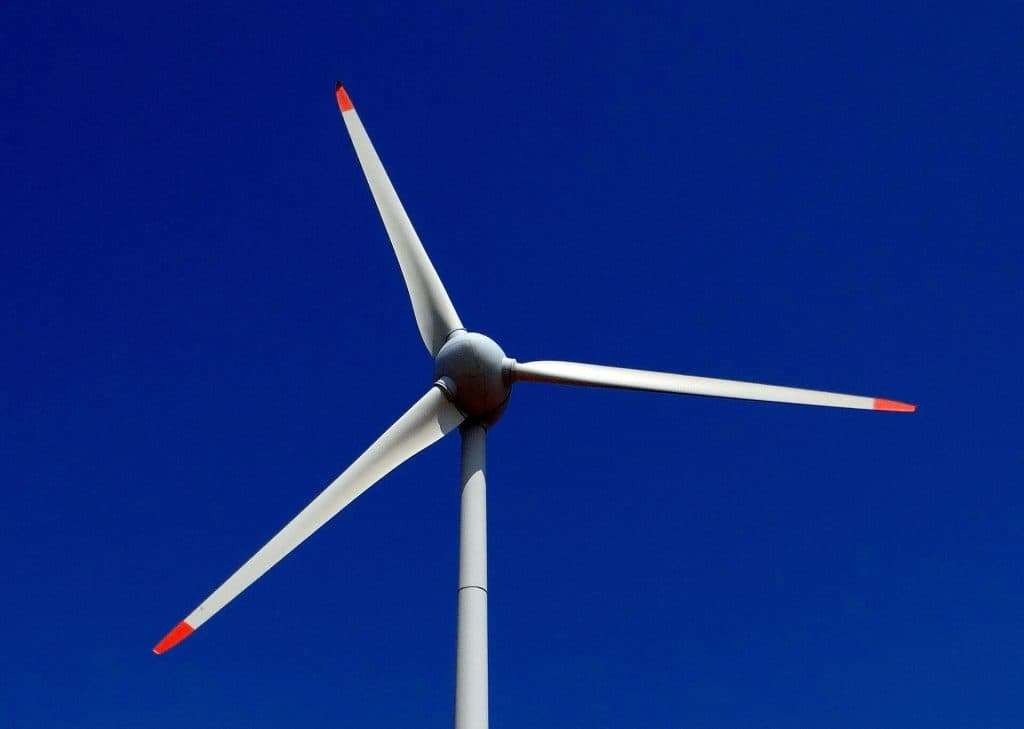
Of the twenty-one referendums on wind turbines held over the past election weekend, only one came out in favor of building them—and even then, by a narrow majority. Industry representatives say one factor behind the results is the non-transparent designation of acceleration zones, which were originally intended to spur the development of renewable energy in Czechia.
A record number of referendums on wind turbines were held across the Czech Republic this year alongside municipal elections. There is room to expand wind power in the country: it currently accounts for just under one percent of the energy mix. And although long-term surveys show that Czechs want wind turbines, they oppose them when a specific site near their municipality is proposed.
“I have to admit that the referendum results didn’t surprise me,” says Štěpán Chalupa, chairman of the Chamber of Renewable Energy Sources. “The whole situation around wind turbines in Czechia has been shaped by the non-transparent designation of acceleration zones and heightened emotions, which have created fertile ground for disinformation to flourish. Deliberate populist politicization of the issue has added to this. Ordinary politicians and mayors have become afraid to address it,” Chalupa says.
According to Chalupa, the forceful approach some companies have taken in communicating with municipalities has also harmed the prospects for wind turbines. “Some mayors have told me they have a project and want to reach an agreement with one developer, but then someone else turns up, wants them to sign some planning agreement and threatens them: ‘Well, if you don’t want to sign, we’ll arrange an acceleration zone here.’ That certainly doesn’t encourage a positive attitude toward wind power,” Chalupa says.
“The referendums were adversely affected by three-quarters of a year of scaremongering, during which various pressure groups in the Czech Republic tried to exploit the issue politically and spread rumors that were untrue. It’s understandable that local residents are worried,” says Martin Sedlák, program director at the Modern Energy Union. He also sees a problem in the state’s failure to communicate strategically.
“Compare that with Poland. Polish government representatives openly say that renewable energy is the answer to Poland’s energy security, and this is reflected in public attitudes toward wind turbines. There’s a big difference between how successfully similar solutions are being developed in Poland and how things are turning out here,” Sedlák says.
What Czech politicians have to say
According to Sedlák, Czechia lacks an authority that could shift the debate away from rumors and toward a realistic discussion of the benefits and drawbacks for each municipality. “The state should ask itself whether it can really do without strategic communication. Today, wind turbines have taken the hit; in a few years it could be data centers or even new nuclear reactors,” the program director warns.
Representatives of the Czech government have generally taken a lukewarm stance on wind turbines. Some coalition figures, including Filip Turek, the government’s Green Deal envoy and honorary president of the Motorists for Themselves party, and Tomio Okamura, speaker of the Chamber of Deputies and leader of the Freedom and Direct Democracy movement (SPD), are firmly opposed to wind power.
Dozens of disinformation events railing against wind turbines have also been held over the past year. Their main speakers, Hynek Beran, Marek Obrtel and Jaroslav Novák, ran in the Senate elections this time. It can be said that their campaign against wind turbines was successful.
Disinformation has taken root in municipalities, including claims that wind turbines harm the health of people and animals. The speakers themselves, however, did not succeed in the elections. None of them made it to the second round of the Senate elections. “It’s a good message that, at least at the national level, this kind of scaremongering isn’t working yet,” Sedlák adds.
The only municipality where residents supported building wind turbines was Dětřichov in the Svitavy region. The result was close: 50.5 percent voted in favor and 49.5 percent against. One reason a narrow majority ultimately supported the project here may be that Anenská Studánka is located less than twelve kilometers away. It has had six wind turbines for almost twenty years, and local residents have no problem with their operation. On the contrary, they are planning further construction.
A study by social geographer Bohumil Frantál of the Czech Academy of Sciences’ Institute of Geonics also found that people tend to be more supportive if they already have experience with wind turbines. “People gradually get used to wind turbines, just as they do to any other structure. In municipalities where there are already wind turbines nearby, people have more direct experience of them, are less afraid of negative impacts and tend to see the positive benefits,” Frantál said.
Project at an advanced stage
Last week, Ekonews took an in-depth look at the case of Kačice. Preparations for the project there are at an advanced stage. Investor NOHO Energy has had a planning agreement with the municipality since 2024, setting out obligations for both the municipality and the investor. Two years ago, the municipality held a survey in which 55.4 percent of voters supported the plan. This time, by contrast, 59 percent voted against it.
It is unclear what will happen next. In this particular case, the referendum result does not in itself mean the project is definitively over. The question was: “Do you agree that the municipality of Kačice should provide cooperation in the preparation, permitting or construction of wind turbines within its cadastral territory?” The majority vote against means only that the municipal leadership is obliged not to actively participate in preparing and permitting the project.
“We acknowledge the result of the vote, in which Kačice residents decided that their municipality should not provide cooperation for the construction of wind turbines. At the same time, it motivates us to explain the specific benefits of wind power more clearly, especially cheaper energy for households and significant revenue for the municipality. We will continue discussions related to the planning agreement once the new municipal council has been formed,” says Ondřej Ludvík, technology director at NOHO Energy.
The fact that wind turbines were rejected in the vast majority of referendums raises another question, according to NOHO project manager Charles Kulček: What will Czechia use to generate affordable electricity in the future? “Even if coal plants stay open longer, they won’t last until new nuclear units are built. And if Czechs are saying no to wind turbines in referendums, they should propose an alternative—or we have to accept that electricity prices will rise and we’ll pay much more for it than we do now,” Kulček says.
“If a municipality has signed a planning agreement with an investor, there could be a court dispute, or they could reach an agreement—we’ll see. It’s far too early to judge how this will turn out. It will depend on the position of the new municipal council,” says Martin Sedlák of the Modern Energy Union.