3 October 2026, 13:01
Loading...
Adaptation to climate change: a new challenge for European countries
Klára Čeperová
11 July 2026, 08:01
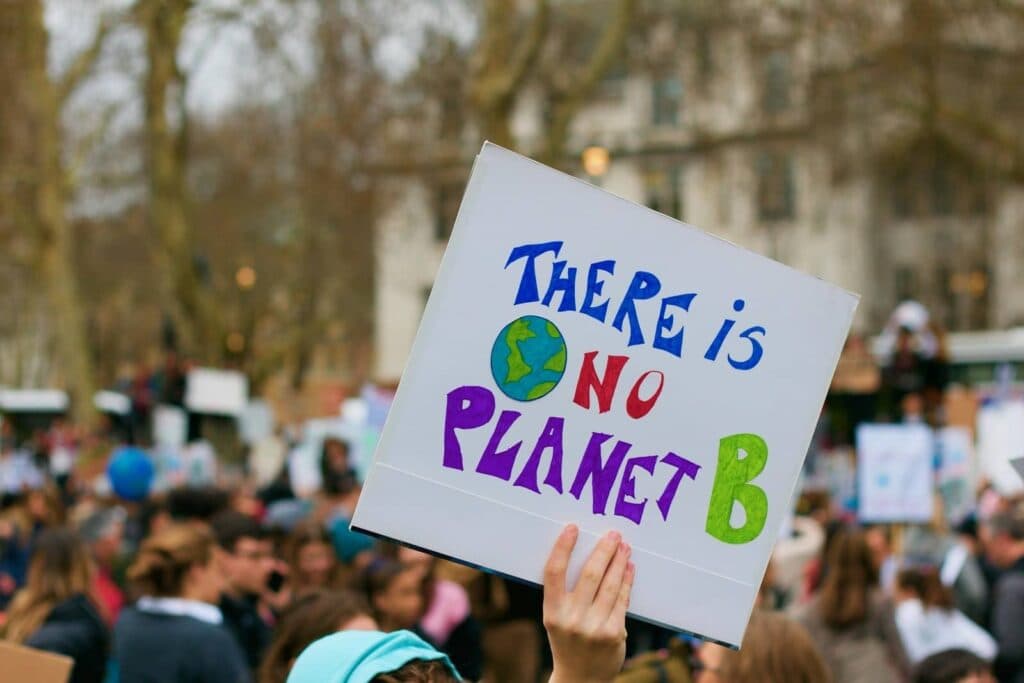
A heatwave that broke a series of temperature records across Europe drew attention to the urgent need to adapt to global warming on a continent that once relied on its relatively mild climate and ambitious emissions-reduction targets. Climate change is already having a major impact, however, and adaptation also needs greater attention.
The European Union has sought to take a leading role in tackling climate change and was one of the first major economies to set a legally binding target of achieving net-zero emissions by 2050.
The EU and the governments of its member states have introduced a range of financial incentives to reduce emissions, including subsidies for building renewable energy facilities and the EU Emissions Trading System, which sets limits on emissions produced by businesses and allows greener companies to profit by trading their unused pollution permits.
Climate change today
The June heatwave, during which temperatures in some parts of Europe climbed above 40 degrees Celsius, revealed that businesses, public facilities and critical infrastructure in the region are not prepared for the effects of climate change that are already being felt.
In Poland, this led to power outages, with outdoor work banned in some places. Trains were cancelled in Germany, and a freight train derailed in Sweden after extreme temperatures warped the tracks. Spain, among the countries worst affected, recorded 1,000 excess deaths that it linked to record heat.
As the world’s fastest-warming continent, Europe faces costs of 40 to 50 billion EUR a year from the effects of increasingly frequent extreme weather events such as floods, droughts, heatwaves and wildfires, according to the European Environment Agency.
Yet the EU’s own spending on climate adaptation remains low, according to Reuters.
“The economic case for mitigation is clearer because there is an emissions trading system, carbon credits and companies working in renewable energy. Adaptation is mostly seen as a cost with very long-term benefits—as delayed gratification, in other words—but sometimes simply as insurance: it may pay off, or it may not,” Polish Deputy Climate Minister Krzysztof Bolesta said.
Official European Commission figures show that from 2021 to 2025, 72% of climate-related spending from the EU’s joint budget went towards mitigation, or limiting the greenhouse gases that cause warming, while only 18% was allocated to adaptation and 9% covered both areas.
Investment needs and the principle of subsidiarity
The European Environment Agency says the investment needed for adaptation in agriculture, energy and transport will range from 53 to 137 billion EUR a year by 2050, and from 59 to 173 billion EUR a year by 2100, depending on whether temperatures rise by 1.5 °C to 2 °C, or by 3 °C, compared with pre-industrial levels.
The agency estimates that the amount of funding currently committed to these sectors is 15 to 16 billion EUR a year. Funding comes mainly from the public sector, at EU, member-state and regional levels.
“There is no point in Brussels deciding how Greeks or Spaniards should fight forest fires. They know far better than we do, just as the Dutch know far better how to build dykes,” EU Climate Commissioner Wopke Hoekstra told reporters. Later this year, he will present a Europe-wide “climate resilience plan” focused on shared scenarios and best practices.
Step by step
Some adaptation measures are simple and relatively inexpensive. Others require more fundamental changes in workplaces and the organisation of work, such as moving shifts to cooler times of day, or even redesigning public transport networks and urban spaces.
The good news, however, is that some progress has been made since the deadly heatwave of 2003, when around 70,000 excess deaths occurred in Europe over the summer, according to peer-reviewed studies.
The World Health Organization (WHO) issued a statement this week estimating that heat-related deaths in Europe would be around 80% higher by now, more than two decades later, without the adaptation measures currently in place. These include heat-health action plans, early warnings, cooling spaces and support for people at risk.
Translation disclaimer
This article is a machine translation of the Czech original and has not yet been fully reviewed. In case of any doubt, please refer to the Czech version.
Sdílejte článek prostřednictvím:
You might also like
3 October 2026, 07:43
2 October 2026, 21:55
2 October 2026, 15:14