China is reducing its emissions intensity, but not enough to meet its targets
China's economy emitted less carbon dioxide last year, according to official data, following a record increase in renewable energy capacity. However, the country is still far from achieving its 2025 target, putting its 2030 goal at risk too.
China, the world's largest emitter of climate-warming greenhouse gases, produces more than 10 000 megatonnes of CO2 annually. In 2022, that accounted for 31% of global emissions.
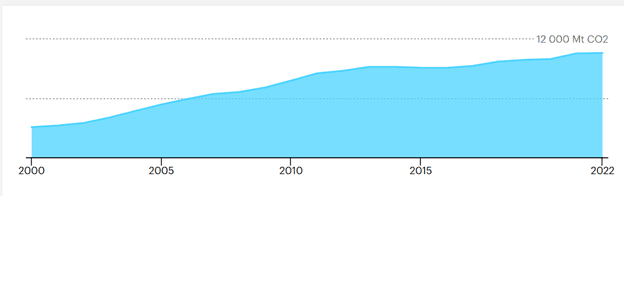
The country does not have targets for reducing its absolute level of carbon dioxide emissions. Instead, it focuses on carbon intensity, which reflects the amount of carbon dioxide produced per unit of economic growth.
For 2021-2025, China plans to reduce its intensity by 18%, as part of a longer-term goal of reaching peak CO2 emissions before 2030.
Less carbon, more output
China's National Bureau of Statistics said in its annual bulletin that the country reduced its carbon intensity by 3.4% last year, contributing to this goal. The original target was 3.9%. Reuters reports.
China managed to reduce its emissions intensity by only 8% between 2020 and 2024, making the 2025 target “extremely difficult” to achieve, said Lauri Myllyvirta, lead analyst at the Centre for Research on Energy and Clean Air. China's commitment to the UN to reduce carbon intensity by more than 65% from 2005 to 2030 could also become more challenging, Myllyvirta said.
“Even under optimistic assumptions for 2025, CO2 intensity will have to fall by 22% over the next five-year period,” he added.
China's fossil fuel energy consumption per unit of economic growth fell by 3.8% in 2024, beating the annual target of 2.5%, the statistics bureau said. The country aims to reduce energy intensity by 13.5% between 2021 and 2025.
Translation disclaimer
This article is a machine translation of the Czech original and has not yet been fully reviewed. In case of any doubt, please refer to the Czech version.




