
17 October 2026, 13:09
Loading...
Germany's gas sector is skeptical about CO2 capture
Jakub Musil
28 April 2025, 10:36
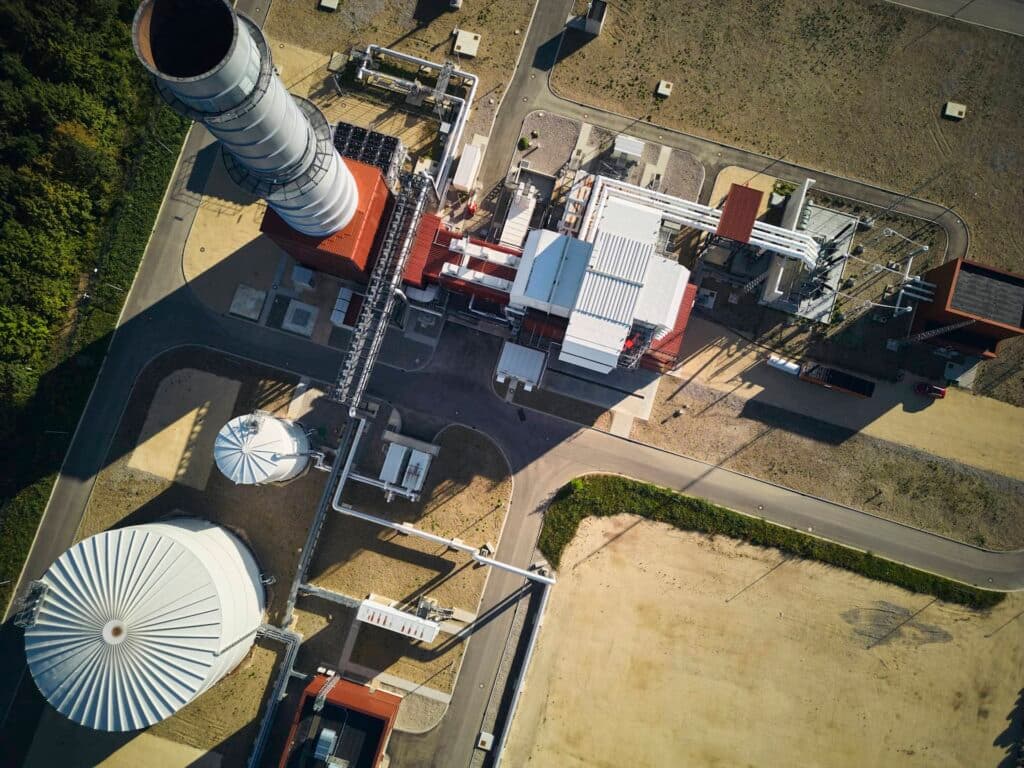
Representatives of the German gas sector are skeptical about deploying technologies for carbon capture and storage (CCS). The main reasons are high costs, technological barriers and a lack of space for storing carbon. In the Czech Republic, companies in hard-to-decarbonize industrial sectors are interested in this technology.
Representatives of the power plant manufacturers' association VDMA Power Systems said that CCS technology for gas-fired power plants is unlikely to be deployed on a large scale in Germany.
“Our members see CCS being used mainly in countries where hydrogen is expensive and gas is cheap, and where storage options are available,” said executive director Dennis Rendschmidt.
Germany's new government plans to build 20 GW of gas-fired power plants by 2030. It also aims to enable the deployment of CCS technologies both in hard-to-decarbonize sectors and to decarbonize gas-fired power plants. However, integrating CCS technologies into new gas-fired power plants is not realistic, according to Rendschmidt, given the high costs.
The DVGW association, which represents water and gas companies, therefore expects the focus to be on hydrogen technologies rather than CCS.
“If we switch to hydrogen, we won't need CCS technology for gas-fired power plants,” said association president Gerald Linke.
CCS technologies are more likely to be used in hard-to-decarbonize sectors where greenhouse gas emissions cannot be reduced by other means.
CO₂ emissions from industry in Czechia and interest in CCS
The cost of CCS technologies is also likely to be a challenge for gas-fired power plants in the Czech Republic. The construction of gas-fired power plants in Czechia was supported by the recently approved LEX plyn legislation and is seen by some experts as a key step in decarbonizing the country.
CCS technologies could play a significant role in hard-to-decarbonize sectors of the Czech economy, such as cement and steel production.
For example, the cement industry is particularly difficult to decarbonize because of its dependence on limestone-based raw materials and the combustion of fuels at high temperatures. Companies in these sectors are therefore significant potential CO₂ emitters that could deploy CCS technologies.
For this reason, Holcim (formerly Lafarge Cement), for example, is actively exploring CCS technologies. The company is examining ways to capture CO₂ directly from cement production and store it in underground formations or use it in subsequent processes.
Translation disclaimer
This article is a machine translation of the Czech original and has not yet been fully reviewed. In case of any doubt, please refer to the Czech version.
Sdílejte článek prostřednictvím:
You might also like




16 October 2026, 10:16