Negative emissions will not save industry, experts say

European industry should not rely on negative emissions to offset the end of new allowances in the EU Emissions Trading System ( EU ETS) from 2039. At least, that is how experts interviewed by Euractiv see the situation. They say industrial companies should instead cut their emissions.
Under the EU ETS, around 10 000 power plants, heating plants and large industrial facilities are required to buy allowances for the CO2 they emit into the atmosphere. Companies can either buy allowances at auction or receive them for free. This applies to economic sectors where there would be a risk of production moving to countries that do not limit greenhouse gas emissions.
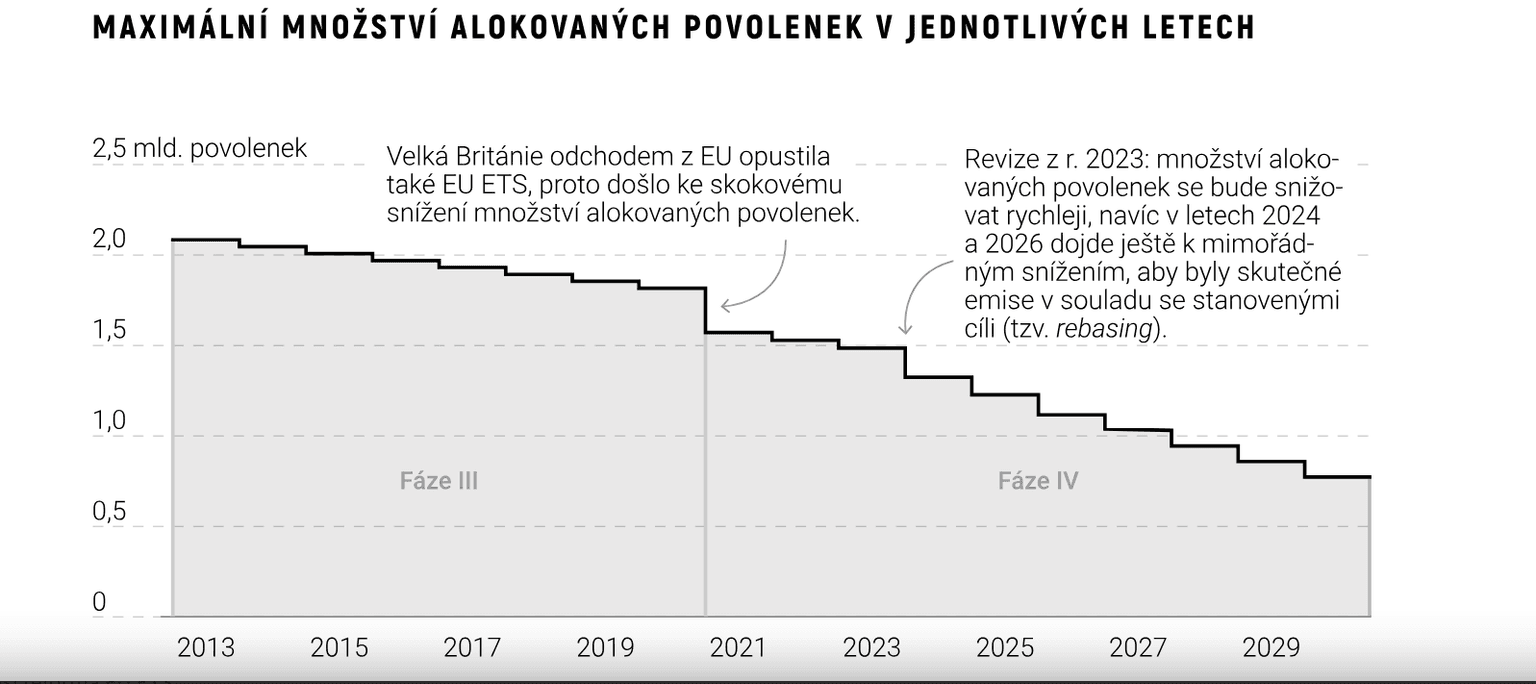
The entire system is designed to encourage companies to gradually reduce their carbon dioxide emissions. This is achieved by reducing the total number of allowances issued each year. From 2034, industrial companies will no longer receive allowances for free, and from 2039 no new allowances will be available. Companies therefore have three options: cover their emissions using allowances secured earlier, buy allowances from those with some left over, or stop emitting.
Negative emissions
Some lawmakers, however, argue that negative emissions—or, more precisely, some form of emissions capture—could allow factories to continue producing CO2-emitting goods after 2039. In this scenario, CO2 captured from the atmosphere through direct air capture technology or natural carbon capture, for example by forests, would be used to create new allowances.
Centre-right EU lawmaker Peter Liese, who previously led the European Parliament’s negotiations on the carbon market, said in May that he wanted negative emissions to be included in the ETS to avoid a scenario in which “there are no allowances left in the system from 2039”.
The European Commission will have to present options for including negative emissions in the ETS by 2026. Experts, however, warn industry against relying on these negative emissions.
“The volume will be small and, at best, enough to offset residual emissions from power plants with CCS, electric steelworks or process-related emissions in the chemical industry,” Felix Matthes, a researcher at Germany’s Öko-Institut, told Euractiv.
He also noted that sectors outside the ETS, such as agriculture, will need negative emissions too.
“But it will no longer be possible to operate conventional steelworks or fossil-fuel power plants. These negative emissions, for which not all the rules have yet been settled, will not be enough,” he added.
Michael Pahle, head of the Climate and Energy Policy Research Group at the Potsdam Institute for Climate Impact Research (PIK), similarly warned companies against what he calls “mitigation deterrence—that is, postponing emissions cuts in anticipation of cheap and abundant negative emissions in the future”.
“If companies expect this to happen and delay their investments in clean technologies, then, if that expectation is not met, they will use up a lot of certificates that would be better saved to avoid high costs in the future,” he said.
Will all ETS allowances be used up by 2039?
There is no consensus on exactly when the last allowance will be issued. According to Matthes, however, it is not so important whether this happens in 2038 or 2039. What matters is that it will certainly happen before the 2040s. Experts also point out that this remains true even when the release of allowances from the Market Stability Reserve is taken into account—a mechanism designed to remove a surplus of allowances from the market or release them, thereby regulating allowance prices.
Pahle, however, noted that a situation in which all allowances are issued is a rather pessimistic scenario. “If you take a more optimistic view, companies will make the necessary investments in clean technologies to significantly reduce their emissions,” he added.
Researchers have long urged policymakers and industry to prepare for the ETS “endgame”, when the volume of newly issued emissions allowances reaches zero.
Current situation
While experts discuss the end of the ETS, market participants appear to be focusing more on the near term.
EU ETS carbon prices do not yet reflect this long-term shortage, as also noted in a report by Matthes, Löschel, Grimm and Weidlich.
Allowances in the ETS are currently trading at around 70 euros per tonne of CO2, well below the previous price of 100 euros in February 2023.
Translation disclaimer
This article is a machine translation of the Czech original and has not yet been fully reviewed. In case of any doubt, please refer to the Czech version.