
28 October 2026, 15:10
Loading...
Study: London is hardest hit by aviation emissions

Zuzana Vrbová
27 February 2024, 18:09
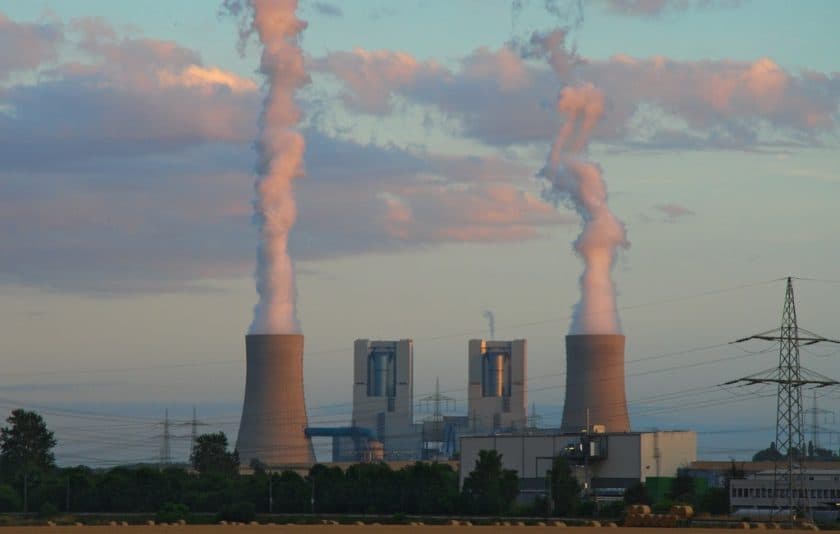
The 20 largest airports together produce as many carbon emissions as 58 coal-fired power plants. This is according to a study that names London as the European city most exposed to emissions. Heathrow recorded the worst result.
Thanks to the six airports serving the British capital, London ranks ahead of Tokyo and Dubai. This is according to a study by think tank Transport & Environment, summarised in an article by The Guardian. According to the study, Heathrow is the world’s second-worst airport in terms of its impact on the climate.
The six London airports expose city residents each year to harmful nitrogen oxide and particulate emissions equivalent to those produced by 3,23 million cars. In Tokyo and Dubai, residents are exposed to aviation emissions equivalent to those produced by 2,78 million cars.
According to research tracking air pollution and greenhouse gas emissions from cargo and passenger flights, these three cities are the most affected by air pollution from aviation. It is the first study to include the carbon impacts of both passenger and cargo aviation, and covers nitrogen oxide (NOx) and fine particulate matter (PM2,5) emissions from 1 300 airports.
“Pollution around airports is increasing year on year,” said Jo Dardenne, aviation director at Transport & Environment, which contributed to the research. She explained the study’s relevance: “It affects millions of people who breathe in toxic emissions and suffer health problems as a result.”
The world’s most polluting airport overall is Dubai in the United Arab Emirates. In a single year, it produced 20,1 million tonnes of CO2 emissions, roughly equivalent to the greenhouse gas emissions of five coal-fired power plants, as well as 7 531 tonnes of NOx and 71 tonnes of PM2,5 particles . London’s Heathrow Airport was the second-worst airport in terms of climate impact, emitting 19,1 million tonnes of CO2 a year.
Critics of air travel say there are still insufficient safeguards against other types of pollution caused by airports. These include noise levels from aircraft; there are also no EU standards for ultrafine particles.
The think tank proposes a combination of measures as a solution: new standards for different types of pollution and airport operations, a ban on night flights, new standards to improve aviation fuel, biofuels (so-called SAF), and above all, a reduction in the total number of flights.
Translation disclaimer
This article is a machine translation of the Czech original and has not yet been fully reviewed. In case of any doubt, please refer to the Czech version.
Sdílejte článek prostřednictvím:
You might also like

28 October 2026, 13:08

28 October 2026, 11:10

28 October 2026, 09:08
