An 83-metre-high headframe at the former Lazy Mine was demolished in the Czech town of Orlová

A specialist company today demolished the skip headframe at the inactive Lazy Mine in Orlová, in the Karviná region. Demolition of the 83-metre-high structure, built in the 1970s, required pyrotechnicians to use around 80 kilograms of explosives and more than a thousand charges. Tomáš Indrei, spokesman for the state-owned Diamo, told reporters. Hundreds of people watched the blast from a grassy area opposite the site. A cloud of dust enveloped them after the explosion.
Preparations to demolish the headframe, which has a footprint of 27 by 18 metres and weighs more than 16.000 tonnes, took several months. Three weeks before the demolition, workers from the specialist company had to drill holes in the reinforced-concrete headframe to place the explosives. „The charges are placed in what is known as the demolition cut, and there are 1060 of them,“ blasting supervisor Jan Výmola said. He had previously said that demolishing the headframe was unique. According to him, a similar structure has been demolished in Czechia only once, at the Dukla Mine in Havířov in 2008.
„It went as expected. The detonation went well. As for the way it fell, it spread out a little more, but it is basically within the norm. Everything is within the safety zone,“ Výmola said after the blast.
He added that the preparations for the demolition, including obtaining the necessary permits, took a year. „Every blast is an adrenaline rush. If you haven’t experienced it, you won’t understand,“ Výmola noted.
According to the spokesman, pyrotechnicians used electronically programmable detonators for the first time in the Czech Republic to demolish the headframe. Their advantage is greater safety. „The electronic detonator is controlled by a chip inside it. This ensures precise timing and maximum safety. The detonator cannot be triggered by any device other than ours. One advantage of this method is that, thanks to the chips, we know before the blast that every detonator is working. The system checks each detonator individually and gives us feedback that everything is working as it should,“ explained Maciej Kosowski of the specialist company.
After the demolition, material from the remains of the headframe will need to be sorted. Cleanup and revitalisation of the site will then continue, with further buildings also set to be demolished. Reclamation of the area is expected to be completed at the end of 2026. „Basically, there should be a meadow here, with three concrete slabs at the sites of the former shafts, ready to be used as a brownfield site by a potential investor,“ said Diamo director Ludvík Kašpar.
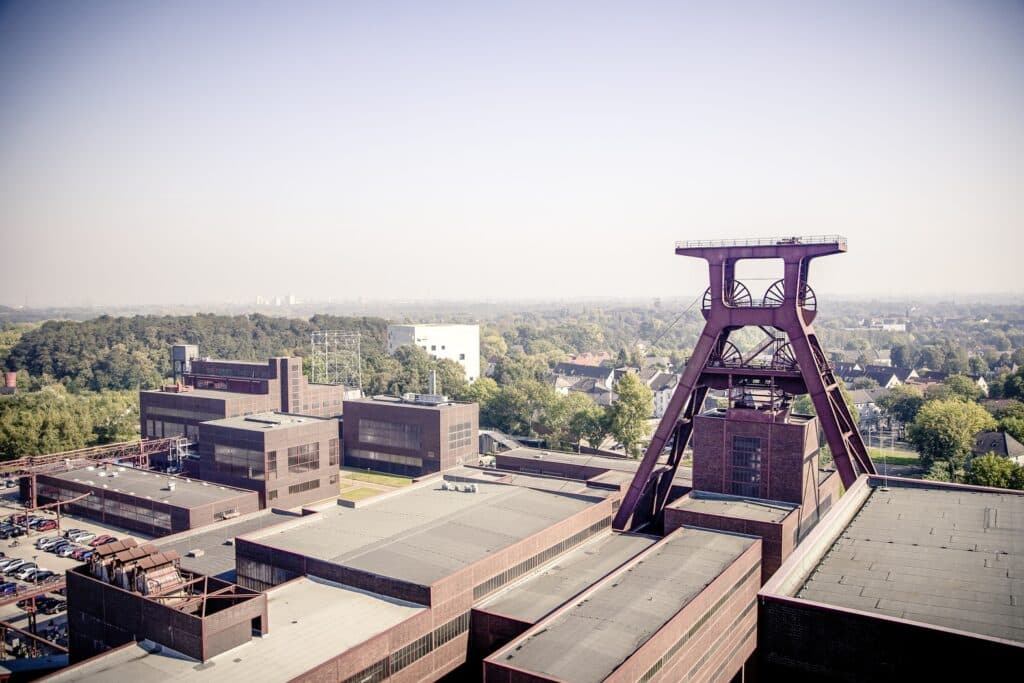
Mining at the site ended five years ago, and around a third of the buildings have since been removed. At the request of heritage officials, the only structure that will remain at the site is the steel horsehead headframe over shaft number two. The shafts themselves began to be decommissioned in 2021. All three shafts have now been filled to ground level. Decommissioning the mine is costly. In the past two years, cleanup costs have been around 135 million crowns a year. This year, they are expected to total approximately 77 million crowns.
The history of the Lazy Mine dates back to the 1890s. At the time, it was called Neuschacht, meaning New Pit in Czech. In the 1950s, the Communists renamed it after Czechoslovak president Antonín Zápotocký. The mine took its current name, Lazy, in 1991. During its 130 years of operation, the Lazy Mine produced 146 million tonnes of hard coal.
Translation disclaimer
This article is a machine translation of the Czech original and has not yet been fully reviewed. In case of any doubt, please refer to the Czech version.




