25 September 2026, 09:51
Loading...
Cleaning up after mining at the ČSA mine: natural monument, new energy and business area

Eduard Majling
10 September 2026, 14:46
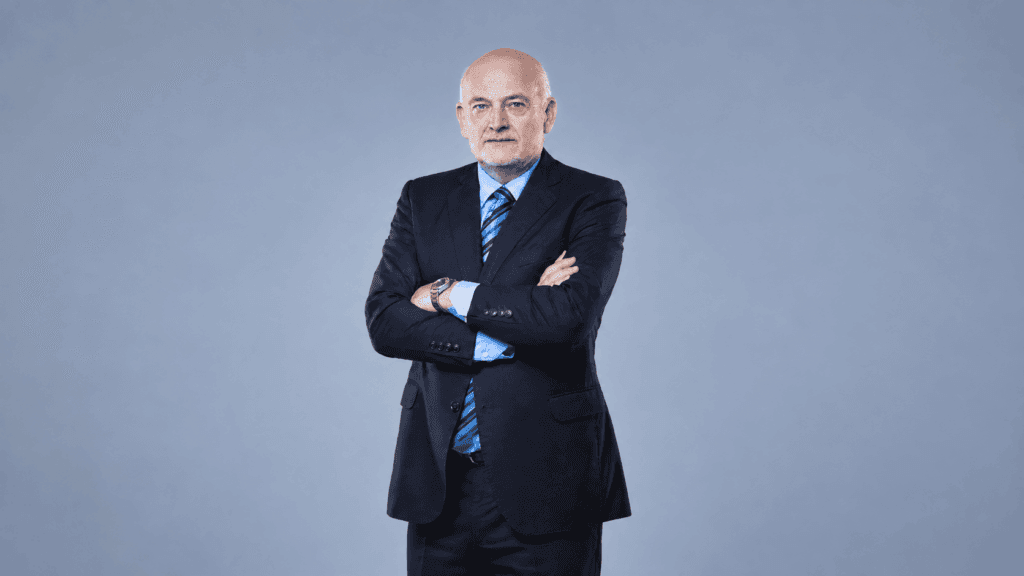
The end of mining at the ČSA mine marks not only the end of one chapter in North Bohemian mining, but also a fundamental shift in what the post-mining landscape should look like. Rather than blanket technical reclamation, more room is being given to natural succession, raising new questions—from safety and the future use of the site to energy projects and billion-crown financial reserves. We therefore spoke with Luboš Pavlas, CEO of Sev.en, about how this change came about, what it means in practice for ČSA, why it has led to a dispute with the state, and what lessons from the process could shape the future of the Vršany mine and other Czech lignite sites.
If we go back ten or fifteen years, what was the ČSA mine originally meant to look like after mining ended, and what ultimately changed in that plan?
First of all, it must be said that every mine has its remediation and reclamation plan, which defines, in layman’s terms, how it is to be “cleaned up” after mining. Historical remediation and reclamation plans envisaged the creation of a lake at an elevation of 180 m above sea level. The lake would cover around 670 ha and would be unique in terms of its size. The plan also included so-called conventional reclamation, meaning a man-made landscape consisting primarily of forests and fields.
So what changed? The new plan primarily reflects the fact that there is no longer enough water in the area and that a lake at an elevation of 180 m above sea level would no longer be feasible. The updated plan therefore envisages an elevation of around 165 m above sea level, entirely subject to natural water-level fluctuations. This will be beneficial for the future manager, who will not have to pay for permanently topping it up. This is currently necessary, for example, at nearby Lake Most, and costs the state up to CZK 20 million a year. The second major change is the designation of a national natural monument in part of the area, creating room for the natural restoration of part of the site. The remaining mine area will undergo the originally planned technical reclamation, while some areas will allow the future construction of energy facilities.
Who first came up with the idea that part of the mine did not need technical reclamation and would be better left to develop naturally?
The state came up with this idea and subsequently approved it. The miner is merely implementing that decision. On the state side, discussions on a new concept for the use of mines had been under way since 2015, while ecological restoration in its current form began to take shape sometime between 2020 and 2022. It is based on a number of internal studies by the Nature Conservation Agency of the Czech Republic (AOPK), which served as input for a multi-criteria assessment of the mine’s future. This assessment was prepared by the state-owned enterprise Diamo. The process was completed by Government Resolution No. 479/2023, which confirms these findings and gives final approval to the future form of the area.
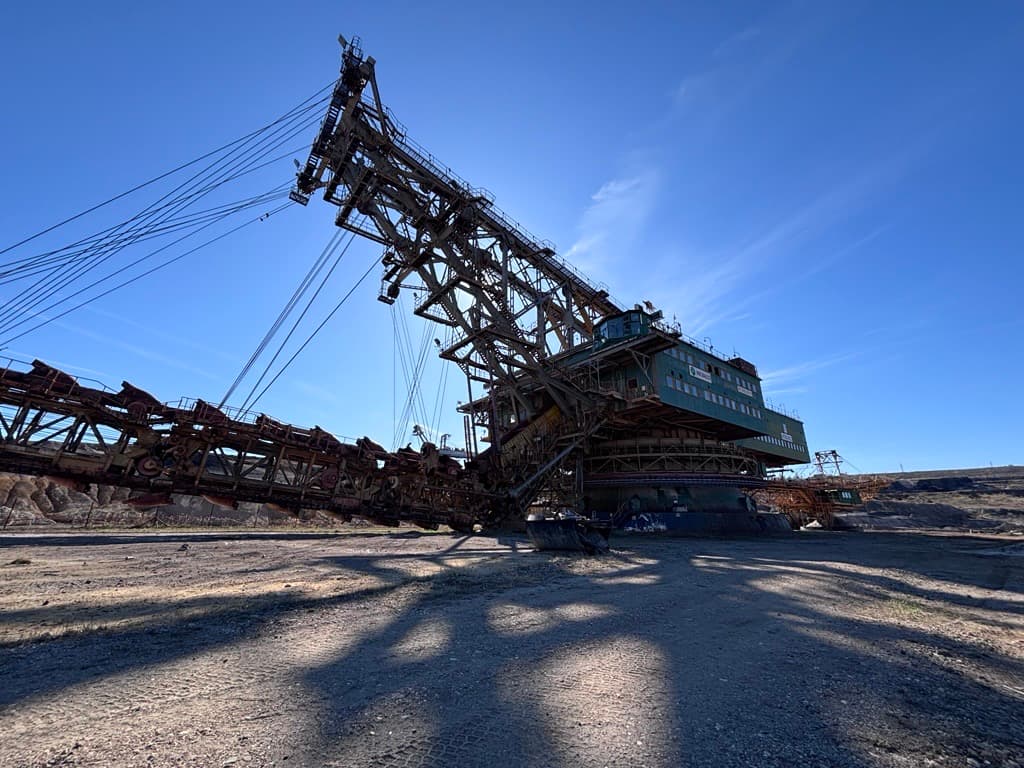
Source: oEnergetice.cz, RK 5000 at the ČSA mine
As the mining company, we were required to bring our remediation and reclamation plans into line with this decision, because we operate primarily on state-owned land. We therefore incorporated the amended reclamation concept into our binding plans in 2023, which we are required by law to submit. It is certainly not an initiative by the mining company, as is sometimes presented. The miner must always meet all legal requirements for cleaning up after itself and must go through a whole series of administrative proceedings. It should be noted that there is a large body of expert studies and assessments concerning the new reclamation concept. The change is therefore based on detailed technical and expert knowledge.
How has the new concept translated into the specific work that needs to be carried out at ČSA?
First and foremost, the new concept does not relieve us of responsibility for delivering a safe solution when mining activity ends. We call this remediation. The decisions mentioned had no impact on the remediation work undertaken or on its standard. The site will be entirely safe after mining ends and will comply with all legal requirements and standards.
What has changed is the scope of reclamation work. Around eight reclamation structures will not be built in the National Natural Monument ČSA Mine area. Instead, the area will largely be left to develop naturally, supplemented by targeted interventions in line with AOPK requirements. As already mentioned, the nature of the lake and the related work have also changed. Some work included in the 2016 plan is therefore no longer included in the new 2023 plan.
One of the most debated issues is the financial reserve for remediation and reclamation. Why does Sev.en believe that a CZK 1.04 billion reduction in the reserve is not the same as savings resulting from the change in reclamation?
This is where the most common misunderstanding arises. A reduction in the reserve does not automatically mean the same thing as savings resulting from natural restoration in the National Natural Monument ČSA Mine area, to which the savings from the change in the reclamation concept relate. Put simply, CZK 1.04 billion represents only funds that the mining company had set aside above and beyond its reclamation obligations for the entire ČSA mine area. We had therefore saved more than the total cost of all future work that needs to be carried out at the ČSA mine. A substantial part, specifically CZK 530 million, was saved on projects carried out between 2016 and 2023. These were projects that were partly or fully implemented even before the plan to designate the National Natural Monument ČSA Mine in 2023. In total, this involved 16 structures, whose implementation was supervised by the mining authority and for which funds were drawn from the reserve, in line with its decision, at a lower amount than envisaged in the 2016 plan.
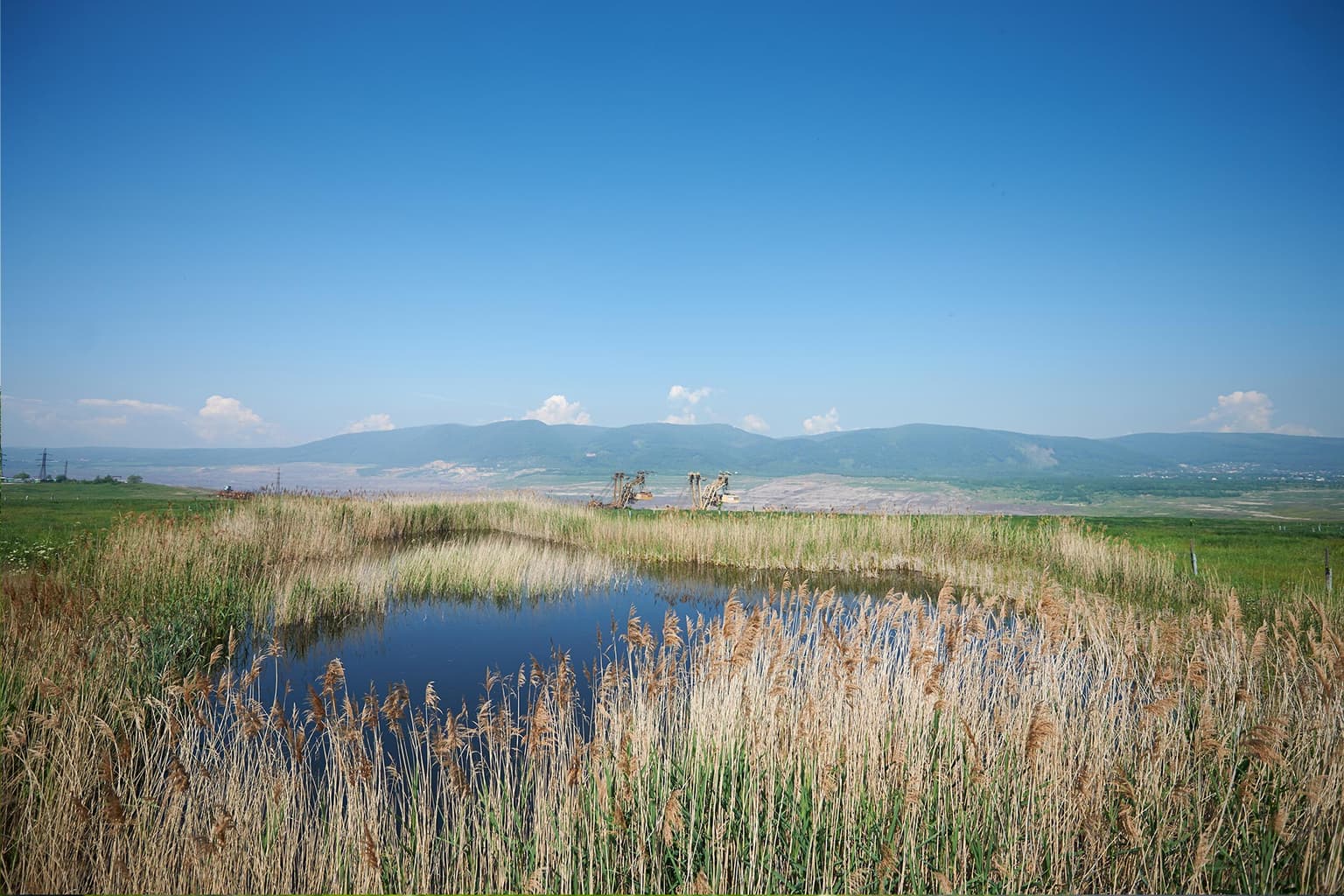
Source: Seven
The savings resulting from the designation of the National Natural Monument ČSA Mine amount to the stated CZK 466 million and comprise the eight unbuilt structures in the natural monument area and changes to the lake concept associated with ecological restoration. Incidentally, this is very similar to the amount calculated by the state in its internal studies in 2022, when one study projected savings of CZK 530 million for the selected solution and another CZK 468 million. However, these studies did not account for preparatory work within the future natural monument itself, valued at CZK 95 million.
Would the company be prepared to show this calculation to the public down to the level of individual reclamation works?
Our company has always provided its partners with evidence of both the amount and the calculation of the funds saved. This applies both within the core zone and outside it. In full compliance with the agreement we had concluded with the State Environmental Fund of the Czech Republic, we submitted documents to the state for an assessment of the savings as early as October 2025. We have regularly and consistently presented the conclusions from these documents to individual media outlets whenever we received a question.
We are currently seeking to arrange independent verification of this calculation by an audit firm, in order to provide our new partners—the municipalities around the ČSA mine—with confidence in handling the funds we will donate to them. These partners do not have the funds or appropriate resources for such verification. For our part, we want to honour the original purpose of the agreement and ensure that funds belonging to our company genuinely end up in the ČSA mine region in the form of donations.
The second part of the dispute concerns the agreement with the state itself. What, in your view, did Sev.en actually promise the state?
First of all, the terminated agreement with the State Environmental Fund refers to savings in the AOPK area of interest, meaning today’s National Natural Monument ČSA Mine. This is fully in line with the aforementioned Government Resolution No. 479/2023, which refers to savings in the ecological restoration area. We respect this delimitation and definition. In our calculation, this concerns the eight specific structures already mentioned and savings from the water-management solution in the given area, all of which are directly related to the National Natural Monument ČSA Mine.
The error lies in treating the amount from the mining authority’s decision as these savings, when it is not and cannot be. The mining authority decides on the amount of the reserve as a whole, not on savings in a specific area. That is a much more specific calculation, which we submitted to the state in the past and which, as far as I know, has not been challenged to this day.
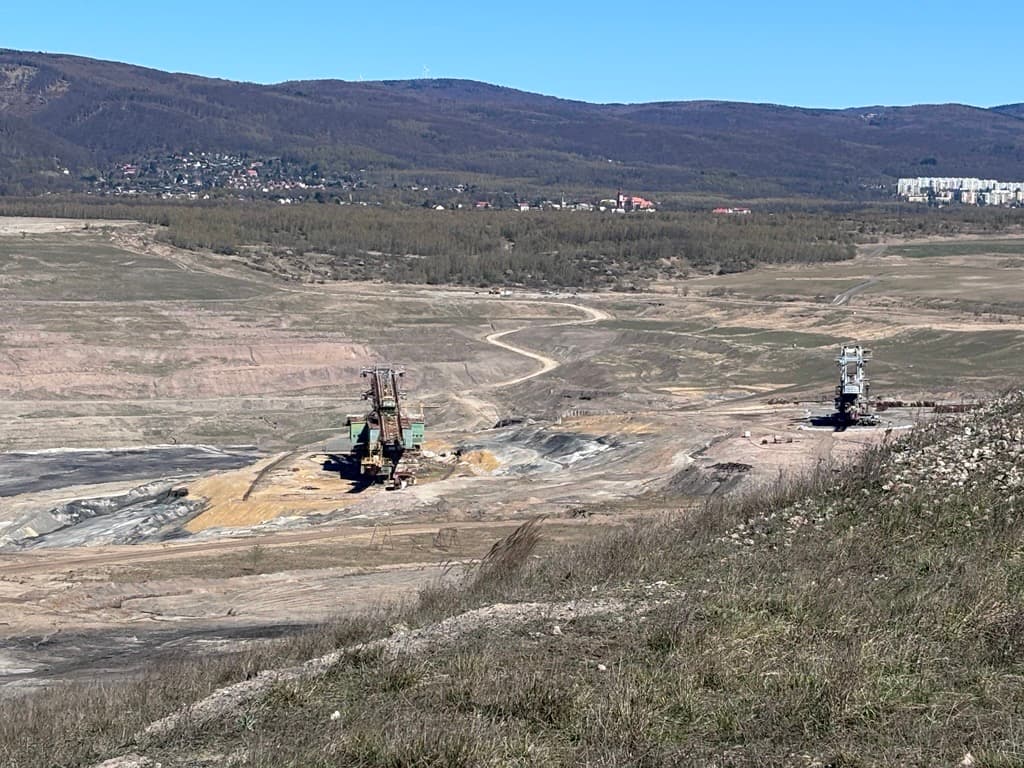
Source: Own, RK 5000 at the ČSA mine
Although we have already terminated the agreement, we want to honour its original purpose—namely to transfer to the municipalities the money determined by the contractual formula and to offer the state land in the National Natural Monument ČSA Mine.
Seven has stated that it wants to distribute the money to municipalities itself. What steps are you planning, and how much money will the municipalities receive?
We would like to conclude donation agreements with the municipalities in the coming weeks, so as not to hold back projects they have been preparing for many years. The amount will correspond to the original calculation, or approximately CZK 213 million. The municipalities have already presented their projects to us, and we are negotiating the terms of the agreement. Our counterparties will be the individual municipalities and the local association of municipalities.
We would also like to donate the land in the national natural monument to the state, thereby fulfilling the second part of the original agreement.
If we set aside the dispute over money for a moment, what specifically should people who have lived around the mine all their lives gain from the new form of ČSA?
First and foremost, the new form should reduce the future costs of managing the landscape for its owner, the state. At the same time, AOPK has obtained the National Natural Monument ČSA Mine, which it had sought for years, and the expert community does not dispute the ecological benefits of this step. However, the area should remain accessible for tourism and sport; part of it already is and will be used for small-scale agricultural activity; and, last but not least, we hope to replace the role of the adjacent industrial complex with economic activity. We are developing this project and would like to bring it to a successful conclusion. The area also has considerable energy potential. As you can see, the mine area will bring a number of benefits to its surroundings. However, we often ask ourselves whether the surrounding area is ready to take over the role of the mining company, which has looked after this extensive site for decades and had hundreds of employees at its disposal. It will be interesting to watch this transformation, and we want to help it for as long as we can.
ČSA is meant to be both a natural site and a location for new energy projects. Is there not an inherent conflict in that?
The new concept designated areas both for ecological restoration and for energy. As part of the underlying studies, opportunities in both areas were thoroughly examined, and sites were identified for potential photovoltaics as well as for a pumped-storage power plant, in which the lake at the ČSA mine would serve as the lower reservoir. From today’s perspective, both energy projects face a number of obstacles. The main potential for photovoltaic development has already been exhausted, and projects can only be developed under specific conditions. We remain active in this area, and we are feeling the change ourselves. The pumped-storage plant at the ČSA mine is a complex project that is not yet being developed.
What was actually the most difficult part of changing the approach at ČSA—the implementation of the remediation and reclamation itself, or convincing those around you that the new approach was right, whether within the company or in relation to the state, municipalities and the public?
Clearly, it is embedding the actual conceptual change in how to deal with sites at the end of their life after coal mining. On the state side, the entire change took almost 10 years, and we are now implementing it in a relatively complex manner. However, other mines show that the changes do not concern only the ČSA mine. Other mines and mining companies are also looking for ways to adapt their historical plans to a wide range of new realities. Such extensive areas need to be newly prepared for challenges including water scarcity, rising temperatures and evaporation, as well as the question of future use. As I have said, there is in fact a large body of expert studies, findings and work by many teams of specialists from the state, our company and external firms behind this.
A similar debate is now under way around the Vršany mine. To what extent can the experience from ČSA be applied there, and in what ways is the situation at Vršany fundamentally different?
As we have said, the basic principles apply not only to Vršany but also to other mines. A concept must be chosen that respects the shortage of water resources, ensures low costs for future management and supports future use after mining ends.
For Vršany, this specifically means that we are also recalculating the site’s water balance there, with studies—particularly by the Ohře River Basin Authority—finding no water-management potential for a lake in the mine. The government has also confirmed the intention of ecological restoration at Vršany based on AOPK materials. However, the question is whether it will want to continue with it, as preparatory work has stopped. Vršany also has a large industrial complex awaiting its future use. As you can see, the questions are essentially the same as in the case of the ČSA mine.
What is entirely different at Vršany, however, is the fact that mining there will end much earlier than planned. This naturally affects the shape and location of the mine when it closes. The original plan was completely different: mining was supposed to continue for at least another 15 years. We must now address the question of how to approach the site in this new reality, which the original mining legislation did not anticipate. We are working on the concept for Vršany’s expected closure and are prepared to respect the requirements of the owner, which is again the state. For everyone, the closure of a coal mine before its reserves are exhausted will be a novelty to some extent; nevertheless, we again want to guarantee that we will leave the site safe and in compliance with all relevant legislation. The end of coal mining is approaching across the Czech Republic, and this issue will certainly be a societal challenge. We will continue to communicate with the state so that we can reflect its requirements in the area and so that it has all the necessary information from us for expert decision-making.
The future of ČSA was also decided before mining ended. Mining at Vršany is drawing to a close—is there time for a decision?
From our perspective, there is not much time left. Although the situation on the energy market changed significantly during 2026, our announcement made in accordance with the Energy Act—that we will close our facilities—still stands. The future of Vršany is closely linked to this, though not necessarily 100%. The coming weeks will still show how the situation develops and whether our group’s coal-fired facilities will be needed for longer. However, if the original coal-facility closure scenario materialises, there are only a few months to resolve Vršany’s future. The necessary legal steps involved in changing the remediation and reclamation concept must also be taken into account. Adopting all the measures at ČSA took years rather than months. There really is not much time. Here too, we must proceed in line with mining legislation, meaning not delaying post-mining clean-up and fulfilling the plans already approved.
If you were to create one rule from ČSA and Vršany for the closure of all remaining Czech lignite mines, what would it be?
That rule would most likely concern faster consideration of expert documentation and the adoption of a specific decision within a defined timeframe. Given how complex the issue is, a number of findings need to be recalled, including all the impacts they have on the future form of the area. So let us listen to experts and make decisions within a reasonable timeframe—something the other coal mines in the Czech Republic no longer have much of. Otherwise, we believe that over time our sites will become a new landscape with appropriate value. This is shown both by the restored parts of our mines and by the now relatively well-known Lake Most—the former Ležáky mine.
Translation disclaimer
This article is a machine translation of the Czech original and has not yet been fully reviewed. In case of any doubt, please refer to the Czech version.
Sdílejte článek prostřednictvím:
You might also like
24 September 2026, 11:23

24 September 2026, 10:30
24 September 2026, 06:56