25 September 2026, 09:51
Loading...
Last coal cart brought out at Stonava mine as Czech hard coal mining ends

oEnergetice.cz, ČTK
4 February 2026, 12:38
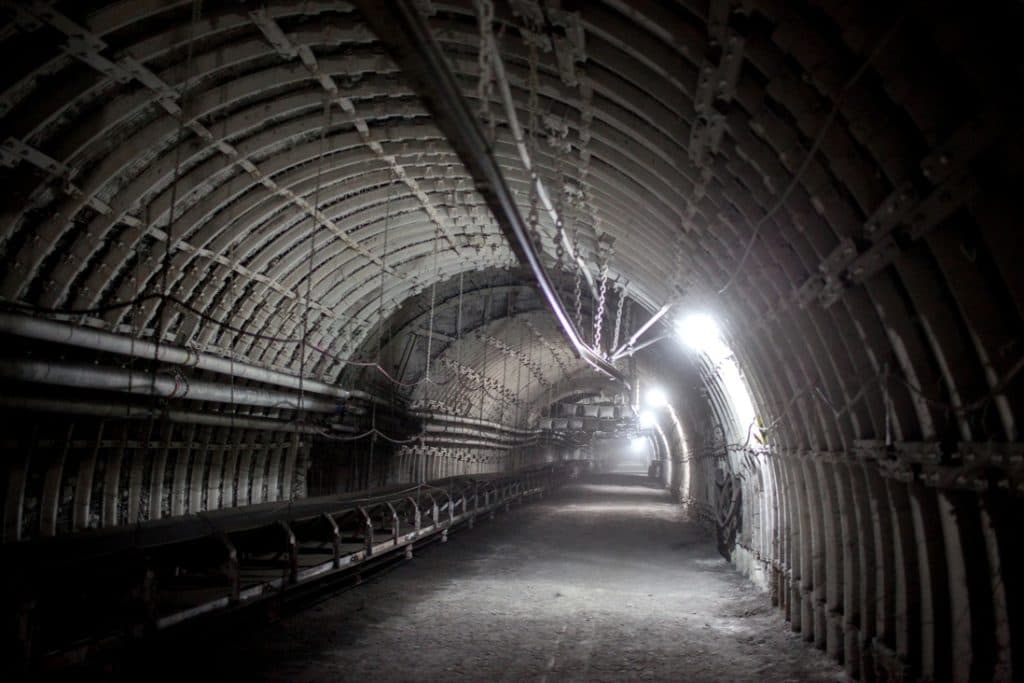
Miners today brought the last cart of coal out of the ČSM Mine in Stonava in the Karviná region. In doing so, they symbolically ended hard coal mining in the Ostrava-Karviná coalfield and across the Czech Republic after nearly 250 years. Dozens of invited guests watched the ceremonial event in the packed area of the so-called shaft station, while others followed it outside on two large screens.
The sole producer of hard coal in the Czech Republic is OKD, which is now state-owned through Prisko. However, mining ceased to be economically viable, so the company has gradually closed all its mines over recent decades. Since February 2021, it had been mining only at the ČSM Mine's North and South sites, where machinery was permanently shut down on the night of 1 February. The last cart of Czech hard coal today came up from a depth of 1300 metres. OKD is changing its business, for example by capturing and using mine gas, and is beginning operations in the production of heating fuel blends. According to analysts, the end of hard coal mining in the Czech Republic will have only a negligible impact on the domestic energy sector.
In 1990, hard coal was mined in 13 countries that are now part of the European Union; only Poland remains today. Czech experts say mining there is also loss-making, but is supported and maintained by the state.
Lignite is still mined in the Czech Republic, extracted from several large open-cast mines in north-western Bohemia. However, this mining too is expected to end in a few years.
Another part of the ceremonial farewell to hard coal mining will take place in Ostrava in the afternoon. A miners' procession will pass through the city to the Cathedral of the Divine Saviour, where a service for miners will be held. It will be officiated by Martin David, bishop of the Ostrava-Opava Diocese, with musical accompaniment by the Permoník Karviná choir.
On the last day of January, 750 employees lost their jobs at the mines, and another 150 will leave OKD by 28 February. Most workers at supplier companies are also leaving. OKD will retain nearly 700 people, whom it will need for wind-down work at the ČSM Mine and to launch new businesses.
The technical decommissioning of the ČSM Mine, where coal was mined for almost half a century, will take around three years and is scheduled to be completed at the turn of 2028 and 2029. OKD has set aside 3,3 billion crowns for it. This will include the environmental disposal of equipment used in the mine, the safe closure of all mine workings, the filling of shafts and the demolition of surface structures.
After OKD permanently ends mining, billions of tonnes of unmined hard coal will remain in Silesia and northern Moravia. However, the reserves lie more than a kilometre underground. Extracting them would be exceptionally demanding both technically and economically, and experts therefore consider any future resumption of mining highly unlikely.
The first precisely located discovery of hard coal in the region was made in 1763 in Silesian Ostrava, then Polish Ostrava. Mining of this fuel in Ostrava and its surroundings began in the 1770s. The main wave of shaft closures came in the 1990s.
In 1990, OKD had nearly 98.000 employees; ten years later, it had just over 20.000. At the end of 2020, around 7000 people, including employees of supplier companies, worked at OKD's mines. After the Darkov and ČSA mines in the Karviná region closed at the beginning of 2021, roughly half remained, and their number continued to decline in subsequent years. Before the closure of the ČSM Mine, OKD employed around 2300 people.
Translation disclaimer
This article is a machine translation of the Czech original and has not yet been fully reviewed. In case of any doubt, please refer to the Czech version.
Sdílejte článek prostřednictvím:
You might also like
24 September 2026, 11:23

24 September 2026, 10:30
24 September 2026, 06:56