4 October 2026, 21:07
Loading...
Britain to host meeting of around 30 countries over Strait of Hormuz, Starmer says

oEnergetice.cz, ČTK
1 April 2026, 13:22
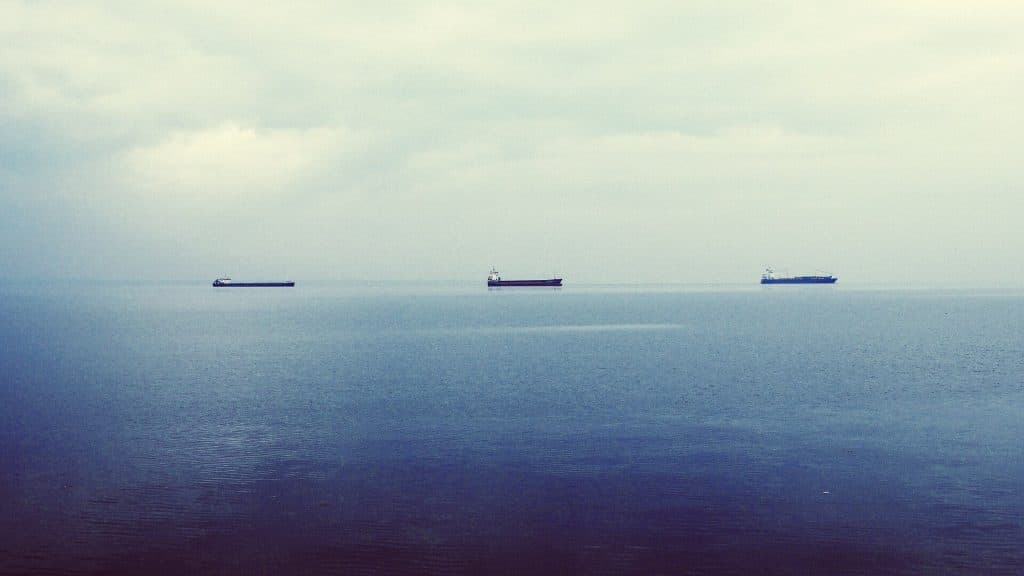
Britain will host a meeting later this week of around 30 countries prepared to take diplomatic and political steps to restore shipping through the Strait of Hormuz and ensure its safety. British Prime Minister Keir Starmer told reporters today, according to news agencies. Closer partnerships with European allies on security and the economy are in Britain’s national interest in the face of global instability caused by the war in the Middle East, the prime minister also said. He described NATO as the world’s most effective military alliance.
On Tuesday, US President Donald Trump urged countries left without access to aviation fuel because of the war in the Middle East to muster the courage to secure oil for themselves. He also said the US would no longer come to the aid of allies that had not helped the Americans with attacks on Iran or with protecting the Strait of Hormuz, and urged them to learn to “fight for themselves”. In social media posts, he singled out Britain and France for inadequate cooperation. Trump later told the British press that he was seriously considering pulling the United States out of NATO, which he called ineffective.
“The United Kingdom has already brought 35 countries together around our statement of intent to create a united front for maritime security in the Gulf. The foreign secretary (Yvette Cooper) will hold the first meeting of these countries later this week,” Starmer said at a press conference.
At the meeting, “we will consider all feasible diplomatic and political measures we can take to restore freedom of navigation, ensure the safety of stranded ships and their crews, and resume the transport of vital goods,” the prime minister added.
The current conflict in the Middle East was sparked on 28 February by US and Israeli strikes on Iran, which began retaliating by attacking US and Israeli targets in the region, including industrial infrastructure in the Arab states of the Persian Gulf. Iran’s Revolutionary Guards are also blockading the Strait of Hormuz, through which tankers normally carry around one fifth of global oil production and about one third of liquefied natural gas (LNG).
Britain, France, Germany, Italy, the Netherlands and Japan issued a joint statement on 19 March expressing their willingness to help ensure safe passage through the strait. The statement, which is political rather than military in nature, has since been gradually joined by around 30 other countries, including the Czech Republic. Czech Foreign Minister Petr Macinka told reporters today, without giving further details, that an international coordination group is due to discuss the situation in the Strait of Hormuz on Thursday, and that the Czech Republic will take part. “We are also considering what we could contribute and what we could do in this matter,” he said.
Today, in response to repeated criticism from the US president, Starmer also defended NATO as “the most effective military alliance the world has ever known”. NATO has ensured Britain’s security for many decades, and the British are fully committed to the alliance, he said.
“Whatever pressure is put on me and others, whatever the fuss surrounding this, I will make my decisions in Britain’s national interest,” the prime minister said when asked about the US president’s consideration of withdrawing the US from NATO.
“But it is becoming increasingly clear that, given the unstable path the world continues to take, our long-term national interests require closer partnerships with our allies in Europe and with the European Union,” Starmer added.
After Trump was re-elected US president in 2024, Starmer sought to act as a bridge between Europe and the United States, Reuters noted. But relations between the two politicians openly deteriorated when Starmer refused to involve Britain actively in the US-Israeli war against Iran.
At today’s press conference, called, according to Reuters, to reassure the British public about rising prices as a result of the situation in the Gulf, Starmer also said that the effects of the war “will shape us for an entire generation” and could resemble the oil shocks of the 1970s. The prime minister also outlined plans to hold another summit with the European Union in the coming weeks, saying he hoped it would repair some of the “deep damage” caused by Britain’s departure from the EU.
Translation disclaimer
This article is a machine translation of the Czech original and has not yet been fully reviewed. In case of any doubt, please refer to the Czech version.
Sdílejte článek prostřednictvím:
You might also like
3 October 2026, 13:01
3 October 2026, 07:43
2 October 2026, 21:55