
28 October 2026, 15:10
Loading...
Arnika: Investment in building waste-to-energy plants is among the highest in the world in Czechia

oEnergetice.cz, ČTK
17 April 2024, 13:31
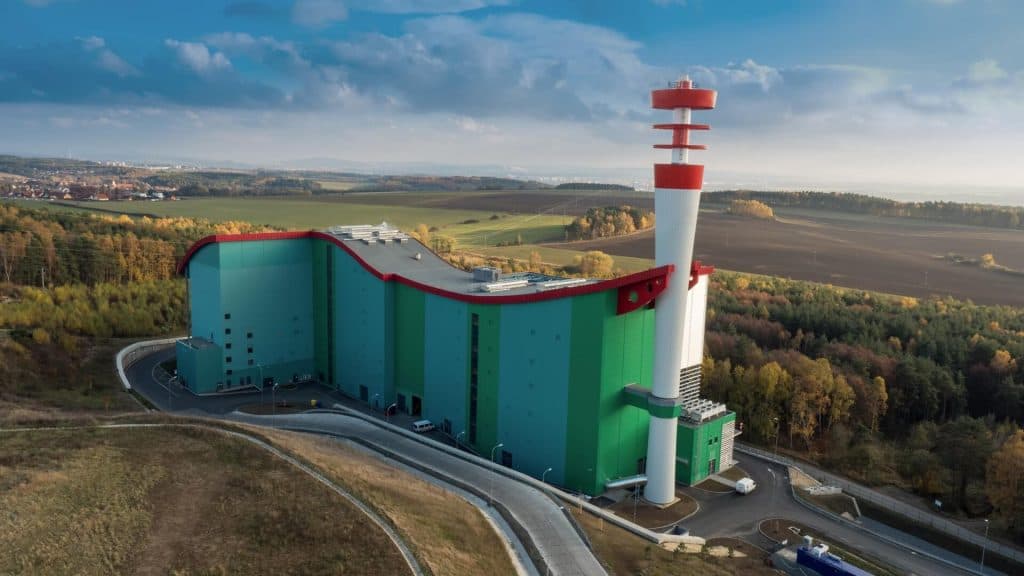
Investment in building waste-to-energy plants (ZEVO) in the Czech Republic is among the highest in the world. The investment per tonne of annual waste-burning capacity is 1000 euros (about 25.000 crowns). This is the highest level among developed Western countries, where the average ranges from 600 to 1000 euros (15.000 to 25.000 crowns). In developing countries, this investment rarely exceeds 400 to 500 euros (10.000 to 12.000 crowns), while the cheapest investment in waste-to-energy plants is in China, where it averages 250 dollars (about 6000 crowns). This is according to an analysis by the environmental group Arnika, whose findings it presented at an online webinar today.
According to Arnika, investment in waste-to-energy plants, which burn 100.000 tonnes of waste a year in the Czech Republic, amounts to around 2.5 billion crowns. The analysis estimates that incinerating one tonne of municipal waste costs approximately 800 to 1500 crowns. Environmentalists say that the operation of incinerators in the Czech Republic can also burden municipalities financially through loans they often guarantee, as well as expenses related to the environmental impact of pollution.
According to Jindřich Petrlík, one of Arnika’s founders, incinerators also often depend on support from European grants and public funds, and their operation must be subsidised or they would not be competitive. At the same time, they are not held responsible for the consequences of their operation – there is currently no fund to address the negative consequences of their operation or the resulting environmental contamination.

Jiří Gavor, an analyst at ENA, previously told ČTK that the number of incinerators in Czechia is lower than the average in developed countries. Incinerators also have the strictest emissions limits of all energy processes, which he says is why they are commonly permitted to be built in the immediate vicinity of residential areas, as is the case with the Malešice incinerator in Prague. Gavor added that, for technical and economic reasons, no waste can ever be completely recycled.
According to Arnika member Nikola Jelínek, Czech incinerators that generate energy received around 585 million euros (almost 14 billion crowns) in grants last year for construction and modernisation. These were projects in Mělník, Komořany, Písek, Planá and Brno. The money was allocated from the Modernisation Fund. It is financed through the sale of emission allowances and aims to support the modernisation of energy systems and improve energy efficiency through investment. The result should be a faster transition to a low-carbon economy.
Under an agreement between European Union countries, waste incinerators are to be included in the emissions trading system from 2026, and no later than 2030.
Translation disclaimer
This article is a machine translation of the Czech original and has not yet been fully reviewed. In case of any doubt, please refer to the Czech version.
Sdílejte článek prostřednictvím:
You might also like

28 October 2026, 13:08

28 October 2026, 11:10

28 October 2026, 09:08
