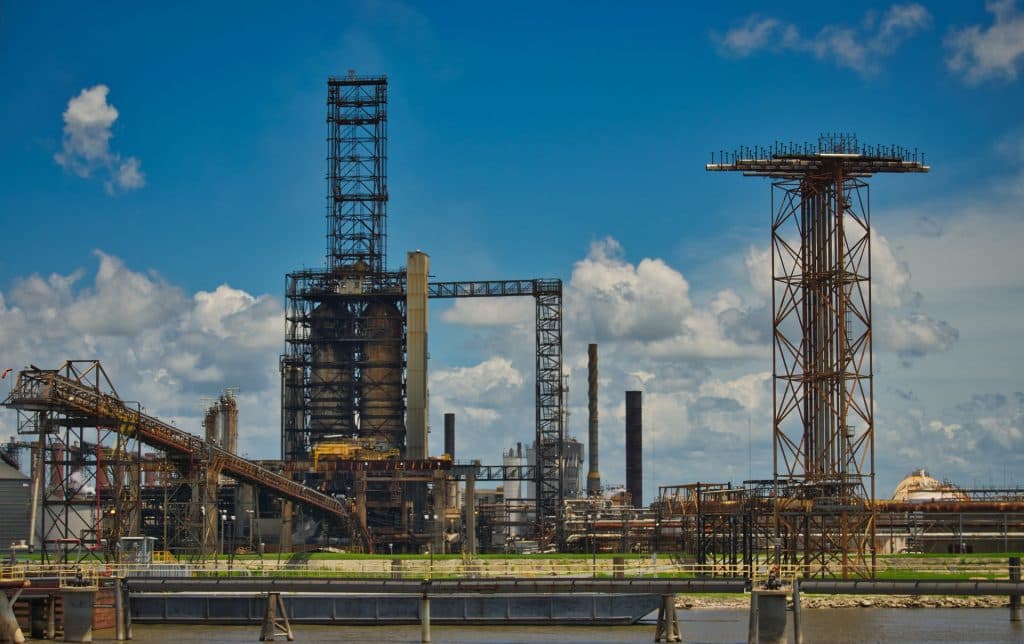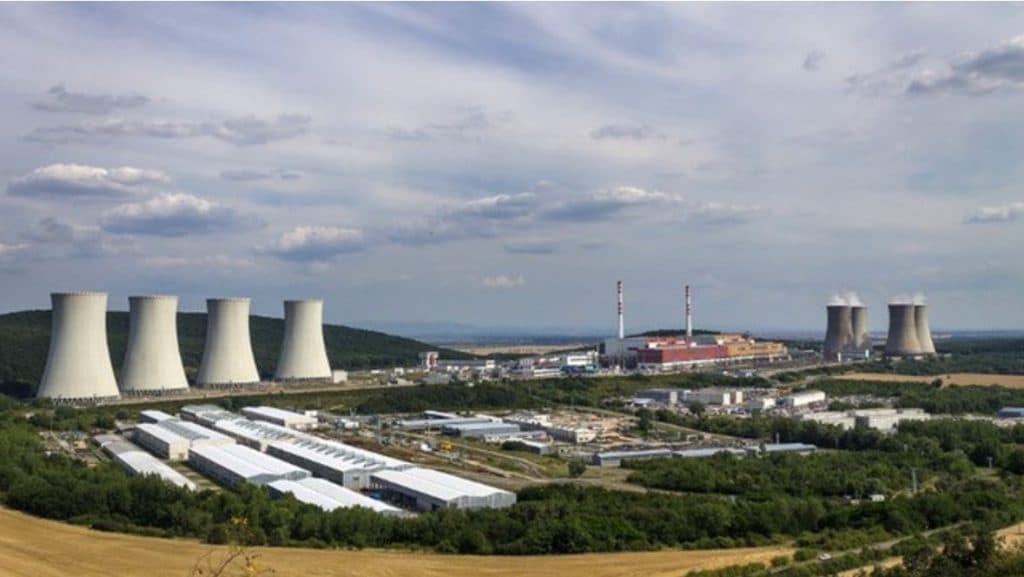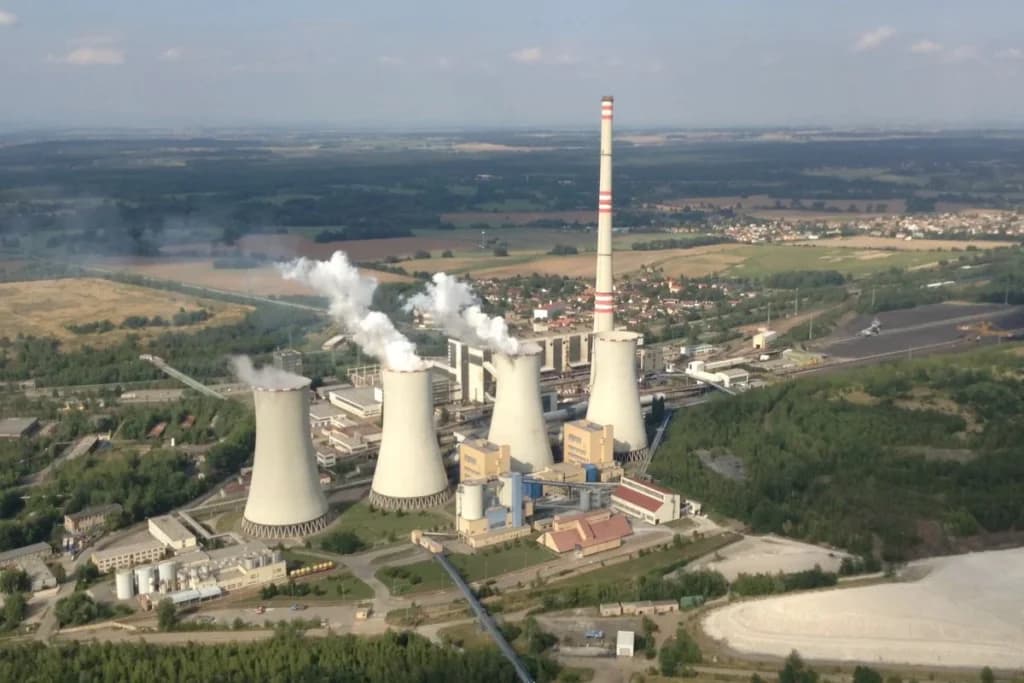
Two units at the Chvaletice coal power plant must remain in operation for now. The reason is not that Czechia could not do without their electricity. Far more important is Chvaletice’s ability to regulate voltage and reactive power. This will most likely be needed particularly during the summer months.
“ČEPS keeps the units in reserve throughout the year. Their deployment in line with ČEPS requirements is expected primarily during periods of low electricity consumption, when voltage regulation problems occur most frequently. These situations generally arise at weekends, during holidays and public holidays outside the winter period,” says Hana Klímová, spokesperson for ČEPS. The transmission system operator ČEPS recently decided that two of Chvaletice’s four units would not be shut down for the time being.
There is no risk of an electricity shortage
Media reports suggest that without coal-fired power plants that can be switched on and off as needed, electricity shortages could occur. Especially in winter, when so-called dark doldrums prevail and renewable energy sources are unable to generate. However, ČEPS sees no problem in this respect. Even if the entire Chvaletice power plant were shut down, Czechia should not face an electricity shortage, even under adverse weather conditions.
Nevertheless, the coal plant has a number of other functions for the system. Above all, it can generate and absorb reactive power, without which the grid cannot operate.
“Reactive power can be thought of as lubricant in the transmission network: we need it there, but it does not do any work. And there must be neither too much nor too little of this lubricant; it has to be balanced,” Zdeněk Müller explained in an interview with Ekonews. He heads the Department of Electrical Power Engineering at the Czech Technical University’s Faculty of Electrical Engineering.
“If you imagine the energy grid not as made up of conductors but, for example, of pipes filled with pressurised water, reactive power raises the pressure. The more you raise the pressure at a given node, the more energy spreads from that node to other nodes. By injecting reactive power, I increase the voltage, causing energy to flow to a particular location or away from a given node,” Müller described.
Chvaletice without coal
Modern solar and wind power plants can also generate and absorb reactive power, but only if they have sufficient active power. Once the sun stops shining and the wind stops blowing, they are unusable for grid management.
In summer 2027, the Tušimice and Ledvice coal power plants and the Počerady gas-fired power plant are due to undergo outages. This will leave the system with too few controllable sources – in a sense, it will be lighter. Without two Chvaletice units, it would be difficult for the system operator to keep the grid under control if a fault or instability occurred.
According to ČEPS, one of the Chvaletice units is to be converted into a so-called synchronous compensator – equipment that can both generate and eliminate reactive power. Chvaletice would then no longer need to burn coal, and the compensator would serve solely to balance reactive power in the grid.
“The measure is intended to minimise the future operating costs of the units at Chvaletice. We estimate implementation will take one year; the technical specification is currently being discussed with the plant owner,” says Klímová of ČEPS. Sev.en Group, which owns the Chvaletice power plant, has so far declined to comment on the transmission system operator’s decision.
The cost of absorbing reactive power
According to Jan Krčál, an analyst at the Facts on Climate organisation, converting one generator into a synchronous compensator could cost in the order of one hundred million crowns. “It is a short-term solution that can make use of existing generators at key coal power plants which would otherwise be shut down and demolished. Gas-fired power plants could similarly be used for grid stabilisation in the future,” the analyst says.
“Very likely, a substantial part of the technology will remain original, or can remain original – the electrical equipment, transformers, circuit breakers, and quite possibly the generator itself. The turbine, which is no longer part of the new technology, will certainly be dismantled,” says Müller of the Czech Technical University. “The key issue is setting up the business model, meaning how the operation of the equipment will be financed. In many situations, reactive power management is a kind of mandatory by-product; here, it will become the main product,” Müller adds.
It is already clear that the regulated component of electricity prices for consumers will rise in the coming years. This will be due not only to one synchronous compensator, but also to further measures involving the upgrading, modernisation and reinforcement of the transmission system and distribution grids.
Who will black-start the grid
Another reason why two Chvaletice units are to remain in operation is their role in restoring the system after a potential blackout. Chvaletice cannot black-start without assistance; it must first be supplied with voltage by the Dlouhé Stráně pumped-storage power plant. The Chvaletice units could then pass voltage onwards and expand the notional island that would gradually bring the grid back to life.
Since coal power plants do not serve only for controllable electricity generation but also have other functions, the question arises of who will provide these functions once coal-fired sources are gone. “For reactive power management and inertia, there are already various types of equipment available today, known as grid-forming technologies,” says Krčál of Facts on Climate. “For example, simple reactors: you can think of them as reactive power dissipators. Or the far more sophisticated Statcom equipment, which can regulate reactive power in both directions and also performs many more functions. Both are static devices; nothing rotates in them, they simply stabilise the grid,” Krčál explains.
Biogas plants are also seeking attention, as unlike solar or wind power plants, they operate regardless of the weather. “Biogas plants can substitute for coal units in various energy services. Their decentralised nature also strengthens energy security,” believes Jan Habart, chairman of the Czech Biomass Association CZ Biom.
“In the event of a power outage or even a blackout, biogas plants can supply critical infrastructure in their vicinity and, after additional technological modifications, can also black-start,” Habart adds.
However, as Müller points out, biogas plants are so small that they are essentially invisible to the system in this respect. “It is a good thing from the perspective of ecology and carbon footprint, but it is unusable for system restoration because ideally you would need a thousand of them in one place,” Müller says.
Close Počerady and Kladno, says ČEPS
Sev.en Group, owned by billionaire Pavel Tykač, announced plans to close three of its coal-fired facilities – Chvaletice, Počerady and the Kladno heating plant – last November. However, large conventional power plants are part of critical infrastructure, and the functioning of society as a whole depends on them to some extent. State-owned ČEPS therefore had to assess whether they could really be closed or whether Czechia would still need them.
As for Počerady, ČEPS found no issue with its closure. The plant is located in the Most region, in close proximity to other coal-fired sources, while a ČEZ gas-fired power plant also operates at the same site. Kladno can also be shut down from the transmission system operator’s perspective, although the situation is somewhat more complicated in this case. The system does not need the heating plant, but without it there will be no one to supply Kladno with heat.
A few days ago, talks between Sev.en Group and the city of Kladno on amending the heat supply contract and continuing operations collapsed. It now appears that another company will take over the heating plant and ensure heat supplies for the city. In any case, Kladno residents’ energy bills will most likely increase.