25 September 2026, 09:51
Loading...
Czech repository authority cancels tender for repository boreholes, completes geophysics tender

oEnergetice.cz, ČTK
4 February 2026, 18:31
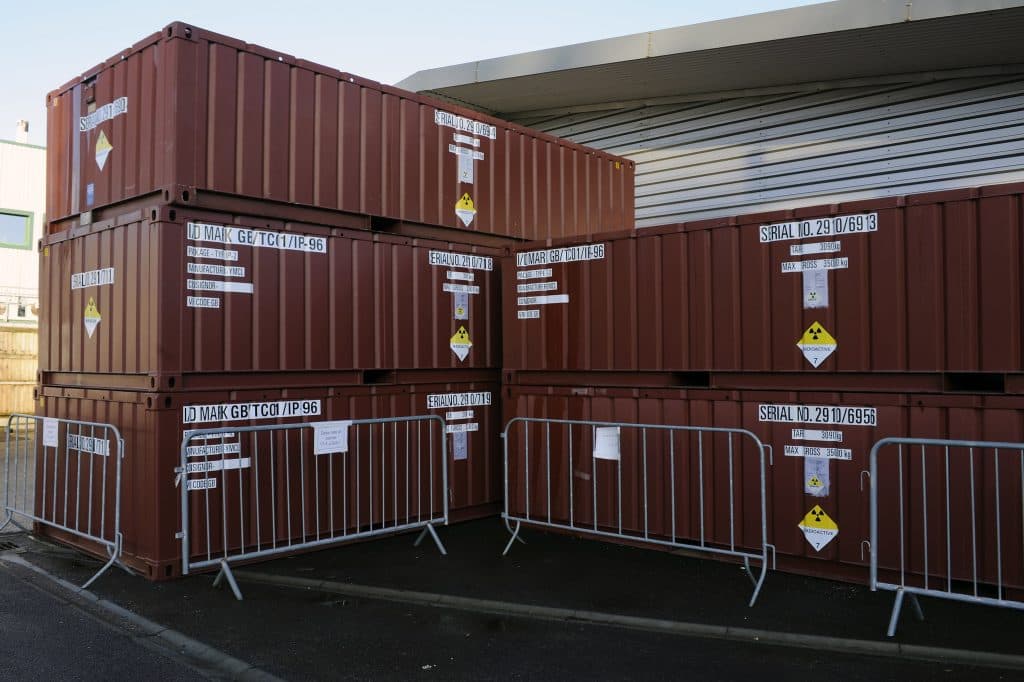
The Radioactive Waste Repository Authority (SÚRAO) has cancelled a tender for deep boreholes planned as part of surveys of areas for a proposed deep geological repository for radioactive waste. The sole bid submitted in the tender was too expensive. The authority will now apparently seek to tender the individual boreholes in stages. By contrast, the tender for geophysical surveys of the individual areas has been completed. SÚRAO spokesperson Martina Bílá told ČTK today. The authority is not yet anticipating delays to the schedule as a result of the cancelled contract.
The authority is working with four sites for the repository. These are the municipalities of Horka and Hrádek in the Vysočina Region, Janoch near Temelín in South Bohemia, and Březový potok in the Klatovy region.
According to a technical report prepared by the Czech Geological Survey and SÚRAO, a total of seven boreholes are planned across all shortlisted areas as part of the surveys. One to a depth of 1200 metres, two to around 600 metres and four angled boreholes to a depth of approximately 300 metres. The authority sought a contractor for all the boreholes in a public tender, but recently had to cancel it.
"The contract was cancelled because the conditions of the procurement procedure were not met; the sole bid exceeded the maximum permissible value," Bílá said.
The bid was submitted by TSSAP, which sought more than CZK 1.99 billion for the work, almost three times the price originally set in the tender specifications.
SÚRAO will therefore try to find companies to carry out the boreholes by another route. "A preliminary market consultation is currently under way for boreholes to a depth of 600 metres. SÚRAO continues to envisage all types of boreholes, but in successive stages," Bílá noted. According to her, the authority does not currently expect any shift in the overall work schedule.
The authority rejected criticism from the Platform Against the Repository, which today warned of the risk of selecting the location for the deep geological repository on the basis of incomplete scientific data. "The cancellation of SÚRAO's contract for deep geological boreholes confirms that preparation of the deep geological repository project cannot be rushed without the risk of errors. Pressure to quickly select a final site with incomplete data could certainly lead to a decision with serious implications for long-term safety and risks for our descendants," said the platform's spokesperson Michael Forman. According to SÚRAO, however, all boreholes remain planned in their standard form.
Preparations have, by contrast, progressed on geophysical surveys. At the beginning of February, SÚRAO signed a contract for their implementation with KANOPY, represented by lead company INSET. Surveys of the physical properties of rocks without disturbing the land are planned and are expected to last several years.
"Geophysics and its methods are crucial to gaining the most detailed possible understanding of the sites. We will of course inform the affected municipalities and the public about planned and ongoing work, and we will be happy to present the geophysical survey, if they are interested, directly in the field," said SÚRAO director Lukáš Vondrovic.
The state should select the most suitable site by 2030. According to the authority's plans, the deep geological repository is intended to be the final solution for the radioactive waste lifecycle. The repository is to permanently store, half a kilometre underground, primarily thousands of tonnes of spent fuel from nuclear power plants.
The repository was originally due to be built by 2065, but construction is being discussed for acceleration because nuclear power has been temporarily classified as a green investment in the EU. The condition is that countries relying on nuclear energy must have deep geological repositories from 2050. Besides Czechia, other countries are also preparing their repositories.
Translation disclaimer
This article is a machine translation of the Czech original and has not yet been fully reviewed. In case of any doubt, please refer to the Czech version.
Sdílejte článek prostřednictvím:
You might also like
24 September 2026, 11:23

24 September 2026, 10:30
24 September 2026, 06:56