
28 October 2026, 15:10
Loading...
End of coal will also affect district heating in the Czech Karlovy Vary Region, SUAS seeks new sources

oEnergetice.cz, ČTK
3 May 2024, 15:15
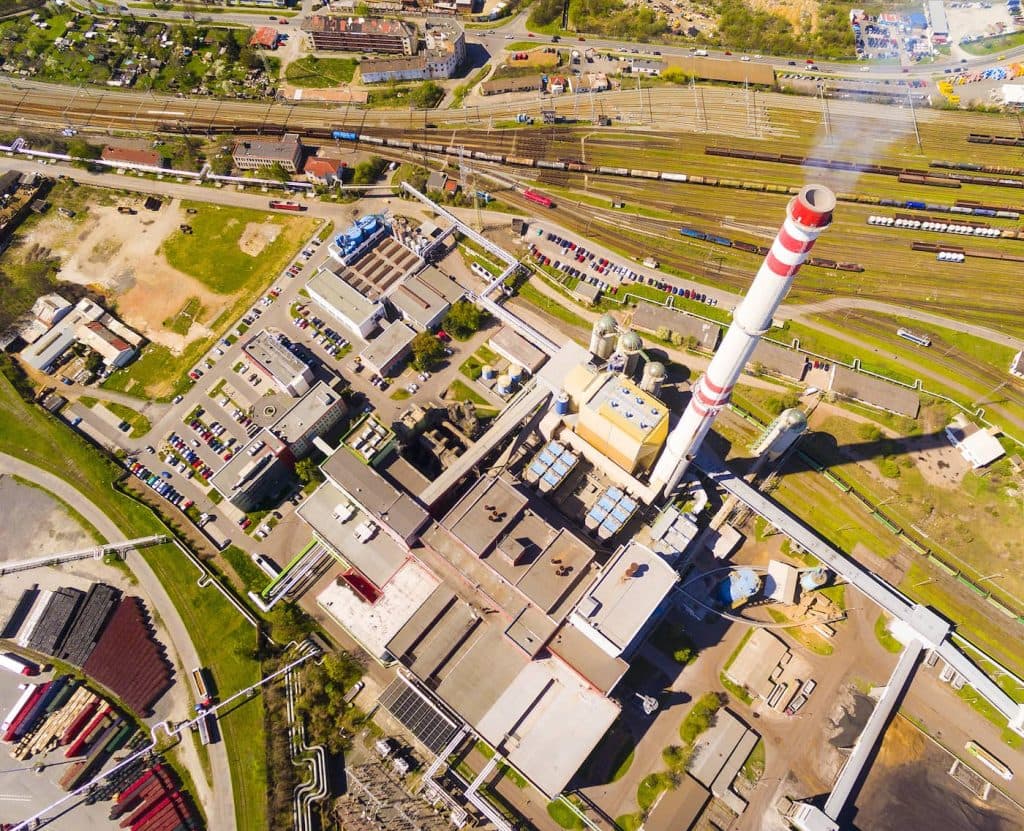
The phase-down and eventual end of lignite mining will have a significant impact on district heating in the Karlovy Vary Region. A large part of the region is supplied by coal-fired heating plants, particularly those operated by Sokolovská uhelná. The company already has to address how it will secure heat supplies in the coming years and what it will use to produce the heat, Pavel Tomek, chairman of the supervisory boards of Sokolovská uhelná and SUAS Group, told ČTK.
In the Karlovy Vary Region, around 50,000 households are connected to Sokolovská uhelná’s heat sources, the Tisová power plant and the Vřesová complex. Most are in larger towns with housing estates, where it is not realistic for all households to switch to local gas boilers or install heat pumps in a short time.
Tisová, a so-called basin power plant, has two units. ETI II is a power-generation unit designed technologically to burn only coal from the Jiří mine. ETI I is primarily intended for combined heat and power generation. It also uses coal from the Jiří mine, but thanks to its fluidised-bed combustion technology, it already burns some biomass and can also burn solid alternative fuels (SAF).
„I expect that during this year we should complete separate transport routes so that we can co-fire solid alternative fuels, wood chips and coal more efficiently, effectively and in a greater proportion than we do now,“ Tomek said, describing one way to reduce the need for coal in heat production and cut carbon emissions.
„ETI I is more of a heating plant unit, which is why it is primarily used in the fourth and first quarters—that is, during the winter months, when demand is highest. But even if we had to shut it down, ETI II would take over its heat production, although for now it would run entirely on coal,“ Tomek said.
The transition to other heat sources will be particularly important for places such as Sokolov, although an alternative was already available there before the energy crisis. „We still have four gas boilers in storage for Sokolov, just in case. And building the heating plants will take six months. … We have building permits for both sites, so if we needed to switch Sokolov over, we could use gas. But the problem is that this would currently double the price of heat. And how will a socially disadvantaged region cope with that? Should we tell people not to heat their homes or to turn the temperature down to 17 degrees? I personally would not want to defend that in front of people,“ Tomek said.
Other projects that could help with the transition away from coal are also in preparation. Their progress will also depend on state support. „There is a combined-cycle gas project for the Tisová power plant, a study is being commissioned for a multi-fuel boiler at Vřesová that would use SAF and biomass in combination with natural gas. We also need to complete a solution for handling municipal waste. We are dealing with it now at ETI I, the fluidised-bed boiler, but we know it will have a shorter lifespan than ETI II, so we are already working to ensure we can replace that source and know what we will replace it with,“ Tomek said.
Translation disclaimer
This article is a machine translation of the Czech original and has not yet been fully reviewed. In case of any doubt, please refer to the Czech version.
Sdílejte článek prostřednictvím:
You might also like

28 October 2026, 13:08

28 October 2026, 11:10

28 October 2026, 09:08
