Four key questions shaping the future of Czech and European energy
When industrial companies in Czechia faced electricity prices exceeding €200/MWh in 2022 and 2023, energy prices became the number-one issue for their competitiveness. Even after the subsequent decline, Europe still has energy prices several times higher than its global competitors—and the gap may widen further.
Another warning signal was the power outage first in Spain in April and then, on 4 July 2025, in part of Czechia. The short-term collapse of electricity supply in several industrial regions showed that the system is not as robust as it appeared, and that investment in its resilience and flexibility cannot be postponed.
These two examples illustrate the core of the problem: European energy today faces fundamental challenges that can be divided into four areas. Each raises crucial questions for the coming decades.
1️⃣ How can we make energy competitive?
Following the publication of the Draghi report, the European Commission is engaging in self-reflection and stressing that decarbonisation cannot be achieved at the expense of European manufacturers’ competitiveness.The resulting Clean Industrial Deal is intended to mitigate risks for investments in decarbonisation technologies and create a framework that will reduce energy costs. The question remains whether it will actually bring a shift from the current situation, or whether it is more of a political signal without a real economic effect. Czech industry needs assurance that state aid will be sufficiently flexible and extensive to enable existing technologies to be replaced efficiently. Without this, it will be difficult to build an energy sector founded on the key prerequisites of competitiveness—stability, availability and price sustainability.
2️⃣ What energy sources will we have in 2030 and 2050?
The future generation mix remains the subject of intense debate across Europe. The phase-out of coal, support for renewables and expectations associated with new nuclear units or SMRs are creating a complex balance that cannot be upset by hasty changes without ensuring sufficient energy supply. This is compounded by uncertainty over the role of gas as a transition fuel and debate over whether battery systems can meet the expectations placed on them by lawmakers and some investors.
Renewable sources currently provide only one-fifth of the energy consumed in the EU. Moreover, the sources receiving the largest volume of public funding account for just 5 % of total energy consumed in the EU. Targets for replacing fossil fuels are therefore proving too ambitious within the given timeframe. The answer must therefore be a debate on which sources the state should support and which it should gradually phase out in order to preserve both stability and competitiveness.
3️⃣ How will we adapt energy grids?
Grids are now the bottleneck of the transition. Connection capacity is often blocked by projects that are unlikely ever to be realised, holding back viable ones. Czechia is therefore preparing a new tariff structure that should reflect the system’s actual costs and needs. The outages in Spain and Czechia in 2025 also showed that grid security and resilience cannot be taken for granted, and that Europe will have to find a new model for ensuring supply stability.
The development of gas infrastructure plays a key role in ensuring the flexibility without which the transition cannot be managed. However, the question remains to what extent, and which commodity, the gas grid will transport—methane, hydrogen, CO2. And also how these modernisation costs will be socialised.
4️⃣ How will the market, tariffs and prices change?
Alongside generation sources and grids, the market itself is the third pillar of a competitive energy sector. In the Czech Republic, PPAs for electricity supplies from renewables—which are a standard tool for stable price hedging in Western Europe—have barely become established. Offtakers often expect cheaper supplies than are realistically possible, and banks are cautious about financing large solar PV plants without storage. This raises the question of whether CfDs or state guarantees for PPAs could be the solution, increasing certainty over the return on investment in renewables, which are currently experiencing a strong cannibalisation effect. At the same time, there is discussion about what role, if any, the market can play in this environment of compensation schemes, guarantees and operating or investment subsidies, and whether this form is sustainable in the long term and sufficiently effective for the expected development. The market now stands at a crossroads between regulatory expectations and the reality of financing.
Where can we find the answers?
The four areas—competitiveness, generation sources, grids and the market—now frame the entire Czech and European energy sector. Each raises new questions while also highlighting the limits of the current approach. Answers can emerge only through dialogue among industry, the state, regulators and energy companies.
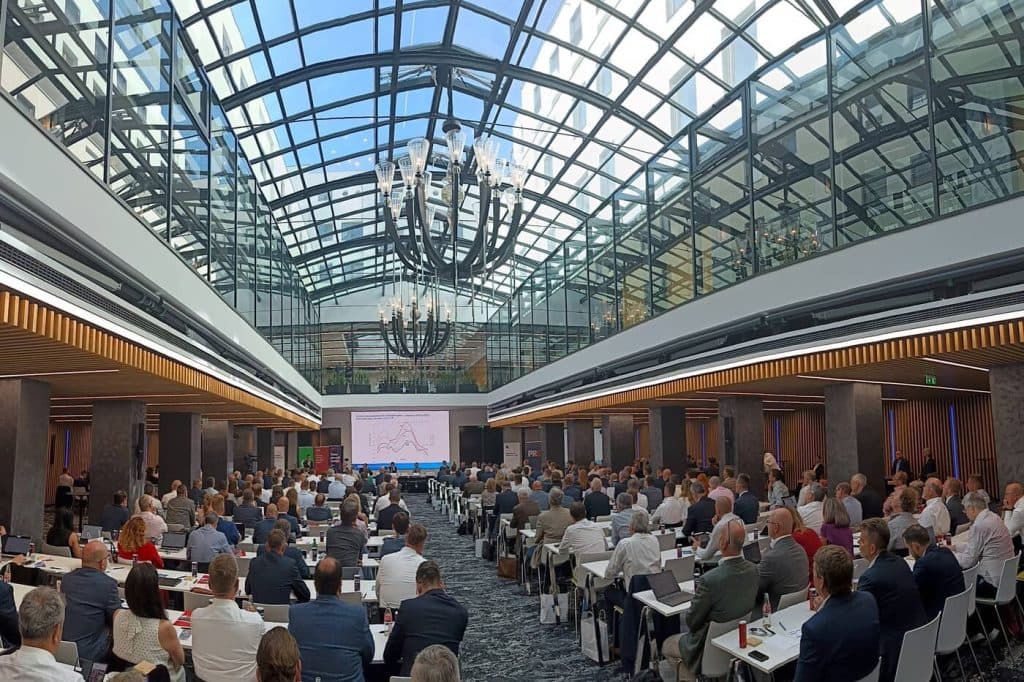
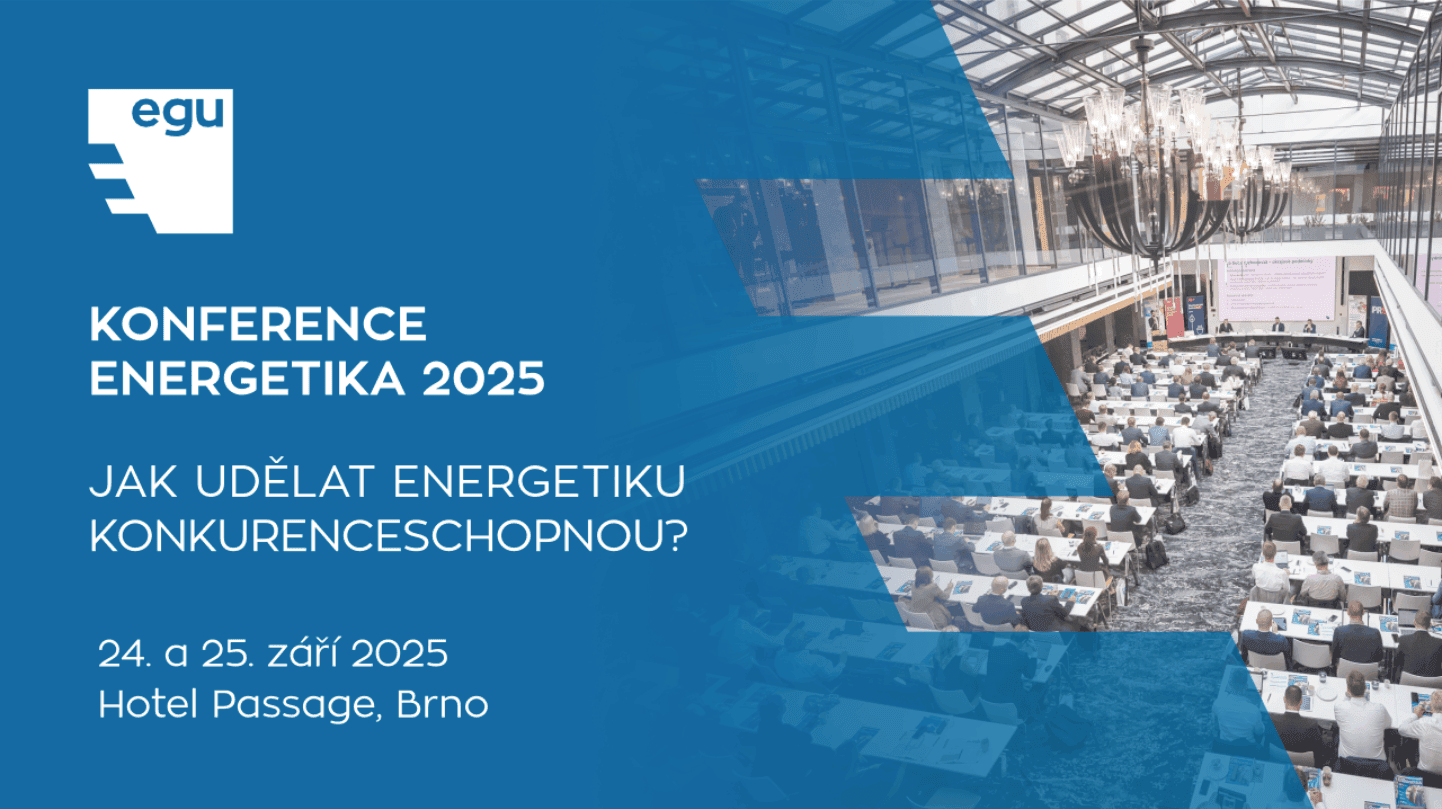
It is precisely this dialogue that the expert conference Energy 2025: How can we make energy competitive? will open. It will take place on 24–25 September 2025 at the Passage Hotel in Brno. Four sessions and a concluding round table will address these exact topics—and seek solutions that can help Czech energy and industry compete globally. Become part of an expert discussion that will set the direction of Czech and European energy for the next decade.
👉More information and registration: https://www.egubrno.cz/akce/konference-energetika-2025/
Translation disclaimer
This article is a machine translation of the Czech original and has not yet been fully reviewed. In case of any doubt, please refer to the Czech version.