
28 October 2026, 15:10
Loading...
Scientists oppose small hydropower plant on the Vltava in the Český Krumlov region of Czechia

oEnergetice.cz, ČTK
6 May 2024, 12:27
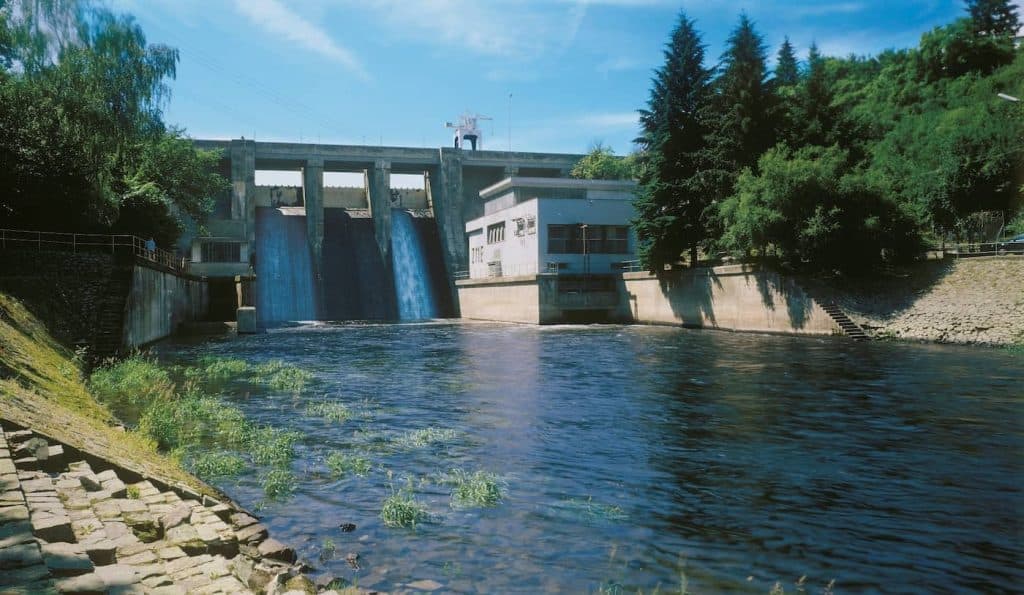
Scientists at the Biology Centre of the Czech Academy of Sciences in České Budějovice oppose damming the Vltava River below the ruins of Dívčí Kámen in the Český Krumlov region. A private investor is preparing to build a small hydropower plant there. The scientists said the project could have a range of adverse effects and lead to a decline in rare plant and animal species. Daniela Procházková, a spokesperson for the Biology Centre, told the Czech News Agency.
“It needs to be stressed that human-caused changes, such as the construction of weirs or hydropower plants, the building of wastewater treatment plants, or the discharge of waste from a campsite, have negative impacts on biodiversity, including threatened species on the Red List or in the Natura 2000 network. These species are highly likely to become locally extinct, for example because of rising water levels upstream of the weir, increased nutrient input, a lack of oxygen, or the loss of microhabitats such as rapids due to a lack of water,” said Vojtěch Kolář of the Biology Centre’s Institute of Entomology and the Faculty of Science at the University of South Bohemia.
Private investor Michal Masnička, who is planning to build the small hydropower plant, said he is building on his own land and complying with regulations. The project has previously been criticised by the Association of Water Tourism and Sports (AVTS). Among other things, it objects to the fact that the construction is planned in the first zone of the Blanský les Protected Landscape Area.
According to the scientists, damming the river for the power plant would completely change the character of the watercourse. A stretch of rapids would become slower-flowing water, which would warm up more, and the river’s natural purification would also be impaired. “Diverting water to the power plant and the planned minimum residual flow, which is significantly below the long-term average for this stretch, effectively mean that we are not trying to address the future negative impacts of climate change, but are heading towards them,” said Jiří Peterka, director of the Biology Centre’s Institute of Hydrobiology.
The scientists say that lower flows could cause slow-moving stretches and pools in the river to silt up and become overgrown, and they do not rule out these areas drying up in summer. The changes could also threaten populations of rare aquatic beetles, mayflies, stoneflies, true bugs and dragonflies, as well as rare fish and amphibian species.
The small hydropower plant project revives a plan dating back to 1912. At the time, workers also dug a millrace, but further work was halted. Masnička said he hopes to complete all the necessary documentation this year and begin the approval processes. No exact date has yet been set for construction to begin.
rek gcm
Translation disclaimer
This article is a machine translation of the Czech original and has not yet been fully reviewed. In case of any doubt, please refer to the Czech version.
Sdílejte článek prostřednictvím:
You might also like

28 October 2026, 13:08

28 October 2026, 11:10

28 October 2026, 09:08
