A construction permit for new reactors at Czechia's Dukovany plant should be issued in 2029

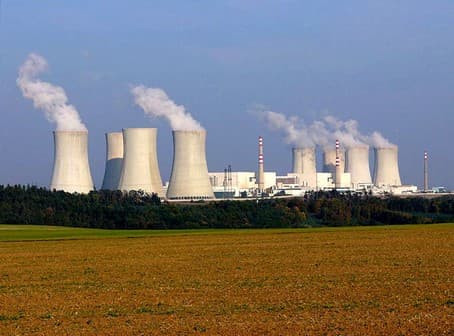
A construction permit for two nuclear units at the Dukovany nuclear power plant should be issued in 2029, when excavation work is due to begin. The construction permit process will start a year earlier. Concrete pouring is then planned for 2030, with trial operations scheduled to begin in 2036. ČEZ Group spokesperson Ladislav Kříž told the Czech News Agency today. Deputy Prime Minister and Minister for Regional Development Ivan Bartoš (Pirates) told the Czech News Agency that obtaining a construction permit is a lengthy process because the project requires comprehensive preparations. These may relate not only to construction but also, for example, to logistics. He believes, however, that there will be no delays.
ČEZ has so far obtained a permit for the reactors' completion covering the environmental impact assessment (EIA) in 2018, and a siting permit from the State Office for Nuclear Safety under the so-called Atomic Act in 2021. That same year, the group also obtained state authorization to build an electricity generation facility and submitted an application for zoning proceedings to the building authority in Třebíč. It is also currently dealing with an appeal filed in 2023 against a non-final decision on the siting of a complex comprising 12 structures.
„We still need to extend the validity of the EIA permit, which is currently valid until 30 August 2026. To keep this opinion valid, we will need to ask the Ministry of the Environment to extend its validity by a further five years before that date, and prepare the relevant supporting documents for the application well in advance,“ Kříž said.

According to Bartoš, an investment on the scale of the expansion of the Dukovany plant changes the character of the entire region. The project and its subsequent operation are complex undertakings, he said, and involve more than just issuing a construction permit or addressing environmental impacts. For example, the Ministry for Regional Development is currently preparing a socioeconomic impact study with two other regions. All of this takes years, according to the deputy prime minister.
However, former ČEZ chief Jaroslav Míl said that the completion deadlines would not be met. Speaking on Czech Television on Wednesday, he said the problem was not the contract winner KHNP or the investor, but could be the expertise of the state administration and local authorities that will make decisions on the project. „More than 40 organizations, government bodies and local authorities will be responsible for permitting the project at a time when their staff have not been trained. We will see situations where we are more than two years behind schedule in issuing the zoning decision for construction of the first unit. The administrative process is completely mishandled,“ he added.
The Transport and Energy Construction Authority (DESÚ), which falls under the Ministry of Transport, will be responsible for construction permits. Bartoš said, citing Transport Minister Martin Kupka (Civic Democratic Party), that the DESÚ would need to increase its staff to handle the project, even though it already has employees working on energy issues. The authority currently employs just over 70 people out of 108 approved positions.
Translation disclaimer
This article is a machine translation of the Czech original and has not yet been fully reviewed. In case of any doubt, please refer to the Czech version.




