
28 October 2026, 15:10
Loading...
Dukovany unit completion: What impact will it have on the region in Czechia?

Jakub Malý
4 April 2024, 12:12
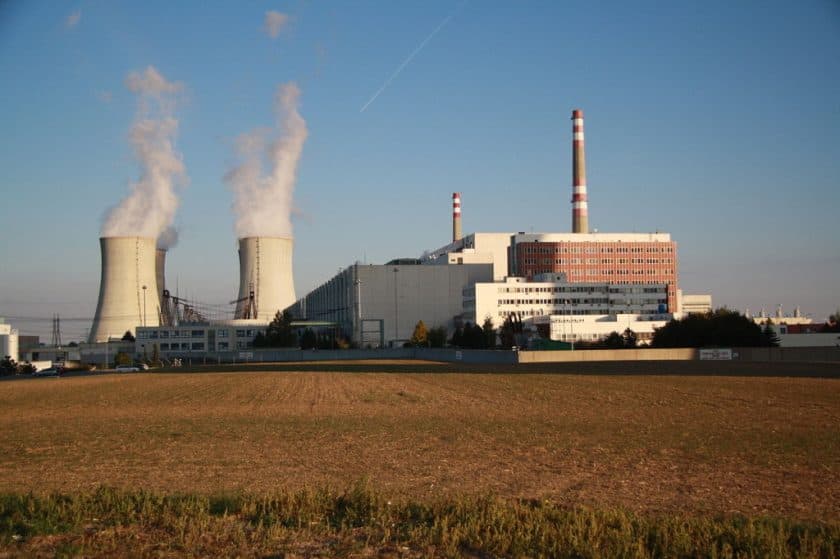
At the end of March, representatives of the Vysočina Region and the South Moravian Region, along with mayors, met in Třebíč with members of the Czech government and senators. The main topic of the meeting was the planned completion of the Dukovany Nuclear Power Plant and its impact on the region.
The regional impacts of such construction are often overlooked in debates about the planned expansion, even though they can have a major effect on quality of life in the area. This is one reason why Prime Minister Petr Fiala asked Regional Development Minister Ivan Bartoš to prepare a socioeconomic study mapping the impact of the planned construction on the region.
"We will monitor population trends and look in detail at transport, healthcare capacity, accommodation and housing for newcomers, leisure activities, the impact on the labour market, and opportunities in schools and education. We will also look at the future revenues of municipalities. From May, we will work on the study with the regions, mayors and major employers,"Bartoš added.
Some of the findings of the study, which is due to be completed in autumn 2024, can already be anticipated, since a similar study was carried out by the Ministry of Regional Development in 2015. The study is entitled Scenarios for the future development of the Dukovany Nuclear Power Plant microregion using the Territorial Impact Assessment approach. It examined the impact on the region under two scenarios: 1. Decommissioning the nuclear power plant 2. Possible construction of an additional unit. In addition to the study itself, a set of maps was also produced, providing a clear overview of information such as municipal revenues from EDU (the Dukovany Nuclear Power Plant), the labour market linked to EDU, and population trends in individual towns.
Among the study's main findings are the effects on employment and the region's overall economic situation. At the time the study was conducted, the power plant itself employed 1,385 people, but this figure must be supplemented by employees of companies connected with its operation. The nuclear power plant has around 400 suppliers of services and materials needed for its operation. EDU makes extensive use of local businesses, so its possible closure would negatively affect the entire region, including peripheral areas already facing unemployment. It is one of the largest employers in the Vysočina Region, and its employees have high purchasing power thanks to above-average wages.
Thousands of new jobs
Construction of the new units will, of course, boost the labour market, with thousands of workers needed at least during the construction phase. Building units 5 and 6 could create as many as 5,000 jobs. Many of the new positions are likely to disappear once construction is complete, but it is important to remember that the existing units are due to reach the end of their service lives in 2037, with the option of extending operations to 2047. The new construction is therefore crucial to supporting the affected regions over the longer term.
The power plant's operation also has a significant impact on municipal budgets. Municipalities in the surrounding area that lie within emergency planning zones receive grant funding (the 1st zone extends 5 km from the nuclear power plant, the 2nd zone 10 km and the 3rd zone 20 km) through a ČEZ Foundation grant programme. This is an important source of additional funding for municipalities, supplementing their budgets. It is also used to cover the extra administrative and financial burden associated with the plant's proximity, including regular drills and radiation shelters. Average contributions received by municipalities are around 20 thousand CZK per resident per year. Over the plant's lifetime, these contributions will amount to tens of millions of crowns, which municipalities can invest in their development.
In addition to contributing to municipal budgets, the ČEZ Foundation supports education in the region. One example is its cooperation with Třebíč Secondary Technical School (SPŠT), which helps train future power plant employees. The plant's proximity is therefore welcome in most municipalities, as demonstrated by above-average support for the development of nuclear energy in the Czech Republic, which reached 97 % in a survey conducted in these regions.
Construction will affect transport across the region
Transporting the oversized components needed for construction will require routes to be planned and then upgraded or newly built before construction of EDU itself begins. The previous government backed this decision in Resolution No. 739 of 23 October 2017, committing to release funding and accelerate the construction projects needed to transport oversized components.
This year, the State Fund for Transport Infrastructure is to allocate 220 million CZK to building new routes essential for completing the power plant. Almost 14bn CZK is expected to be spent on preparing road infrastructure over the next ten years. State funding is expected to enable work to begin this year on projects including part of the Jihlava bypass and the Brtnice bypass. Bypasses will also need to be built around Třebíč, Zašovice, Okříšky and Slavětice to connect to Dukovany. The bypasses will ease congestion in the often-overloaded centres of towns and villages.
The completion of EDU presents a unique opportunity to build—or at least renovate—transport infrastructure that will continue to serve its purpose after construction is finished and help ease traffic problems. It will speed up travel across the Vysočina Region and the South Moravian Region, as well as the movement of people and materials. Construction of the transport infrastructure itself will generate new contracts and jobs and make the region more attractive to potential new businesses. In the longer term, quality of life will improve not only in terms of transport but also through the region's development as a whole.
Translation disclaimer
This article is a machine translation of the Czech original and has not yet been fully reviewed. In case of any doubt, please refer to the Czech version.
Sdílejte článek prostřednictvím:
You might also like

28 October 2026, 13:08

28 October 2026, 11:10

28 October 2026, 09:08
