1 November 2026, 16:09
Loading...
AI won't magically solve Czech energy challenges, but it can still be very useful
Unicorn Systems
13 February 2024, 02:27

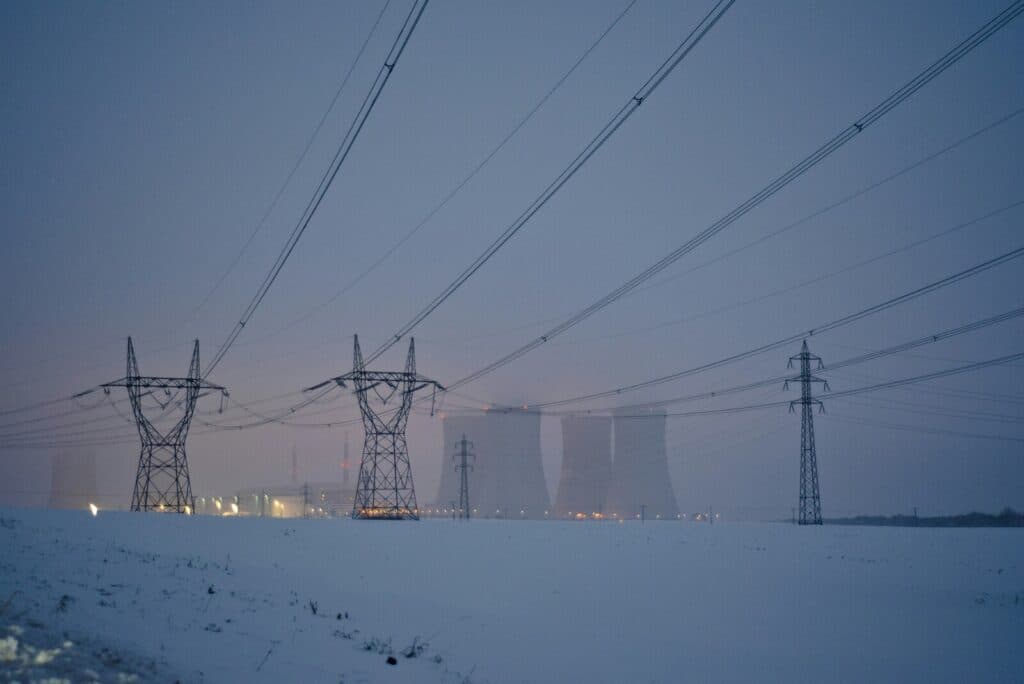
Artificial intelligence is one of the biggest phenomena of our time. It is becoming part of our everyday reality, and hopes are high. The energy sector is no exception. In an industry where generation and consumption must be kept in balance at all times, we need to be able to forecast all the necessary variables as accurately as possible, including, for example, day-ahead and intraday market prices. And that is becoming increasingly difficult.
The rise of renewable energy sources, climate change, decarbonisation, electric mobility and decentralised generation are all factors that make the existing system more complex and bring uncertainty. Experience so far shows that artificial intelligence is no magic bullet, but it can deliver a range of improvements. In more than a few cases, the eventual benefits can amount to tens or hundreds of millions of crowns in cost savings for a particular market player.
Easy for a mathematician, a real puzzle for AI
Forecasting is a daily staple for players in the energy market. Traditionally, the main focus has been on consumption. Traders need to estimate how their portfolios will behave, because even the consumption of a single household varies depending on a range of factors. But generation forecasts are becoming increasingly important too, because the energy sector is no longer the conservative industry it once was, and its generation base is undergoing a fundamental transformation. Stable coal-fired power plants are being shut down, some countries are phasing out nuclear power, while intermittent solar and wind sources are growing.
Historically, forecasts have been based on a fundamental model, built on an algorithm using regression analysis. For an energy system with given parameters, the model uses developments over the past 13 months to forecast, for example, consumption over the next 48 hours. One advantage is that such a model is usually built by a mathematician, who can explain to a trader how the forecast works. And if the forecast differs significantly from reality, they can step in, find the source of the error and adjust the model. These models are used not only to forecast generation and consumption, but also increasingly volatile prices.
When the first practical artificial intelligence tools appeared, there was great excitement that from then on we would make forecasts using AI alone. But it turned out that it is far from that simple. There are tasks that people can solve relatively quickly and easily, but artificial intelligence struggles with them. One classic example is the relationship between output and input variables, represented graphically as a spiral. It is relatively easy to describe mathematically and identify specific points on the curve. A mathematician would have it done in under an hour. Artificial intelligence spends a long time circling around it, trying to find its own way of locating and defining the points on the curve, because it does not understand what a spiral is. And even once it manages that, if you then rotate the spiral, the whole model has to be retrained.
Another weakness is that artificial intelligence is a black box. We cannot explain its calculations, and therefore cannot identify and correct errors in them. We have data at the input and output, but do not know what happens in between. That is why so-called hybrid models, which combine traditional fundamental models with neural networks in a suitable way, are becoming increasingly common.
Saving human effort
Developers have therefore largely shifted to combining the two approaches: they take a fundamental model and put it into a neural network, a form of artificial intelligence. The network learns to understand the model and work with it. This has several advantages. Once a mathematician builds a fundamental model, it needs ongoing maintenance because the market, customer behaviour and various other factors change. The algorithm includes many parameters, which must be calibrated as circumstances evolve. Neural networks can take on a significant part of this work, reducing the workload for people. There are never enough skilled mathematicians.
This factor is becoming more important as the energy sector grows more complex—intermittent renewable sources are expanding, electric mobility is arriving, and portfolio balancing is shifting to 15-minute intervals instead of the current hourly ones. Weather is an increasingly major complication, as global changes make it harder to forecast locally. Forecasting models are therefore more complex, with more inputs. Neural networks are more flexible in this respect: they can incorporate new parameters more effectively and easily, or filter out those that are not important. Models can therefore be updated more efficiently.
Artificial intelligence can also help with a range of supporting functions, such as segmenting customers to forecast consumption. Today, for example, standard load profiles (TDD) are used to estimate household consumption, but these will no longer be available once advanced metering (AMM) is rolled out more widely. Households will therefore need to be divided into groups based on factors such as the number of people in the household, how much electricity they use to run it, and whether they have installed solar panels or battery storage. Forecasts can then be created separately for each segment.
When one percentage point means hundreds of millions of crowns
At Unicorn, we are testing the results we can achieve by using artificial intelligence. We are working with our Unicorn University as well as the Institute of Computer Science of the Czech Academy of Sciences. So far, the results show that AI can improve the accuracy of our consumption forecasts by one or two percentage points. That may not seem like much at first glance, but for an electricity trader, such an improvement is significant. Given the penalties currently imposed for imbalances between generation and consumption, it could save larger market players tens or even hundreds of millions of crowns a year. In this case, then, every percentage point counts.
In conclusion, it is worth noting that however much forecasting models improve, including through the growing use of artificial intelligence, forecast accuracy depends to a decisive extent on the quality of the input data. That is why one of the key products in our energy-focused Lancelot suite is the so-called Lancelot Hub, which consolidates and cleans data from across the energy market. At Unicorn, we like the motto “data at the center”. Given developments in the energy sector, that will become ever more true. Artificial intelligence can then help us make the most effective use of this data.
About the author
Luboš Zelinka

works at Unicorn Solutions as Lancelot Family Business Architect. In this role, he is responsible for implementing products in the Lancelot family. He also serves as Lancelot Chief Evangelist, overseeing the long-term development of the Lancelot energy platform and the products built on it. He has worked in the energy sector for more than 15 years, during which time he has helped deliver a wide range of Lancelot implementations for leading Czech and international energy companies.
Translation disclaimer
This article is a machine translation of the Czech original and has not yet been fully reviewed. In case of any doubt, please refer to the Czech version.
Sdílejte článek prostřednictvím:
You might also like
1 November 2026, 07:59
31 October 2026, 12:55

31 October 2026, 08:21

30 October 2026, 20:16