
25 September 2026, 09:51
Loading...
Electricity prices plunged deep into negative territory over Easter, remain below zero

Eduard Majling
9 April 2026, 06:26
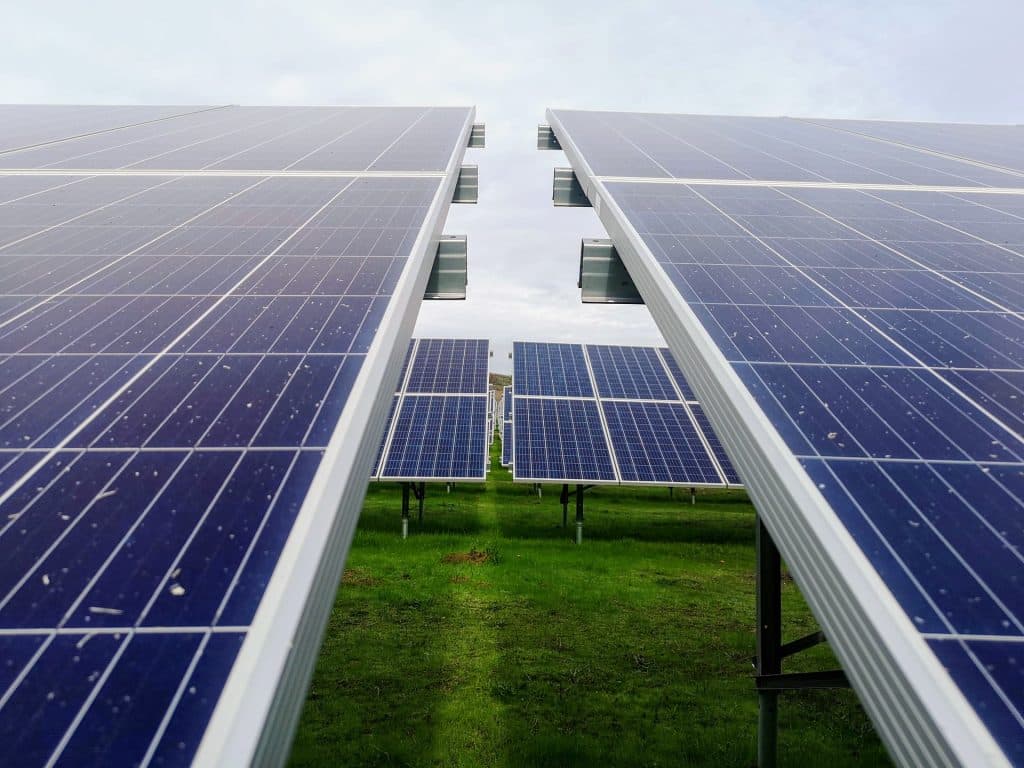
Electricity prices on European spot markets experienced a sharp decline over Easter. Traditionally lower demand during the holiday period, combined with high output from solar and wind power plants, led to a substantial oversupply. However, negative prices did not disappear from the market after the Easter holidays ended, although the drop around the midday peak in photovoltaic generation was not as dramatic in the following days.
With the arrival of spring and rising photovoltaic generation, electricity prices on European spot markets are once again increasingly falling towards zero or into negative territory. This phenomenon was also evident during this year's Easter holidays, when strong wind and solar generation coincided with lower holiday demand. As a result, electricity prices on the Czech day-ahead market for delivery on Easter Monday fell to nearly -135 EUR/MWh, specifically in the period between 13:45 and 14:00.
Prices fell even lower during the same quarter-hour in neighbouring Germany, where they dropped to -147 EUR/MWh. Electricity prices fell lowest anywhere in Central and Western Europe in Hungary, where they reached nearly -200 EUR/MWh.
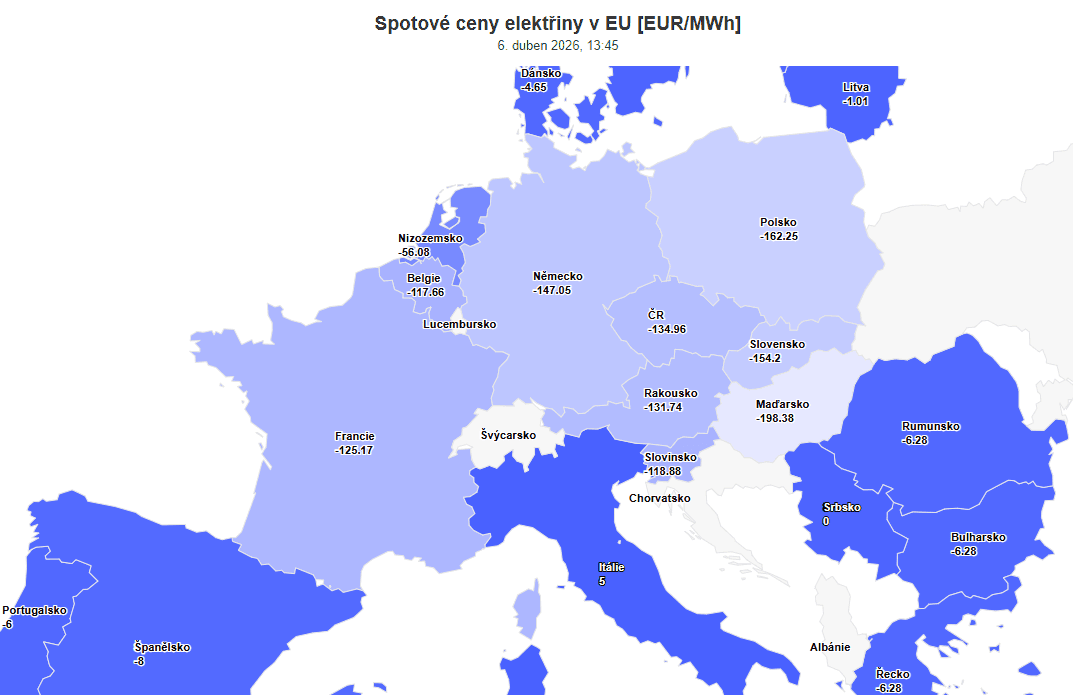
Spot electricity prices for delivery shortly after noon on Easter Monday. Source: Energostat
Hungary has traditionally had an electricity deficit and, due to imports, typically records higher electricity prices than the Czech or German market. However, strong photovoltaic generation can lead to a significant price drop even in this market in such cases.
Negative electricity prices remain on the market
However, negative electricity prices did not disappear entirely from European markets even after the Easter holidays ended. While the situation is not as dramatic as it was on Monday, when electricity in neighbouring Germany, for example, traded at negative prices for most of the day, prices remain below zero around noon.
Photovoltaic generation has been relatively strong this week, exceeding 50 GW in Germany according to data published on the ENTSO-E platform, approaching the total load of the German system.
Data in this chart is also available in 15-minute resolution60min15min
Translation disclaimer
This article is a machine translation of the Czech original and has not yet been fully reviewed. In case of any doubt, please refer to the Czech version.
Sdílejte článek prostřednictvím:
You might also like

24 September 2026, 11:23

24 September 2026, 10:30
24 September 2026, 06:56