25 September 2026, 09:51
Loading...
ENTSO-E: EU generation capacity adequate until 2025, uncertainty over plant closures

David Vobořil
16 October 2017, 17:36
Electricity generation adequacy will remain high in most European countries in 2020 and 2025, although some Central European markets may face potential problems. This is according to a report by the European Network of Transmission System Operators for Electricity (ENTSO-E), published on 3 October.
The report identified island countries (Cyprus, Malta, Ireland and Northern Ireland) and peripheral parts of the countries studied (such as Albania, Bulgaria, Greece and Finland) as particularly problematic in terms of generation adequacy. According to the modelling, these areas will be above the LOLE (Loss Of Load Expectation) reliability indicator threshold of 10 hours per year in 2020.
In addition, electricity supply reliability risks may also arise in continental Europe, in France and Poland, and in Italy, where the LOLE reliability index reaches approximately 35 hours per year.
In Czechia, the study does not anticipate reliability risks over the 2020-2025 period. In Czechia, the generation adequacy assessment must be prepared by ČEPS, with the latest version published in August 2016.
„Interconnection capacity is sufficient and, in the event of any sudden outage, Czechia can import the electricity required to cover domestic demand. We do not expect any change in the availability of cross-border interconnection capacity or any problems related to the risk of power plant closures during this period,“ the ENTSO-E study states in relation to generation adequacy in Czechia.
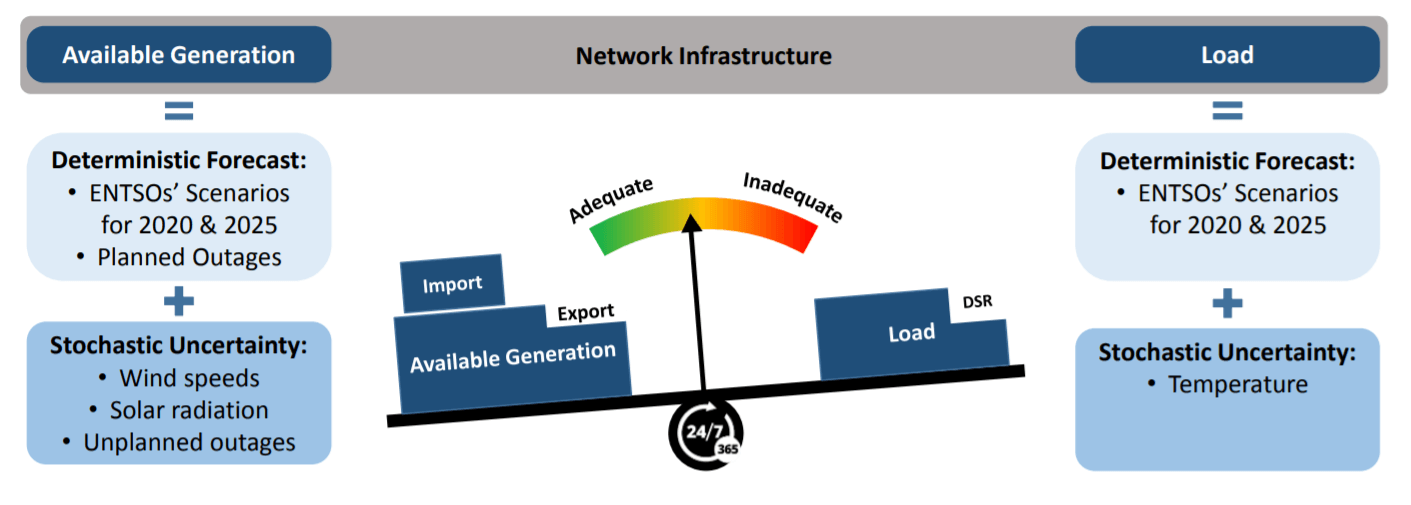
Generation capacity adequacy, also known as generation adequacy, is defined as the ability to balance consumption and supply while ensuring the flexibility of the generation portfolio to respond to sudden changes in output. The ENTSO-E approach is based on assessing reliability levels, analysing residual load curve behaviour, evaluating flexible capacity, and incorporating market and climate conditions affecting plant operation.
The LOLE reliability indicator (Loss Of Load Expectation) indicates the number of hours during a given period (typically a year) when load exceeds forecast generation, including imports. LOLE does not take into account the scale of the load not covered. Every hour in which even a minimal amount of load is not covered is counted.
Key parameter: Thermal power plant closures
The ENTSO-E report states that a key parameter affecting the assessment of generation adequacy is the closure of thermal power plants, whether for economic or political reasons. Although 45 % of countries are affected by thermal power plant closures, according to the report, 82 % of countries are affected by this phenomenon due to cross-border impacts. Removing these generation capacities from the market would mean a 15 % reduction in total installed thermal power plant capacity compared with ENTSO-E's base scenario.
„Particularly in Central European countries with a high number of old power plants, there is a significant risk of premature closures. It will therefore be crucial to monitor activities related to power plant closures on a broader European scale,“ the ENTSO-E report states.
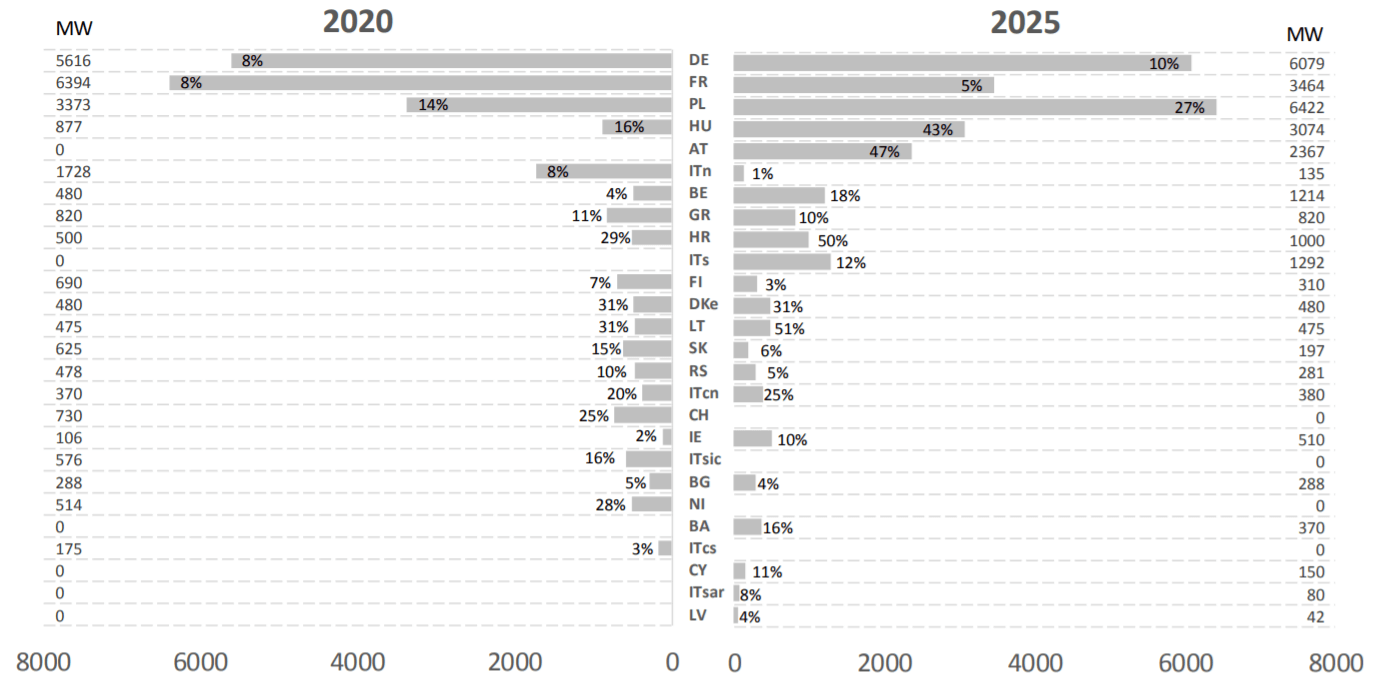
The study identifies Poland as the country whose generation capacity could be most affected by thermal power plant closures. Polish transmission system operator PSE estimates that by 2020, approximately 3,4 GW of installed capacity at Polish thermal power plants could be closed, rising to as much as 6,4 GW by 2025.
The main reason is the obligation to modernise power plants to meet technical standards under the EU Industrial Emissions Directive. According to ENTSO-E, current unfavourable market conditions generally prevent these upgrades.
„The capacity market currently being developed by the Polish government is therefore a decisive solution for ensuring a sufficient level of generation adequacy,“ the ENTSO-E report says.
ENTSO-E also stated that although Spain did not have a generation adequacy problem in the analysis carried out, doubts remain about the future of its installed coal-fired capacity, as these plants will also need to be upgraded to comply with EU emissions standards.
Translation disclaimer
This article is a machine translation of the Czech original and has not yet been fully reviewed. In case of any doubt, please refer to the Czech version.
Sdílejte článek prostřednictvím:
You might also like
24 September 2026, 11:23

24 September 2026, 10:30
24 September 2026, 06:56