
25 September 2026, 09:51
Loading...
Data centres off-grid: a symptom of an outdated, slow energy sector?

Jakub Malý
5 February 2026, 06:53
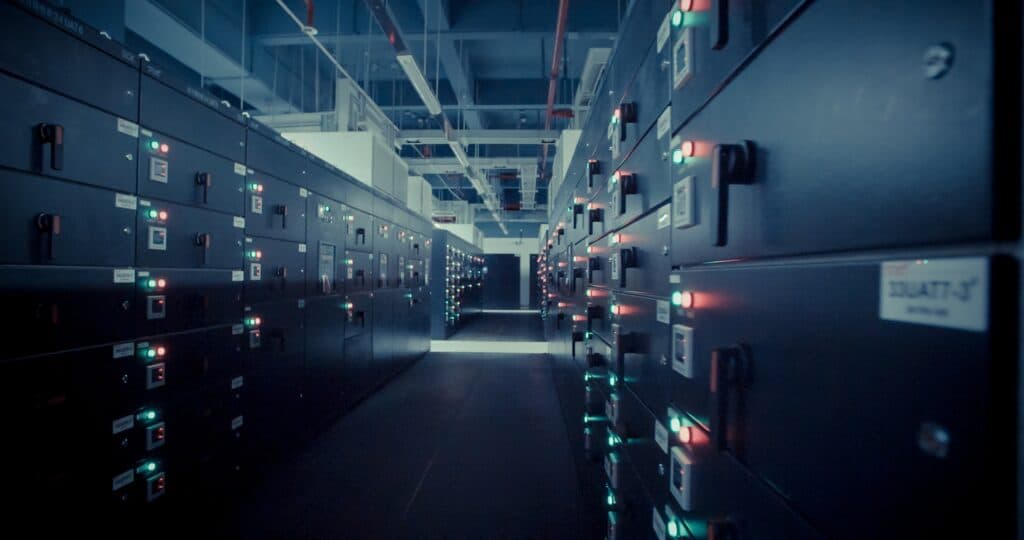
The rapid growth of data centres shows that the constraint on further digitalisation is increasingly not electricity generation, but the ability of energy grids and the regulatory environment to respond to the pace of new investment. Interest is growing in operating data centres with their own electricity generation outside the public grid, a pragmatic response by investors to lengthy connection lead times, uncertain capacity and the high risk of project delays.
Data centres are among the fastest-growing segments of electricity demand, particularly in connection with the development of artificial intelligence, cloud services and compute-intensive applications. The energy requirements of new projects often range from tens to hundreds of megawatts, while requiring highly reliable supply and minimal outages. In this context, it is increasingly apparent that the standard process of connecting to the transmission or distribution system represents a major bottleneck – not only technically, but above all in terms of time.
According to current data from the Cleanview database, which tracks data centre projects in real time, the United States has 577 operating data centres with a load of approximately 14.2 GW and 667 planned projects that would increase the total by a substantial 176.7 GW. This statistic illustrates the enormous scale of planned investment compared with the current situation. More than 30 data centres are currently planned with installed gas turbine capacity exceeding 48 GW.
Due to lengthy permitting processes and limited grid capacity, a trend known as grid-skipping is emerging, namely the deliberate bypassing of the public electricity grid and the construction of proprietary electricity sources directly on the data centre site. This approach can significantly shorten the time between an investment decision and the start of operations, which is crucial for developers. However, it should be noted that this is not a uniform model and, in some cases, may be a temporary solution until a grid connection becomes available; elsewhere, long-term or permanent off-grid operation is already being planned.
From a technological perspective, natural gas clearly plays an important role in these projects. On-site gas turbines and cogeneration units can deliver high operational reliability, rapid output adjustment and relatively short delivery times compared with grid reinforcement. At the same time, it must be noted that moving electricity generation “behind the fence” of data centres raises fundamental questions related to CO₂ emissions, fuel consumption and the long-term compatibility of these solutions with decarbonisation targets.
From a broader system perspective, the grid-skipping trend can be seen as a symptom of a deeper imbalance between the pace of development in the digital economy and the ability of energy infrastructure to adapt to it. Data centres are gradually changing from passive consumers into active energy hubs that optimise their own security of supply regardless of the state of public grids. Unless permitting processes and the coordination of investment in transmission and distribution systems can be accelerated, this approach may become standard due to the logic of investment decision-making.
Translation disclaimer
This article is a machine translation of the Czech original and has not yet been fully reviewed. In case of any doubt, please refer to the Czech version.
Sdílejte článek prostřednictvím:
You might also like

24 September 2026, 11:23

24 September 2026, 10:30
24 September 2026, 06:56