
28 October 2026, 15:10
Loading...
Ember: Europe's electricity grids are not ready for renewable energy expansion
Klára Čeperová
15 March 2024, 07:26
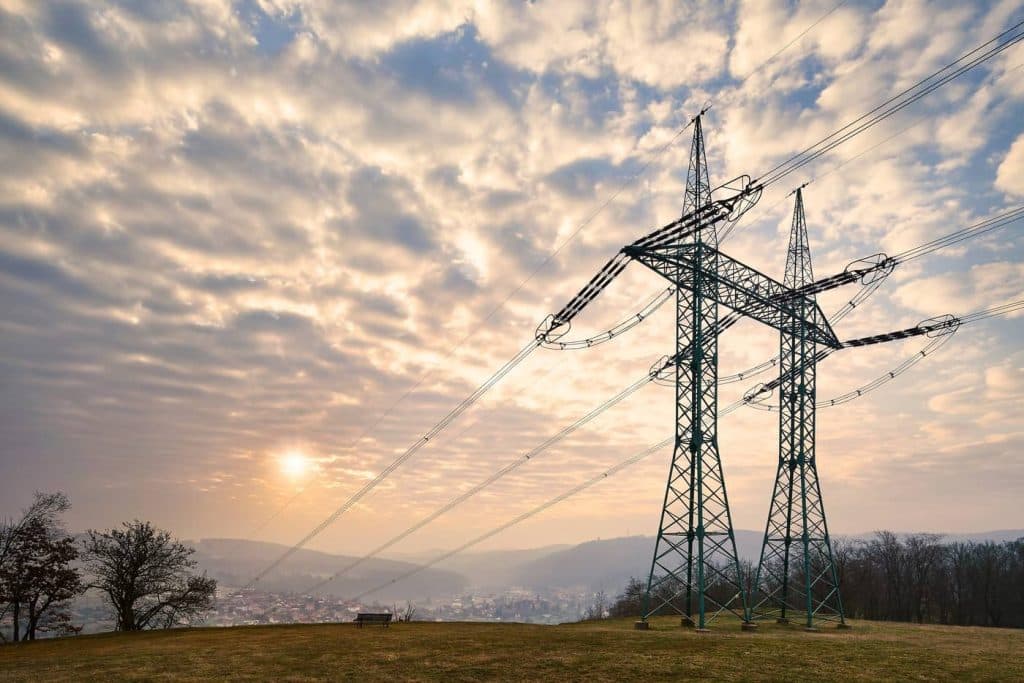
EU countries systematically underestimate in their development plans how quickly renewable energy sources will be connected to the grids. Planned investment in power system development is therefore insufficient given the scale of expansion that would be desirable. New research has also found that the gap between the investment needed and the investment planned is larger than previously thought.
Europe has a grid problem. While new solar panels and wind turbines are being added rapidly across the EU, investment in long-distance high-voltage power lines and lower-voltage distribution networks is lagging behind. A 2023 report said that the gap between the investment needed and the investment delivered would reach 583 billion euros by 2030, but new research shared exclusively with Euractiv suggests it could be even larger.
A brake on the energy transition
Eleven EU countries do not adequately account for renewable energy targets in their grid plans.
“Unless plans are updated, this is holding back Europe's energy transition,” said Elisabeth Cremona, an analyst at the think tank Ember, who conducted the clean energy study.
Grid bottlenecks can pose a risk to the energy transition. Depending on the country, newly built solar installations often have to wait months to be connected to the grid.
“There is a risk that grids will not be ready for the coming solar boom,” the Ember think tank said. As solar panels increasingly dominate Europe's renewable energy markets, the plans of EU countries differ from current forecasts by as much as 82%.
“Ensuring that solar and wind farms can actually connect to the system is just as important as the panels and turbines themselves,” Cremona said.
Successful examples
Notable exceptions are Croatia, Denmark, Finland and the Netherlands, whose grid plans are keeping pace with the expected increase in solar and, to a lesser extent, wind power.
“Finland's transmission system operator Fingrid appears to be guided in its scenarios by high-level policy goals, such as carbon neutrality by 2035 and EU climate neutrality by 2050,” the think tank wrote.
Where is progress stalling?
The problem is not just with planned development; in some countries, system operators are facing opposition to this kind of construction.
For example, in Germany, where local opposition has blocked the transmission of wind power from north to south, electricity often has to travel from northern Germany to the south via Czechia. Around 6,000 kilometres of power lines are currently missing.
Translation disclaimer
This article is a machine translation of the Czech original and has not yet been fully reviewed. In case of any doubt, please refer to the Czech version.
Sdílejte článek prostřednictvím:
You might also like

28 October 2026, 13:08

28 October 2026, 11:10

28 October 2026, 09:08
