Fossil fuels still have a chance in “green” Britain

David Cameron will go down in history as the prime minister under whom the ruling right-wing Conservative Party became markedly “greener”. Like Berlin, London became a respected advocate of renewable energy sources and greenhouse gas emissions reductions. Yet critical voices are now also growing louder in both capitals, arguing that their governments have gone too far in their “green enthusiasm”.
However, the United Kingdom is a different case from Germany. The Federal Republic currently has no problem with a shortage of power plants; rather the opposite. Berlin is primarily dealing with the challenge of managing the boom in weather-dependent renewable sources at a time when no truly fundamental breakthrough in energy storage has yet arrived and the country is lagging behind in building transmission grids.
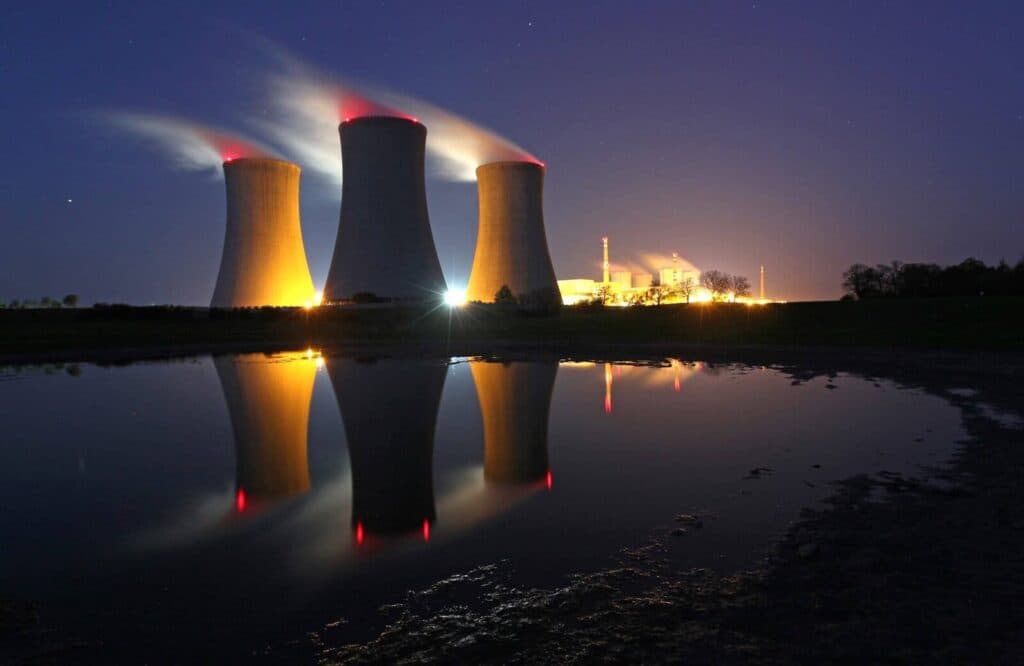
The United Kingdom’s problem is more prosaic. London is addressing the growing threat of a major shortage of energy sources. Its power plants are ageing, and nobody really knows how they will be replaced over the next five to fifteen years. The renewable energy boom will not save the situation for now. There is no doubt that fossil fuels will play a significant role in the British energy sector – and experts can argue over how much longer.
Křetínský’s bet
The bet on acquiring coal assets in Britain may have gone “against the tide” in recent years, yet it appears that Czech businessman Daniel Křetínský and the EPH holding he leads backed the “right horse”. This is regardless of the outcome of the Brexit referendum, which is now also associated with the gradual “fading of green” in the plans of London’s new cabinet. Even earlier, it was possible to calculate the state of Britain’s ageing energy sector.
The nearly fifty-year-old Eggborough power plant faced the threat of rapid closure because of the “green plans”, but for now it survives. British transmission system operator National Grid needs a strategic reserve for periods of higher winter electricity demand that other sources will be unable to meet.
Coal, then gas?
And for the somewhat more distant future, EPH is now planning that it could bet on another fossil fuel – natural gas – in place of the coal-fired power plant. The future gas-fired plant, with a capacity of 2 thousand megawatts, would match the capacity of the current largest gas-fired plant, Pembroke, operated by RWE. It could begin generating electricity sometime around 2022.
In fact, the previous British government had already envisaged so-called capacity payments – support for gas-fired sources which, thanks to their flexibility, are meant to keep both the entire energy system and the transmission grid operating safely. The condition is that Eggborough succeeds with its bid in the “capacity contract” auction.
At a time when Britain is still discussing the possibility of extracting shale gas and oil – and replicating the boom that has undoubtedly benefited the US economy – it is now also possible to bet on the further development of gas-fired power plants.
Power plants phased out
A more accurate picture of the ageing of Britain’s energy sector was provided recently by an analysis from Barclays Research, based both on the need to replace ageing power plants and to “decarbonise”.
It should be noted that Barclays Research analysts see considerable opportunities for investors in green energy. However, for the United Kingdom to meet its stated targets, the island nation must invest £215 billion by 2030, according to the study.
By then, roughly 70 percent of electricity generation capacity will have become obsolete. Unless plans change, Britain will lose 15 gigawatts of coal-fired capacity by 2025. And what further losses await the British energy sector by the end of 2030? These will include 7.7 gigawatts of the current 8.9 gigawatts of installed nuclear capacity. As the problems surrounding the Hinkley Point project show, the construction of further nuclear units looks uncertain.
Britain will also lose 13 gigawatts of gas-fired capacity by 2020; by 2030, this loss will amount to 22 gigawatts.
Dependence on subsidies
Despite Britain’s achievements to date in reducing energy consumption (by nearly one-fifth compared with 1990), Barclays Research’s “central scenario” projects a modest 5 percent increase in electricity consumption by 2030. This need not mean an increase in overall energy consumption, because one significant factor in further developments is the electrification of heating. Another is the growth of electric mobility.
Simply put, even replacing existing sources with plants of the same capacity (or, more precisely, with the same ability to generate electricity regardless of weather conditions) may not be enough. In an already distorted market environment, further subsidies and support schemes will be needed – whether in the form of a guaranteed electricity price for new sources, in the British style (the so-called Contract for Difference), or the aforementioned capacity payments.
Green boom continues
It is clear that, thanks to continuing support, the renewable energy boom will continue in Britain. As recent reports show, the British will also do enough, for example, to develop battery storage. Yet the needs are enormous. The aforementioned Barclays Research analysis states that, in order to meet its targets (which do not include the complete displacement of conventional sources), Britain would have to invest £95 billion in renewable sources, battery storage and decentralised energy generation.
When it comes to green sources, this is certainly not about halting their expansion, but about a realistic assessment of their potential over different time horizons. Criticism of the government’s policy to date concerns its lack of realism. Dan Lewis, who advises British business on infrastructure policy, for example argues that “instead of building more cleaner gas-fired power plants when renewable sources cannot meet demand”, the government subsidised the much less environmentally friendly burning of diesel.
It appears that London now recognises the importance of gas, and Křetínský’s next British bet could therefore pay off…
Fracking – yes or no?

Calls for shale gas and oil extraction are closely linked to Britain’s relatively recent history. In the last century, the United Kingdom became a major producer of both strategic commodities in the North Sea, making it far less dependent on energy imports than other European countries. Yet, as is well known, this chapter in the history of its energy sector is slowly coming to an end.
Energy security experts place great emphasis on extracting domestic resources – alongside domestic renewable and nuclear sources. “Government policy is currently leading to bizarre consequences,” says Dan Lewis. Instead of the aforementioned shale extraction of gas and oil directly in the United Kingdom, he says, Britain imports coal and oil from Russia, as well as gas and oil from Norway.
In Britain too, the controversial method of extracting shale resources – hydraulic fracturing, or fracking – naturally faces opposition from part of the public.
Sweetening the deal for fracking
The question now will probably be whether London can weaken sceptics’ voices with various incentives. One such “sweetener” is intended to be the so-called Shale Wealth Fund, which is to collect 10 percent of tax revenues from future extraction and use them to compensate areas affected by resource extraction. Crucially, this money should go directly to households, rather than to “local rulers”.
Excitement was recently sparked by reports that the first shipment of liquefied shale gas from the United States to the Grangemouth chemical plant in Scotland is planned for September. Some observers consider it absurd that the Scottish government has declared a moratorium on fracking there.
It must be expected that the debate over whether to exploit shale will remain very lively. A key argument in favour of using domestic gas in the energy sector, however, will also be the effort to maintain transmission grid stability at a time of an ever higher share of renewable sources in electricity generation. Put more simply – to prevent any blackouts.
Carbon underground?
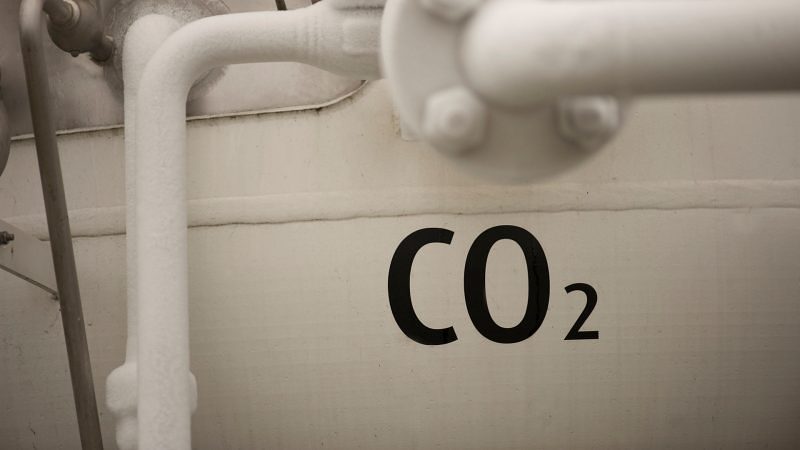
Perhaps an even more controversial topic than shale extraction is the method of capturing carbon emissions and storing carbon dioxide in underground repositories (Carbon Capture and Storage – CCS). Among other things, this would make it possible to keep all fossil-fuel power plants running – whether coal-fired or gas-fired.
The British government had previously decided to give CCS the same opportunity as, for example, the further development of renewable and nuclear power plants. In all these cases, operators could look forward to a guaranteed price (the aforementioned Contract for Difference).
However, David Cameron’s government managed to cancel the planned allocation of £1 billion for the development of CCS technology this year, because it remains “unproven” and too expensive. Nevertheless, some steps by the new cabinet are sending more hopeful signals regarding the coal industry – for example, greater emphasis on linking climate change policy with industrial policy and research support.
A recent report by the UK National Audit Office even argues that if CCS technology is not developed, it will mean higher budget expenditure for Britain in the longer term.
The author works as a consultant and energy project specialist for the HATcom agency.
Translation disclaimer
This article is a machine translation of the Czech original and has not yet been fully reviewed. In case of any doubt, please refer to the Czech version.