German CDU/CSU parties want to prioritize overhead lines, saving billions and time

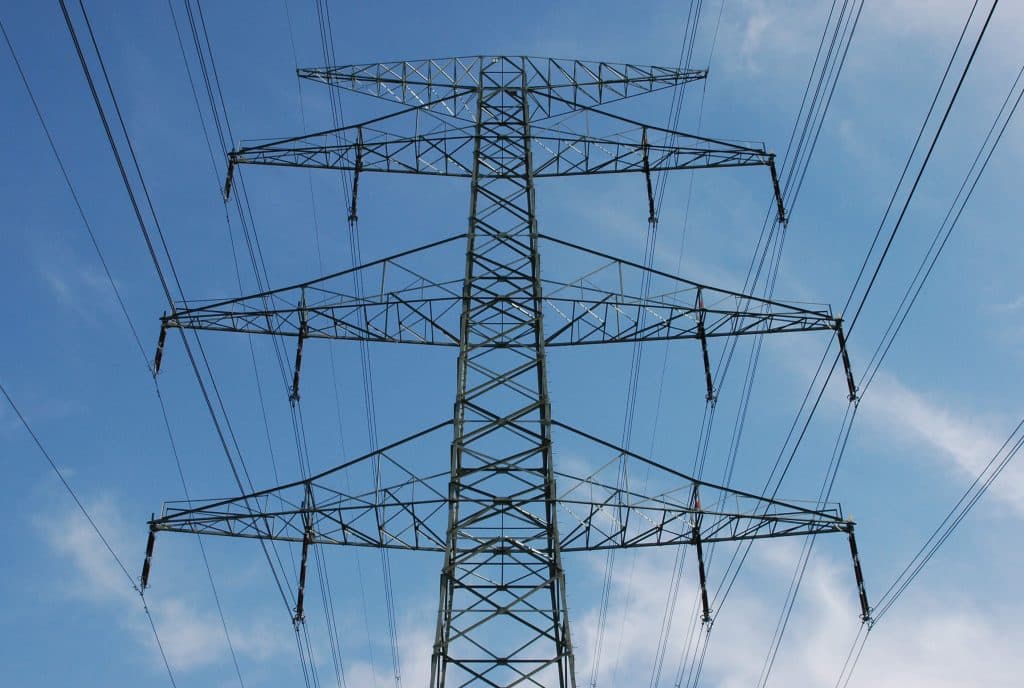
The debate over the construction of electricity transmission lines in Germany is intensifying. The CDU and CSU parties have presented a new 12-point plan that prioritizes overhead lines to cut costs and accelerate projects. Proposed savings of up to EUR 35 billion out of the EUR 300 billion planned for transmission network expansion reflect an effort to develop infrastructure efficiently. However, the plan raises questions about its impact on the environment and electricity prices, which are already high.
Germany’s conservative opposition alliance, the Christian Democratic Union (CDU) and the Bavarian Christian Social Union (CSU), has proposed a 12-point plan aimed at prioritizing the construction of overhead lines over the underground cables that have long been preferred. The move is expected to save approximately EUR 35 billion out of the EUR 300 billion earmarked for expansion. The German daily Frankfurter Allgemeine Zeitung reported on the plan.
The conservative parties argue that expanding renewable energy is a lost cause unless sufficiently powerful electricity grids are built at the same time. The CDU and CSU parliamentary groups aim to approve the 12-point plan to reduce the cost of grid expansion this week and submit it to parliament.
“There is little point in spending many billions of euros to build several gigawatts of wind power capacity in offshore waters if much of it then has to be shut down for a large part of the year because transmission capacity for the energy produced was not provided at the same time,” the document states.
The two parties have thus joined the German Association of Energy and Water Industries (BDEW), which recently also called for several key transmission lines to be built as overhead lines.
CDU and CSU propose a new rule: “Overground where possible, underground where necessary”
The idea of placing most transmission lines underground to reduce their visual impact on the landscape and make new lines more acceptable to the public was originally promoted by the government of former CDU Chancellor Angela Merkel. In 2015, Merkel’s grand coalition government, together with the Social Democratic Party (SPD) of current Chancellor Olaf Scholz, agreed to prioritize underground cables at the behest of then-CSU leader and Bavarian premier Horst Seehofer.
The current proposal, signed by parliamentary group leader Friedrich Merz (CDU) and CSU regional group leader Alexander Dobrindt, states that the rule in future must be: “overground where possible, underground where necessary”. Routes should “generally be planned and built as overhead lines” to reduce construction and operating costs and shorten planning and construction times. “Underground cabling will generally be used in polluted areas.” According to the proposal, a large-scale shift to overhead connections could save EUR 35 billion.
That would be almost 12% of the approximately EUR 300 billion in transmission network expansion costs estimated in the new 2037/2045 network development plan. A further EUR 150 billion has been earmarked for distribution networks. Private and commercial consumers have to pay for this through network charges. After the German government cancelled the last federal subsidy of EUR 5.5 billion because of the budget crisis, network charges are expected to rise. The CDU/CSU fears this burden will further increase Germany’s already high electricity prices for end consumers.
Underground lines can cost up to 10 times more
The construction of overhead and underground power lines differs not only in cost, but also in complexity and environmental impact. According to the International Energy Agency (IEA), the cost of building high-voltage overhead lines is approximately EUR 250,000 to EUR 500,000 per kilometre, while underground lines can cost EUR 1,000,000 to EUR 3,000,000 per kilometre.
The difference in cost is due to the greater material, labour and engineering requirements involved in installing underground cables. Underground lines require more complex construction work, including excavation, cable laying and protection against moisture and other environmental factors.
The European Network of Transmission System Operators for Electricity (ENTSO-E) states that underground lines usually cost 3 to 10 times more than overhead lines. This significant difference is due not only to construction itself, but also to maintenance and operating costs. Overhead lines are simpler and quicker to install, which also means lower construction and operating costs.
Underground lines, however, offer advantages such as less visual impact on the landscape and a lower risk of damage from external factors, which can be significant in densely populated or environmentally sensitive areas.
Translation disclaimer
This article is a machine translation of the Czech original and has not yet been fully reviewed. In case of any doubt, please refer to the Czech version.