20 October 2026, 15:34
Loading...
Tesla unveils Model 3, the most affordable car in its portfolio
Tomáš Jirka
1 April 2016, 15:49
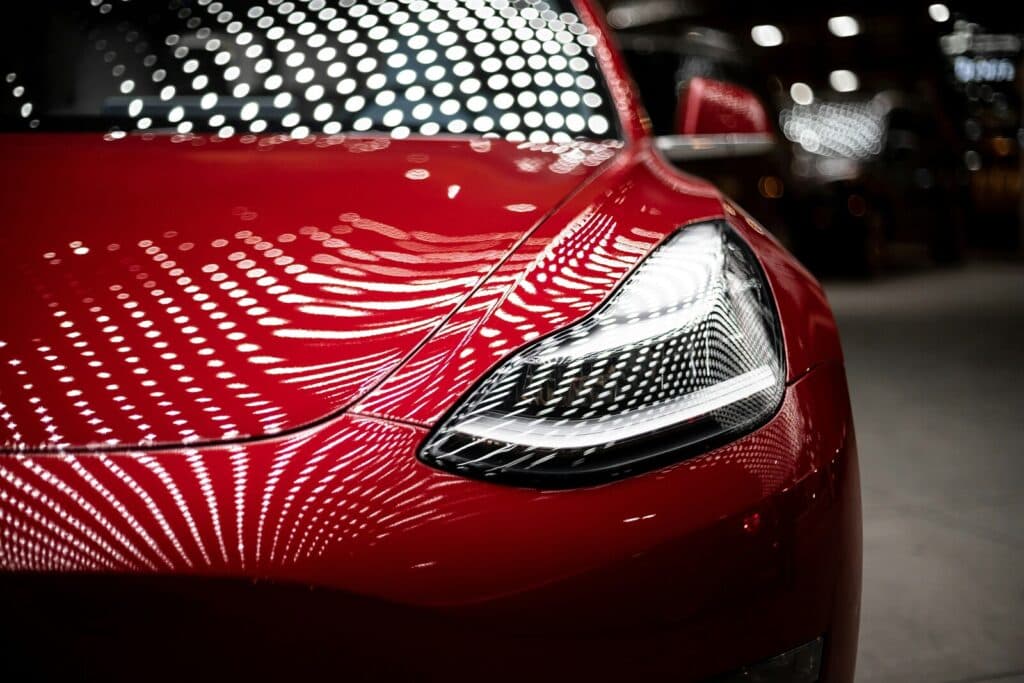
On the evening of 31 March 2016 (5:30 a.m. Czech time), carmaker Tesla Motors unveiled its fourth vehicle, the Model 3. Although production is not expected to begin until the end of 2017, the company collected 130,000 orders from enthusiastic customers on the first day alone. To ensure maximum customer satisfaction, existing customers—owners of the Model S and X—will be given priority, following Ferrari’s example. That is the extent of the phenomenon Tesla has become over its thirteen-year history.
At the official event, not entirely unlike an Apple product launch, virtually all speculation about the new model was confirmed within 22 minutes. Invited journalists even had the opportunity to take the car for a short drive at the company’s design studio. According to Elon Musk, more detailed specifications will only be available closer to the start of production. He said this should begin by the end of 2017, which, given previous experience, sounded rather amusing, and the audience reacted accordingly.
Tesla essentially promises every year that it will turn a profit the following year (yes, due to massive investments in the Gigafactory and new models, it was still in the red in 2015), but its name and market position are very strong, so customers simply believe in it.
Confidence in the claim that, thanks to the highly successful Model S and the ramping-up Model X, the carmaker has already developed everything it needs is helping to drive the number of orders placed and deposits paid. The plan to increase sales from last year’s 50,000 electric vehicles to 80,000 to 90,000 in 2016 could be achieved, thanks to the launch of Model X sales. With the Model 3, even the highly ambitious target of selling 500,000 electric vehicles in 2020 could become reality.
An affordable Tesla electric vehicle = USD 35,000
Tesla promised an affordable electric vehicle and confirmed a price of USD 35,000 before subsidies at the presentation, putting it on a par with the competing Chevrolet Bolt (albeit with a different body shape due to its urban focus, but still with a 60kWh battery), which will reach the market much sooner. The second generation of the Nissan LEAF and other lower-priced electric vehicles can also be expected, which is why Tesla is still keeping some of its trump cards to itself.
Subsidy schemes vary significantly from country to country, but it should be added that operating an electric vehicle is cheaper than operating an internal-combustion alternative. Moreover, the Model 3 targets the mid-size segment, competing with the Audi A4, BMW 3 Series and Mercedes C-Class, where price tags exceeding one million Czech crowns are quite common and where a completely quiet cabin, except in top RS/M/AMG models, is desirable.
What is included in the price?
The basic version will be able to travel at least 350 km on a single charge and accelerate from 0-100 km/h in 6 seconds. The more powerful version will reach this mark in around 4 seconds. Range will naturally depend on driving style, but the good news is that charging station expansion is planned. Information has also emerged about planned versions, with a range of up to around 500 km and prices of up to USD 60,000 expected.
The Tesla Autopilot system will also be standard, as will a combination of front and rear luggage compartments, thanks to which the Model 3 will offer more luggage space than any other similarly sized car—a challenge to Mladá Boleslav.
Like the Model S, the Model 3 should, according to Elon Musk, excel in crash tests. Confirmation of this information will have to wait until the production version. As with other models, the possibility of controlling the vehicle via a smartphone is also unsurprising.
Although it is a mid-size vehicle, there should be enough space in the rear seats for three adult passengers. Moving the dashboard forward has created more legroom for rear-seat passengers. The dashboard lacks conventional instruments, which are replaced by a centrally mounted fifteen-inch display that, in combination with a head-up display, provides all the necessary information.
An interesting feature of the interior, which differs significantly from previous models and is more reminiscent of motor show concepts, is the glass roof. It will probably also be possible to order the car with a conventional roof, or a retractable glass roof following the Model S. As this is intended to be a mass-produced, mainstream electric vehicle rather than a luxury vehicle like the S or X, the absence of a conventional roof could be a potential drawback.
The exterior design follows the “Tesla” tradition, without the imitation front grille of the Model S. Other trump cards could include additional body styles, as originally announced.
The Supercharger situation
A much-discussed detail, confirmed at the presentation, is the possibility of using Tesla Superchargers (Tesla’s network of DC charging stations with output of up to 120 kW, thanks to which even the likely 60kWh battery could be charged to 80% in 20 minutes) and Destination Chargers free of charge. According to Musk, the number of Superchargers worldwide should double by 2017, to 7200, as should the number of Tesla Stores, of which there are currently 220 (unfortunately, none in the Czech Republic). The number of Destination Chargers should be quadrupled by the end of 2017, to around 15,000.
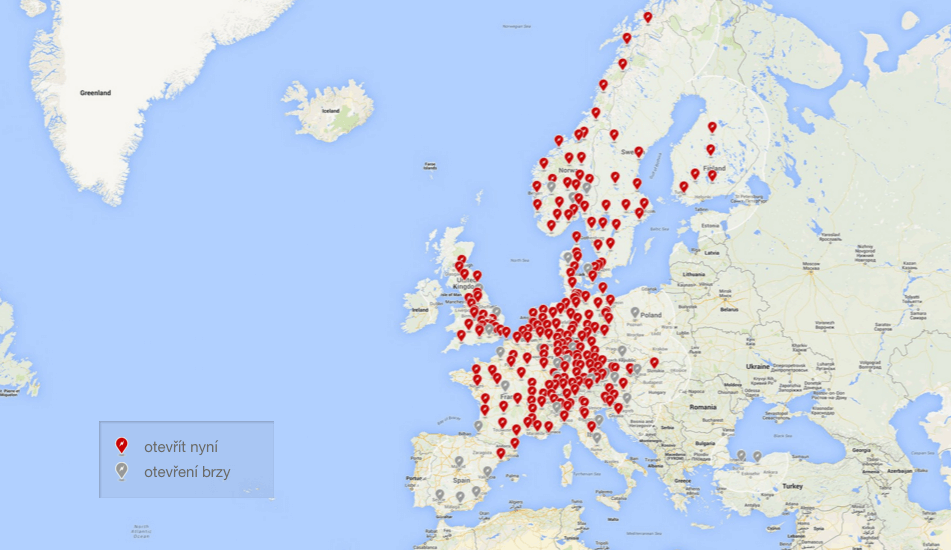
Supercharger availability in the US is excellent. Looking at the map of stations in Europe, a fairly clear dividing line between Western and Eastern Europe is visible, but this is beginning to change this year. In the Czech Republic, a Supercharger is being built in a configuration of 6 Tesla Supercharger stalls and 6 E.ON CHAdeMO/CCS stalls near Vystrkov by Humpolec at kilometre 90 of the D1 motorway, while a second will be available in Prague on Vídeňská Street. This also confirms speculation about the possibility of building charging stalls at Benzina filling stations.
In Slovakia, a Tesla Supercharger station is already located near Zvolen, confirming Tesla’s strategy of building fast-charging stations not in city centres but on the routes connecting them, along strategic motorways. Another nearby station in Eastern Europe is planned in Poznań, Poland.
Footage from the first Tesla Model 3 test drives
Translation disclaimer
This article is a machine translation of the Czech original and has not yet been fully reviewed. In case of any doubt, please refer to the Czech version.
Sdílejte článek prostřednictvím:
You might also like

20 October 2026, 12:55
20 October 2026, 10:49
20 October 2026, 06:13