20 October 2026, 15:34
Loading...
The American nuclear renaissance is being funded by the government and multinational tech giants. Europe is lagging behind

Martin Voříšek
20 October 2026, 14:49
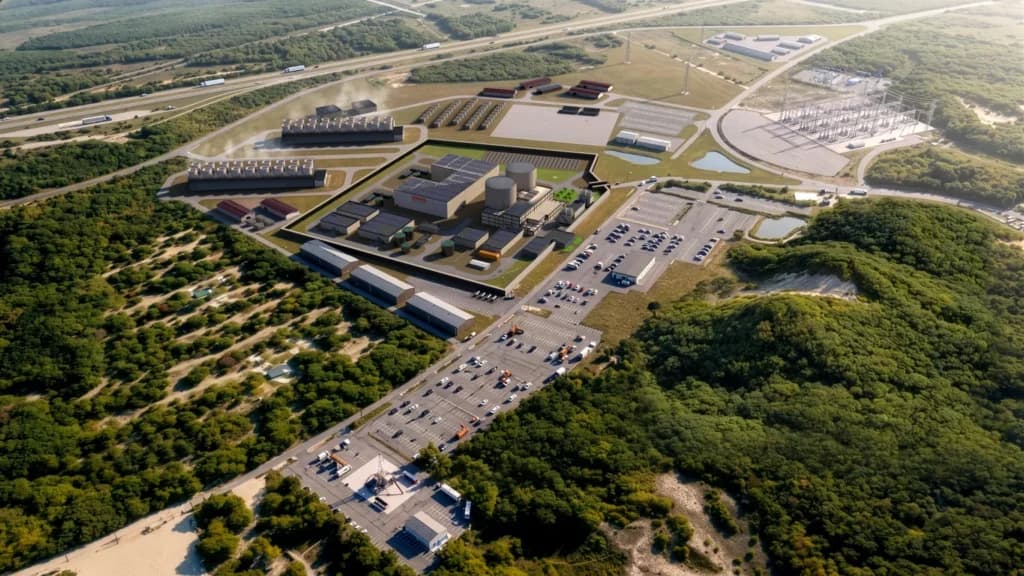
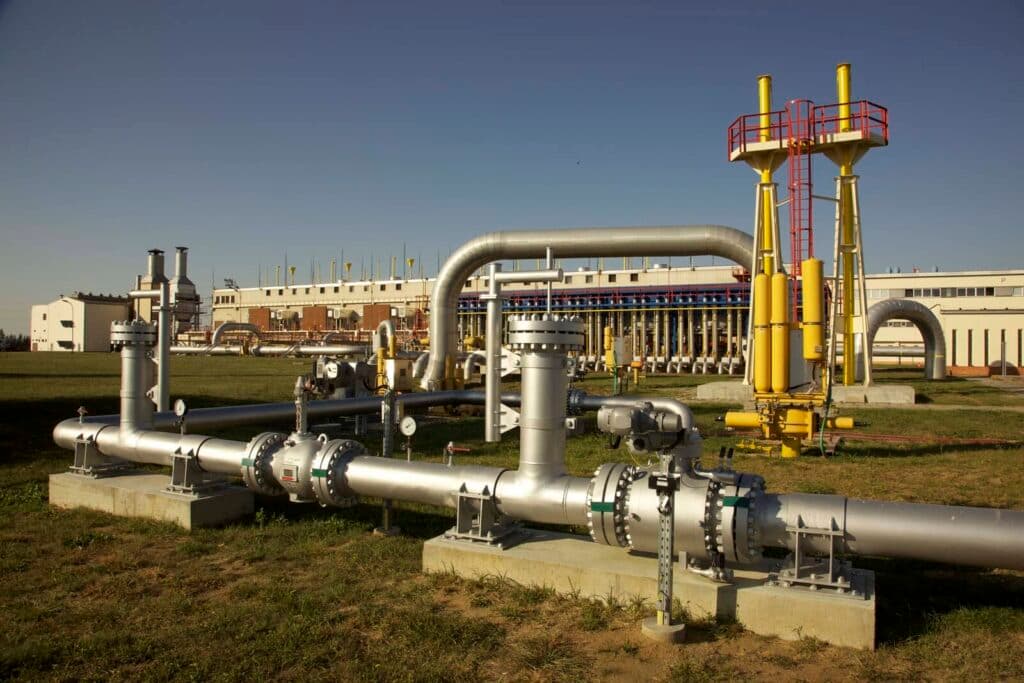
Under President Donald Trump, the United States is trying to put nuclear power back at the heart of its energy policy. But Donald Trump is not the only force behind America’s nuclear renaissance. Private companies are also helping to drive it. The reason is rapidly growing electricity demand from data centers, which is bringing new customers to nuclear power plants. While Washington helps with financing and reducing construction risks, technology companies are taking on part of the risk associated with future revenues from new power plants.
Efforts to revive nuclear power are becoming increasingly apparent around the world. The Czech Republic is turning to nuclear power, as are other European countries, including the traditionally nuclear-powered France, as well as Sweden, the Netherlands and Poland. Similar developments are also taking place outside Europe, including in the United States.
The American nuclear renaissance differs from Europe’s in one crucial respect. While private-sector involvement is rare in Europe—with the exception of an agreement between Google and Fortum to purchase electricity from the Loviisa nuclear power plant—private companies are much more active in the United States.
Vistra is a case in point. Meta secured supply from its power plants early this year, and in October the US Department of Energy pledged up to $4.2 billion to modernize and increase the capacity of its facilities.
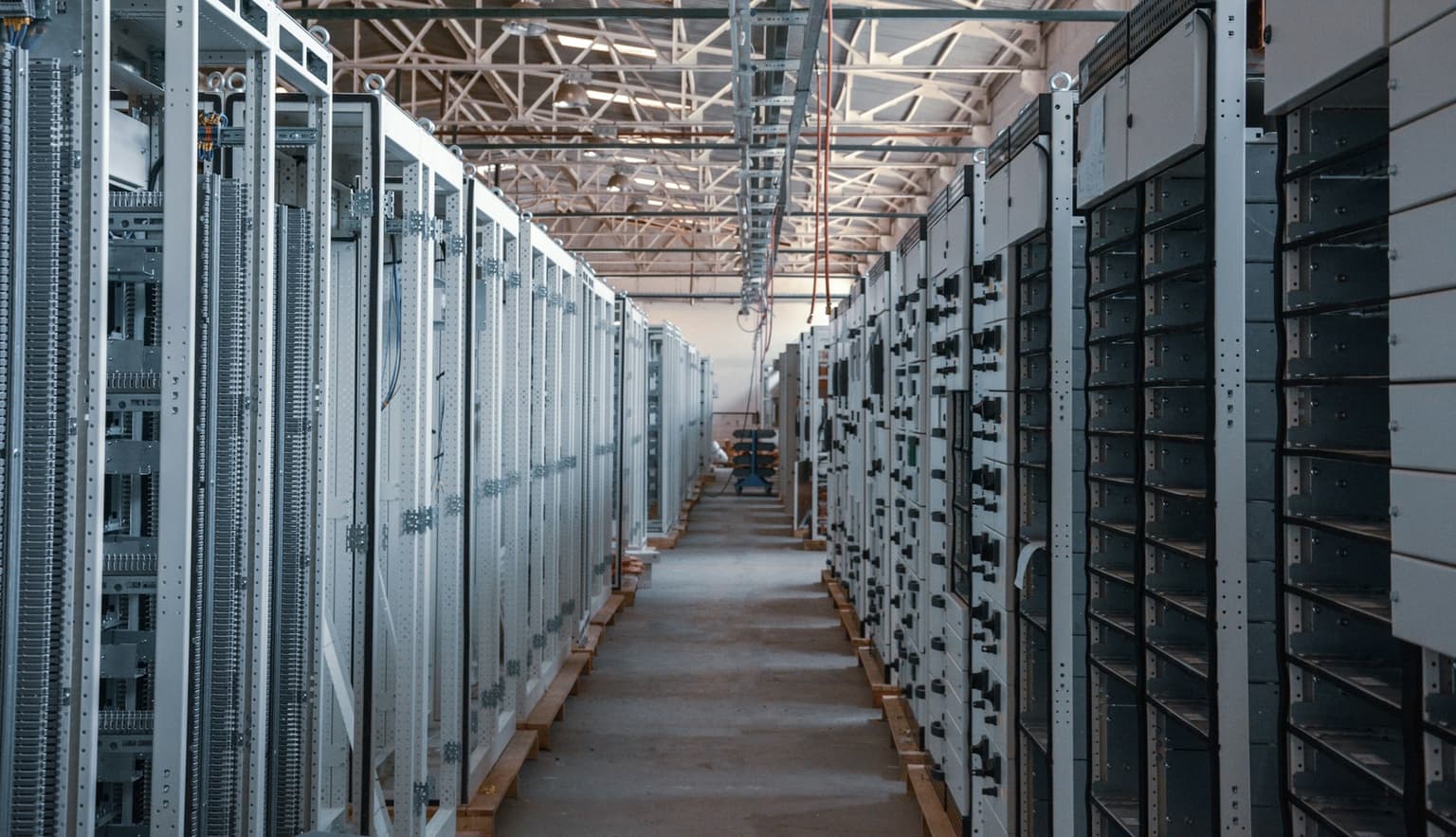
Data center. Source: Unsplash
The government is therefore focused on reducing investment, technology and supply-chain risks, while customers such as Google and Meta help power companies secure long-term buyers for the electricity they generate.
Increasing existing plant capacity by 5 GW and building 10 new large reactors
The nuclear renaissance began with an executive order issued by President Donald Trump in May 2025. It directs the Department of Energy to support a five-gigawatt increase in the capacity of existing reactors and to work towards having ten new large reactors under construction by 2030.
For comparison, according to the World Nuclear Association, the United States has a total of 94 operating reactors at 54 sites. Their total installed capacity is around 97 GW. The plants are located across 28 states.
One form of support is federal loans. In addition to the conditional pledge to Vistra, the department has concluded loan agreements worth around $1 billion to restart the Crane plant in Pennsylvania and for a loan of up to $1.52 billion to restart the Palisades plant in Michigan.
Once back in operation, Crane is expected to supply up to 835 MW to the grid. Palisades has a capacity of 800 megawatts, and its return to service is still subject to approval by the local nuclear regulator.
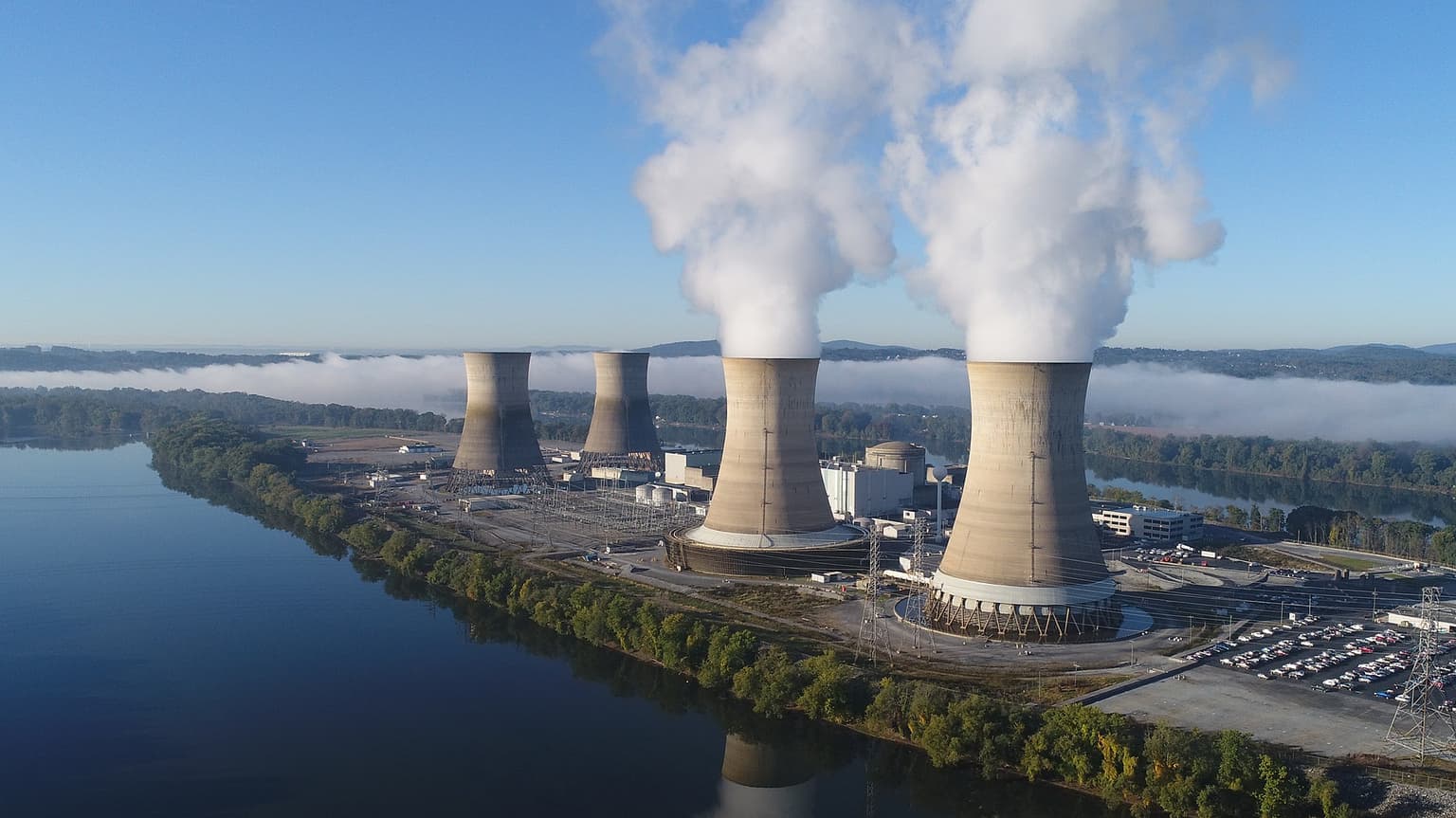
Three Mile Island nuclear power plant (now the Crane Clean Energy Center).
Source: Constellation Energy
It should be noted that, in Vistra’s case, the financing is only a conditional pledge so far. Vistra must first meet technical, legal, environmental and financial requirements before the department can sign a binding loan agreement and provide the loan.
Another part of the federal strategy focuses on manufacturing capacity for new reactors, which is essential to new construction. In June 2026, the Department of Energy announced a conditional $17.5 billion loan program to help finance the purchase of long-lead components for up to ten large reactors (so-called long-lead items). The aim is to order these key components in advance and speed up their delivery by as much as three years.
The government is also supporting the development of small modular reactors. In December 2025, the Department of Energy selected the Tennessee Valley Authority (TVA) and Holtec to receive up to $800 million for first projects in Tennessee and Michigan. TVA is preparing a BWRX-300 reactor at the Clinch River site, while Holtec plans to build two SMR-300 reactors at the Palisades plant. This funding covers only part of the total costs, but these steps clearly show the federal government’s efforts to revive nuclear power.
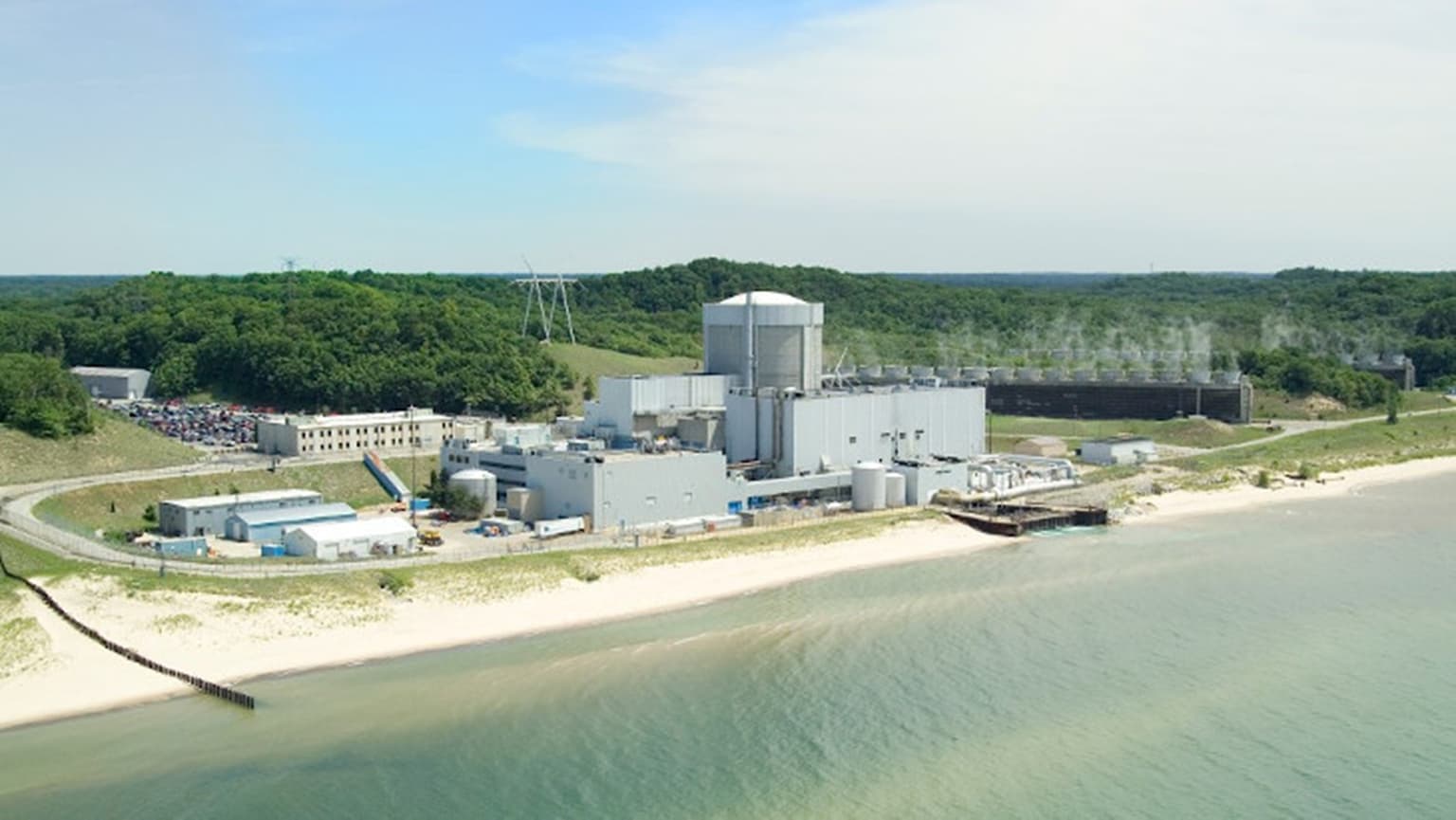
The Palisades reactor could become the first reactor to be restarted after being permanently shut down. Source: Holtec
Alongside financial support, the permitting of advanced technology projects is also moving forward. In March 2026, the US Nuclear Regulatory Commission approved the issuance of a construction permit for the first unit of TerraPower’s project in Kemmerer, Wyoming. The sodium-cooled reactor is expected to have a capacity of up to 345 megawatts. The project includes energy storage, allowing output to be temporarily increased to as much as 500 megawatts.
Technology companies secure long-term electricity offtake
One crucial aspect distinguishes America’s nuclear renaissance from Europe’s: the involvement of private companies. They are much more likely to take on the risk associated with selling electricity by signing long-term contracts. While such agreements are relatively rare in Europe, several have been signed in the United States this year.
A long-term power purchase agreement helps a generator secure a return on its investment in advance. If a major customer commits to buying electricity for fifteen or twenty years, a company does not have to rely solely on wholesale electricity prices, which can fall below the level needed to recoup its investment. This makes revenues more predictable and can help secure financing from commercial banks.
Google and Constellation Energy have most recently agreed on a long-term power purchase. Their contract will support a capacity increase of 890 megawatts across a total of eleven units at six sites. The first capacity increase is expected as soon as 2028. Constellation said it would spend more than $4.3 billion on the capacity expansion. A separate 15-year agreement also covers not only the capacity increase, but primarily the purchase of electricity from a further 2,700 megawatts of capacity at existing power plants.
Google is thereby expanding its portfolio of agreements with nuclear power plant operators, helping to meet the growing electricity consumption of data centers. The company said its agreements to increase the capacity of existing reactors and restart shuttered facilities would add more than 1.5 GW of nuclear capacity to the US grid. The partnership with Constellation also includes plans to use cloud tools and artificial intelligence to plan upgrades, manage operations and protect infrastructure. However, their impact on prices and supply reliability will only become clear in practice.
Meta has already used a similar model in partnership with Vistra. The 20-year power purchase agreements cover more than 2,600 megawatts of capacity. This includes 2,176 megawatts from the operating Perry and Davis-Besse plants in Ohio, plus another 433 megawatts that will be added through upgrades to three reactor units at nuclear power plants in Ohio and Pennsylvania
Vistra’s case clearly demonstrates how the private and public sectors can work together. While Meta provides the power plant operator with long-term certainty over electricity sales, the Department of Energy offers preferential financing to upgrade the same plants. This does not mean the government assumes all the project’s risks or that the funding is a direct subsidy. It is, however, a good example of public-private cooperation, with each sector playing a different role.
Other examples include Amazon’s agreement with Constellation to purchase electricity from 690 megawatts of capacity at the Calvert Cliffs plant, which is also intended to support a 190-megawatt capacity increase. Microsoft, meanwhile, signed a 20-year agreement to purchase electricity from the Crane plant, whose restart was supported by the Department of Energy through a $1 billion loan agreement. Buyers are therefore supporting not only the construction of new facilities, but also the continued operation and restart of shuttered plants.
America’s nuclear renaissance is therefore built on two main pillars of support. The first, government support, reduces investment and technology risks, while the second, private-sector buyers, secures long-term electricity sales. For now, this model is most evident in nuclear plant upgrades and restarts.
PPAs supporting the construction or expansion of nuclear power plants are rare in Europe
One of the few recent examples of a long-term agreement with a nuclear power plant operator in Europe is the already-mentioned agreement between Google and Finland’s Fortum to purchase electricity from the Loviisa plant.
The contract covers the period from 2028 to 2049 and ensures that Google will purchase up to half of the plant’s output. The agreement is intended to help Fortum complete investments to extend Loviisa’s operating life. A possible 10 MW capacity increase is also under consideration. Google plans to invest at least €13 billion in Finland over the next two years, primarily in data centers and supporting infrastructure.
Europe does have long-term contracts that secure revenues for nuclear power plant operators. However, their counterparties tend to be governments rather than private companies. Through contracts for difference, governments guarantee generators an agreed electricity price. This model is planned for new power plants in the Czech Republic, France, Sweden and Poland.

Dukovany nuclear power plant. Source: Unsplash
Long-term agreements securing offtake from new projects are also relatively rare in Europe, and particularly in the Czech Republic, for renewable energy sources. Among companies operating in the region, Czech-based Rezolv Energy, which is developing projects in southeastern Europe, is one example of an active player in the PPA market. It has already arranged electricity supply from renewable energy projects in Romania for major European buyers.
Translation disclaimer
This article is a machine translation of the Czech original and has not yet been fully reviewed. In case of any doubt, please refer to the Czech version.
Sdílejte článek prostřednictvím:
You might also like
20 October 2026, 12:55
20 October 2026, 10:49
20 October 2026, 06:13