Westinghouse's troubles were brewing twenty years ago, recalls František Hezoučký
Westinghouse's current bankruptcy is far from necessarily spelling the end of the famous brand. However, it can be described as the culmination of many problems from both the recent and more distant past. A major turning point came around twenty years ago.
In the 1990s, one of the largest and most successful industrial giants in American history, with a broad portfolio of activities spanning the entire economy and a history dating back to the 19th century, was gradually breaking up. It was Westinghouse Electric Corporation. Its founder was George Westinghouse, a renowned inventor, visionary and industrialist, as well as a major rival of Thomas Edison.
Today's leading global supplier to the nuclear power industry, Westinghouse Electric Company, builds on that illustrious tradition, but represents only a small—albeit also famous and significant—part of the former “big” Westinghouse. It had extensive operations in engineering and energy (far beyond just nuclear power), manufactured everything from radar systems to refrigerators, and was a pioneer in areas including commercial radio broadcasting.
The former “big” Westinghouse ran into major financial trouble in the 1980s and over the following decade. František Hezoučký also worked at Westinghouse at that time—one of the best-known figures in Czech nuclear power, known among other things as the later head of the completion of the first two units at the Temelín nuclear power plant.
Hezoučký was a technical adviser to Westinghouse for just under five years, from May 1993 until the end of 1997.
The arrival of Michael Jordan
Today, most people associate the name Michael Jordan with the famous basketball player, but an American manager who played a regrettable role at Westinghouse during those critical 1990s bore the same name. Jordan spent much of his life at PepsiCo, where he rose to become its chief executive. He left the business in 1992, but it was not long before he began working in private investment.
Westinghouse brought in Jordan as its chief executive and designated saviour in 1993. “As I recall, they were not looking for a manager who would get the company back on its feet so that it would not cede its ground to others,” František Hezoučký said in an interview with the oEnergetice website. They were “merely” looking for a way to keep making money. “Mike Jordan was selling off the traditional portfolio while investing in radio and television,” Hezoučký recalls.
According to Hezoučký, Jordan sought a short-term solution rather than a long-term outlook for the core business—the industrial and energy sectors in which Westinghouse was the leader. “Mike had no attachment to Westinghouse,” Hezoučký explains of the situation at the time. Yet, in his view, Westinghouse had a huge number of high-quality specialists even then, on whom it could have built.
“These specialists began leaving Westinghouse en masse—the best departed first because they knew they could find work elsewhere. In short, in my view Mike may have saved dividends in the short term, but he certainly would not have been the right person for Mr George Westinghouse—the person the company needed,” František Hezoučký adds.
Devotion to Wall Street
Views on Michael Jordan's tenure naturally differ. Steve Massey, an economist and journalist who covered the breakup of the original “big” Westinghouse for the Pittsburgh Post-Gazette, for example concluded that Westinghouse was already in such a state that even Michael Jordan could not have saved it. However, when it comes to the causes of the collapse of a corporation that had been an American source of pride for many decades, Massey's view largely coincides with František Hezoučký's assessment.
For example, Steve Massey argued that Westinghouse Electric Corporation had, since the 1980s, become overly obsessed with rapidly “increasing shareholder value” and had not paid enough attention to developing its core business. Massey quotes former Westinghouse chiefs and other observers who speak of a “blind devotion” to Wall Street.
Reckless America?
Jordan's focus on the media business and divestment of everything else was also reflected in the fact that the famed Westinghouse Electric Corporation changed its name to CBS Corporation. It was this now predominantly media company that, paradoxically, sold off its “residual” energy and environmental business in 1999. That business gave rise, among other things, to the much smaller Westinghouse Electric Company (no longer “Corporation”) that we know today, which focused on nuclear power. Its new owner at the time was British Nuclear Fuels Limited (BNFL).
At that time, concerns and doubts were also voiced in the United States as to whether America should relinquish such significant nuclear power activities. On the other hand, unlike in other countries around the world, nuclear power in the US had traditionally been developed within large private corporations, and that development had long been successful. Westinghouse was a pioneer and set the direction of development in pressurized-water reactors. Other global companies—controlled by the state virtually everywhere else—then acquired know-how from Westinghouse.
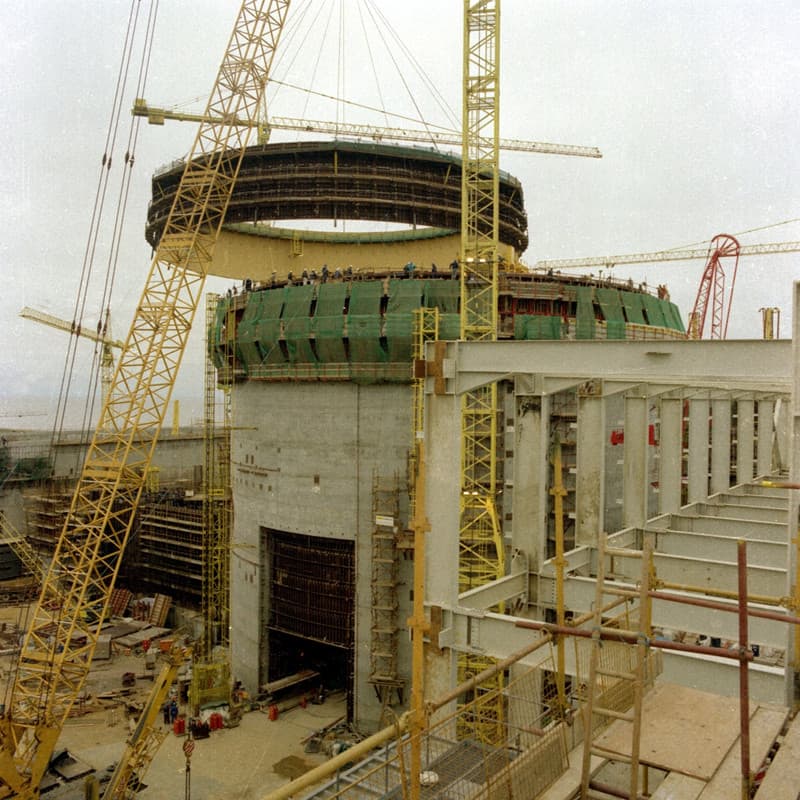
Warnings from US energy security experts were apparently less audible also because, at the end of the last millennium, Westinghouse came under the wing of BNFL—a company from an allied country that was moreover controlled by the British government. But it did not stop with Britain...
Back to quick profit
The British Labour government decided to sell Westinghouse in 2006, with Japan's Toshiba acquiring a majority stake in the company (which, given its headquarters and activities, can still be described as American). The British finance minister at the time, Gordon Brown, still faces criticism that in 2006 he favoured attractive short-term financial prospects and recklessly damaged his country as a traditional nuclear power. Britain has strong companies in the nuclear industry, but lacks its own reactor design. (In this respect, it is in a similar position to the Czech Republic.)
The opposition British Liberal Democrats, for example, argued at the time of Westinghouse's sale to Japan that the sole purpose of the transaction was to “plug holes in the public finances”.
And the possibility of another sale of Westinghouse has been discussed recently after Toshiba, together with its US nuclear division, ran into major financial trouble. Who might become Westinghouse's new owner? Or will today's Westinghouse also continue to be broken up, with new owners buying its individual parts?
For example, former US Navy officer Kirk Lippold once again warns of the transfer of Westinghouse nuclear technologies to countries with strategic interests different from those of the US. Lippold has China primarily in mind.
And given Westinghouse's current bankruptcy—which, according to Lippold, the Japanese should never have allowed—it is truly unclear where this traditional American “nuclear treasure” will ultimately end up.
The author works as a consultant and energy project specialist for the HATcom agency.
Translation disclaimer
This article is a machine translation of the Czech original and has not yet been fully reviewed. In case of any doubt, please refer to the Czech version.