20 October 2026, 15:34
Loading...
BMW i3 in Czechia – urban future from Leipzig. Why is it selling so well?
Tomáš Jirka
15 November 2017, 18:31
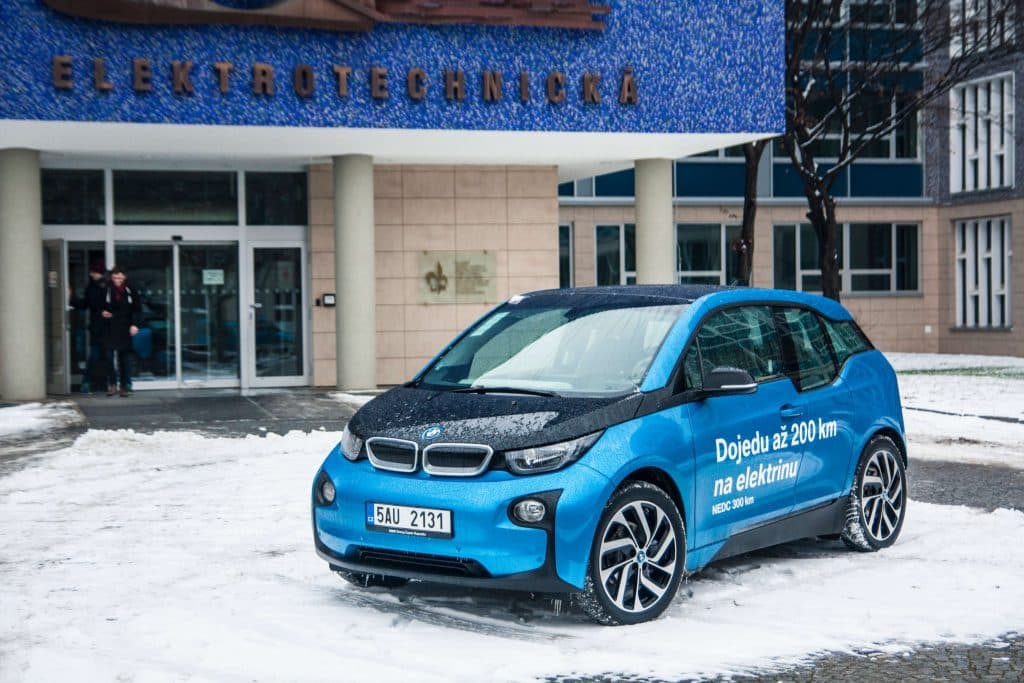
The BMW i3 has recently become one of Europe’s best-selling electric vehicles. With more than 8 thousand units sold since the start of this year, it ranks third according to the EAFO agency, with an 11.5% share of the electric vehicle market. The BMW i3, which surpassed 100,000 units produced during November, is also one of the most distinctive electric vehicles, because BMW designed it as an entirely new car from its i division, unrelated to combustion-engine cars and with a highly distinctive design.
The world is changing, and human mobility with it; gone are the days when humanity paid no heed to the environment. Today, environmental consideration is one of the most important areas of development, and BMW has thus entered a new era: “i”.
The first concept, “project i”, began to be developed as a new approach to the automobile itself as early as 2007. It was unveiled to the public in 2011 at the International Motor Show Germany, and shortly thereafter the BMW i3 was introduced (during the 2012 Summer Olympics in London; production began in July 2013), along with the “born electric” campaign (also running in Czechia), in which ordinary people share their impressions of switching from a combustion-engine car to an electric one and why they would not go back. The BMW i3 is simply an image-building car, unconstrained by the standard automobile architecture of the past 100 years.
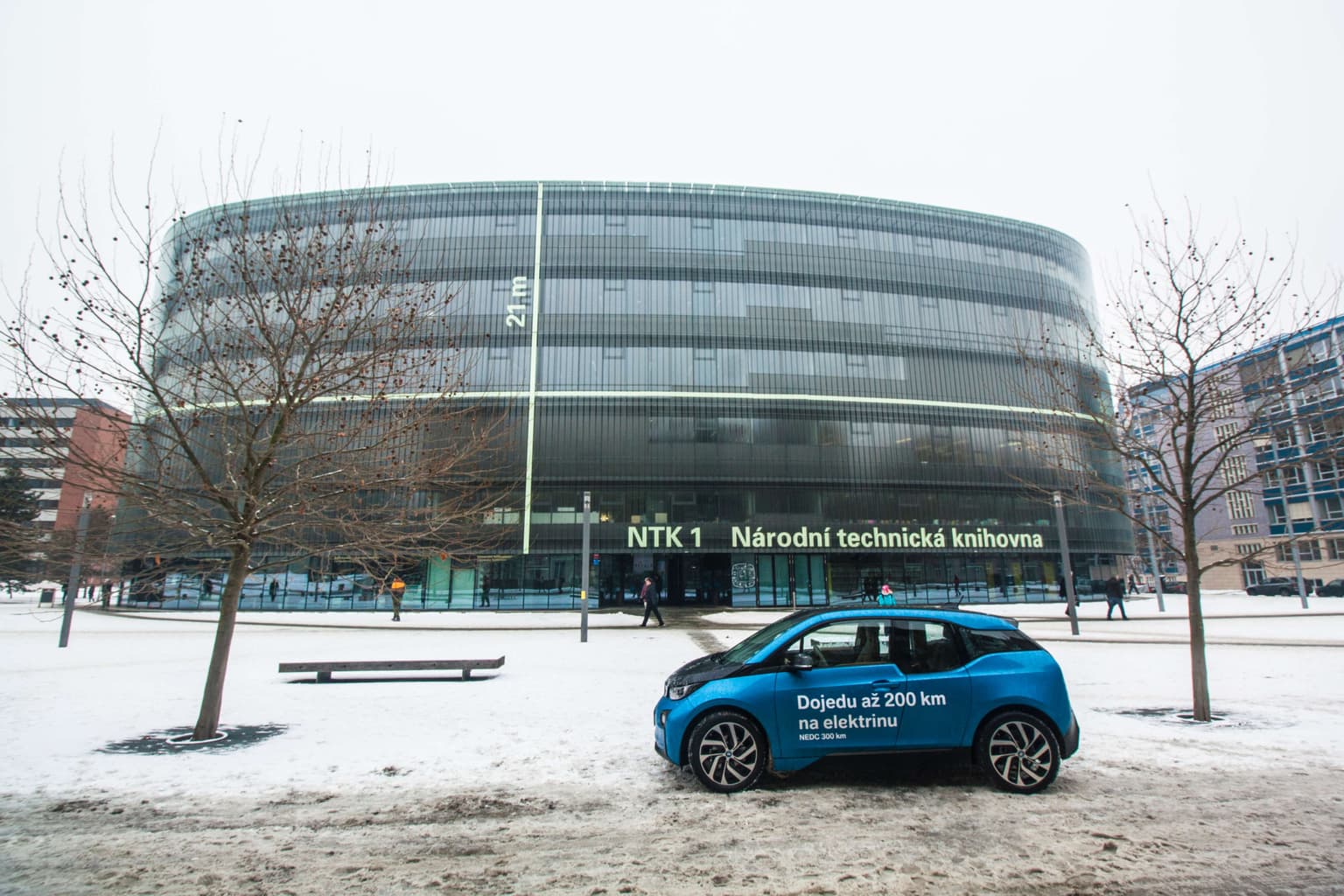
A change in the car concept
BMW i cars differ not only in their drivetrain, but also in their construction and materials. And that is precisely what makes the i3 even more interesting from a future perspective. Cars are full of plastics, something BMW sought to avoid as much as possible when developing the car of the future, for reasons of sustainability, responsibility and city-conscious design.
Unlike many other brands, development of the i3 did not focus merely on installing an “emission-free” and silent electric drivetrain in an existing body shell, but rather on a wholly new electric vehicle design focused on sustainability throughout its entire life cycle.
This resulted in an entirely new vehicle concept, with no link to the combustion-engine tradition and no need to meet established conventions regarding the installation of a power unit with transmission, cooling, exhaust and fuel systems.
This gave the BMW i3 its unmistakable shape and design language belonging to the BMW i family, with an emphasis on aerodynamics and the use of renewable and recyclable materials – as much as 95% of the entire vehicle is recyclable! Instead of being disposed of, batteries can also be used as stationary energy storage once their capacity has fallen below the declared 80% of the original level and they can no longer provide a sufficient energy reserve.
(Watch a video on BMW i3 recycling by TestDriven)
The BMW plant in Leipzig, where the i3 is produced, is supplied with energy generated by wind power plants (contractually, of course), while energy for carbon-fibre production in the US is sourced 100% from hydropower plants (Moses Lake near Seattle). Similarly, energy for charging the car can be secured from one’s own photovoltaic panels or through a “green tariff”, bringing it closer to the zero emissions so frequently mentioned in the promotional materials of every electric vehicle.
That is a somewhat different, considerably more precise approach to producing the car of the future, isn’t it?
What is the recyclable natural interior like?
The petroleum-based plastics usually found everywhere in door trims and on dashboards have been replaced by ultra-lightweight fibres of kenaf, a hibiscus plant (up to 30% lighter than conventional materials); the seats can be made of 100% pure, breathable wool, or, like other parts of the interior, natural leather tanned in a bath made from olive leaves that would otherwise be merely a waste product of olive plantations.
The interior trim is made of eucalyptus wood, which is naturally resistant to moisture and processed without chemicals to retain its soft texture. The material on the doors and dashboard is made of 70% Bombay hemp and 30% PET bottles.
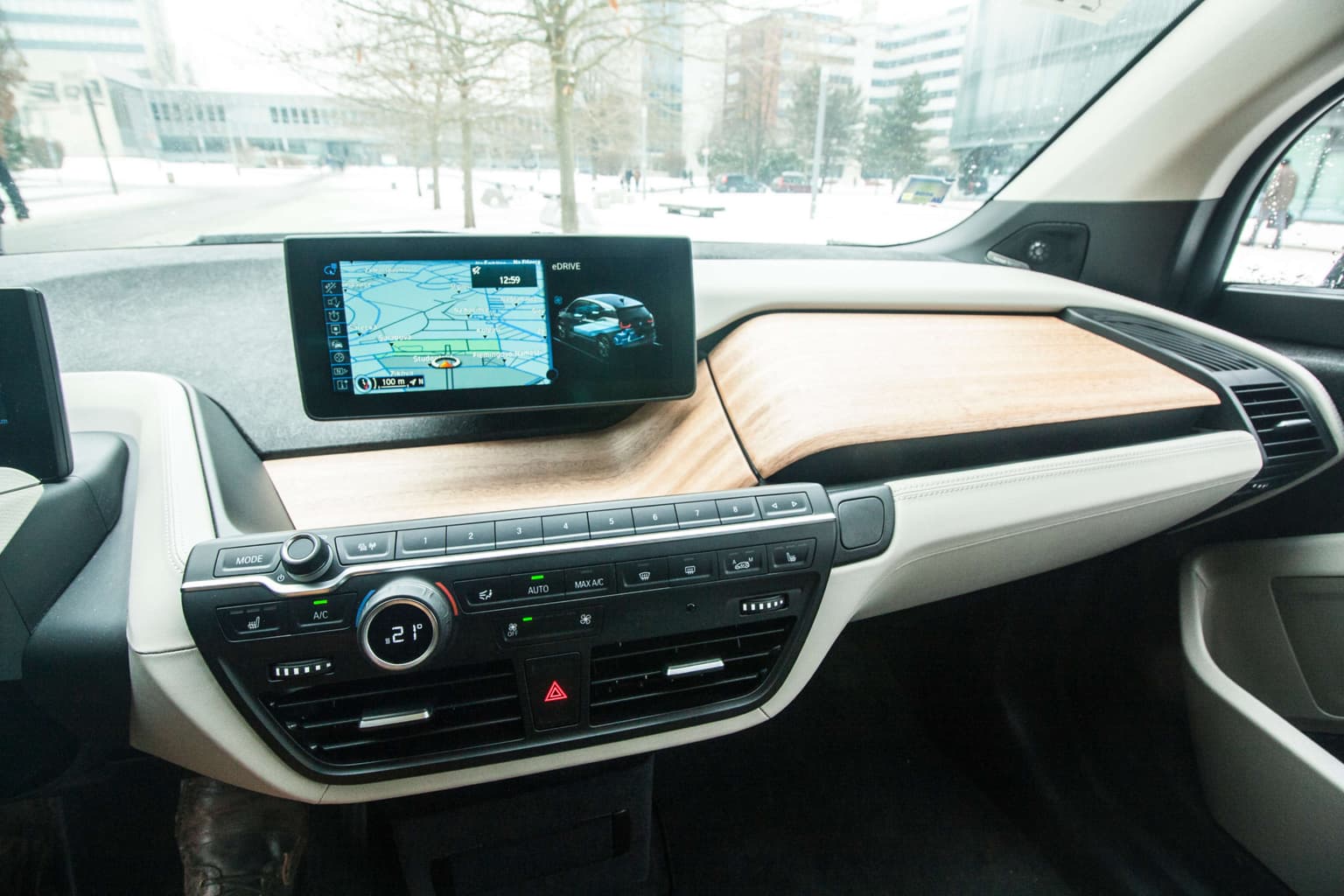
That sounds interesting, doesn’t it? And it is interesting inside too – personally, I find the futuristically shaped interior, with its floating display behind the steering wheel and 10.3-inch iDrive display in the middle of the dashboard, very interesting (and its thin bezel looks considerably better than the one in the 225xe), though not flawless.
The first thing that struck me was that, even with the seat set to its lowest position, you still sit quite high above the batteries (viewed from the side with the doors open, the car’s “thick” floor is noticeable), and personally I felt somewhat cramped beneath the roof, as I did in the car overall – though it must be said that the i3 is a small city car and I am 190 cm tall.
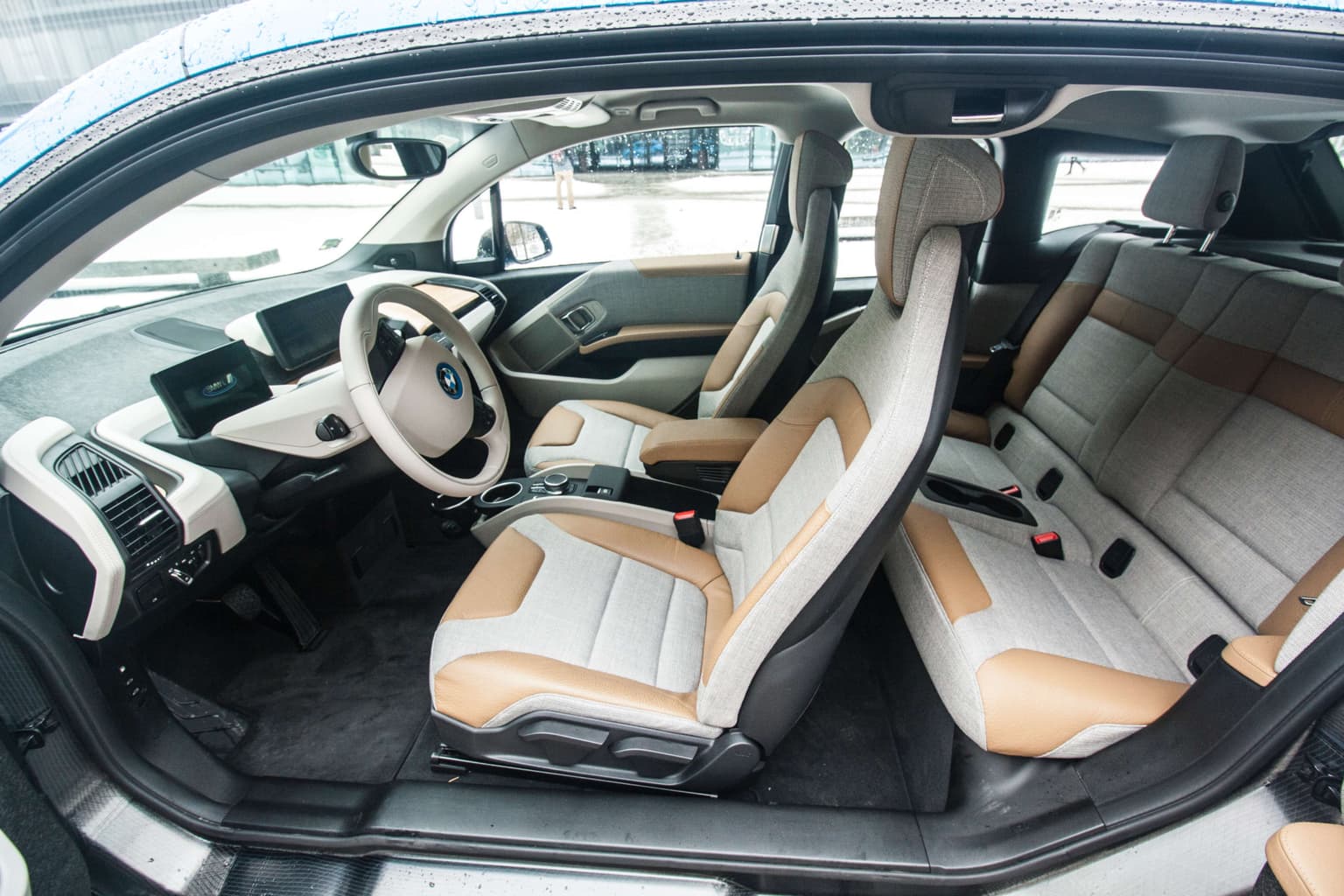
I was looking forward to a pleasantly “BMW-like” steering wheel, but another surprise awaited me: it is quite far removed from the very pleasant “M” steering wheels, both in terms of rim thickness and the material used, which feels oddly artificial and, unlike the leather on the seats, not especially pleasant to me. I do not know the purpose of the circumferential seam, nor have I encountered it like this anywhere else, but the impression is not great.
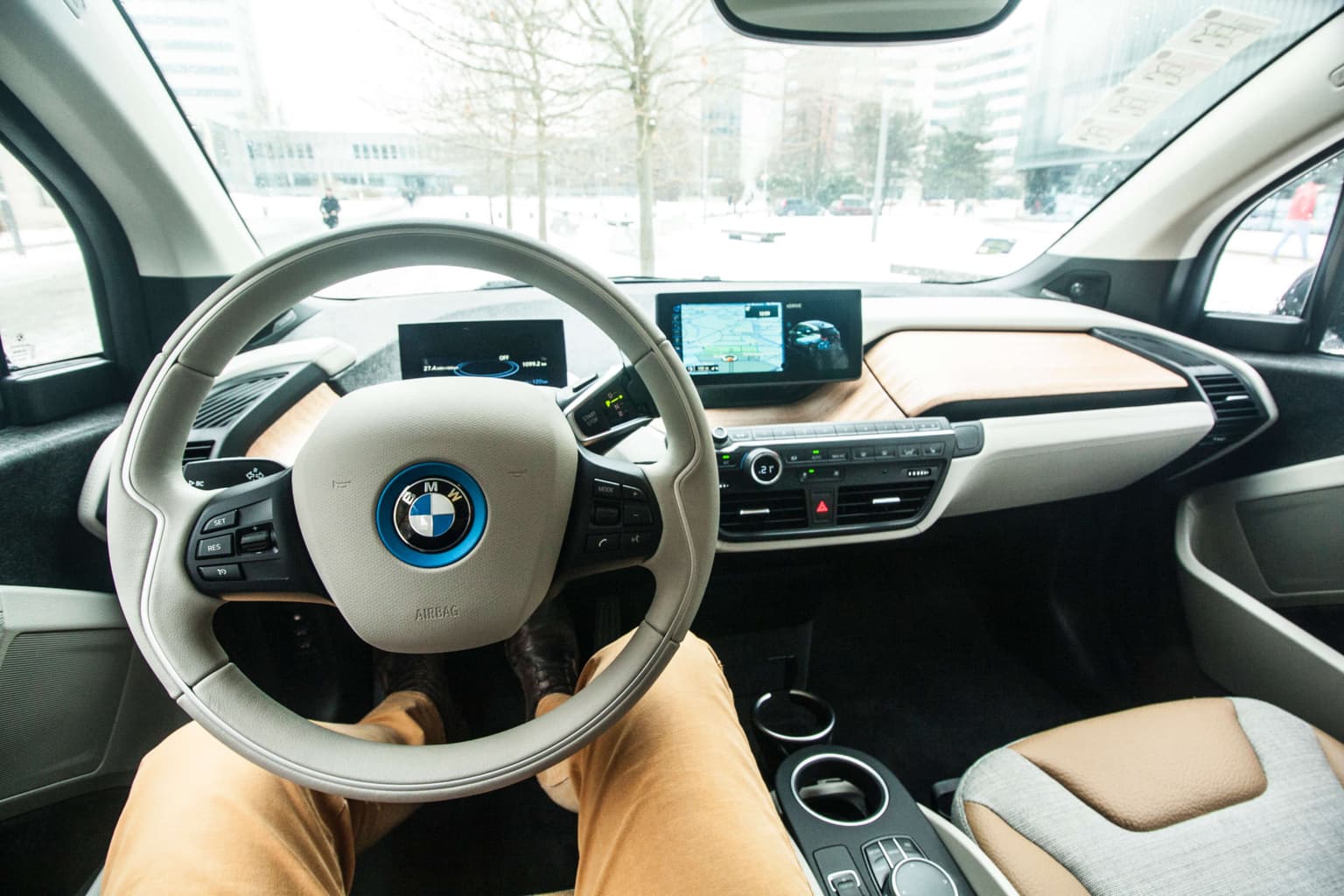
On the other hand, I was very pleasantly surprised by both the appearance and surface of the eucalyptus wood, as well as the kenaf fabric – from the photographs I had feared a “fibreglass canoe on the Sázava” feel, but that is not the case, and it gives the i3 interior the atmosphere of an unusual car. The natural wool from sheep raised near the Leipzig plant on the seats is another major plus for me personally.
There may be even less than “just enough” room in the rear seats, but again, it is a city car and the assumption is that the rear seats will mainly be occupied by children, two of whom fit without a problem. It is a pity only that there is no armrest to separate them; I still vividly remember my battles with my brother on journeys lasting more than half an hour. Nor do I understand the drink holders located here.
An advantage is the absence of a B-pillar and the rear-hinged, coach-style doors opening against each other, which until recently were the preserve of concepts only – access to children and child seats will be considerably easier than with conventional doors, particularly given the aforementioned unique lack of a B-pillar.
Exterior: some like it, some do not… And what about those doors?
The BMW i3, designed by Richard Kim, remains quite exceptional on the road even after all these years. Above all thanks to its silhouette and doors.
The tall, boxy body shape itself is generally not viewed particularly positively. Nothing in the BMW i3 is as one is used to. Yet this achieves maximum use of the vehicle’s footprint (the car is exactly 3999 mm long, 1775 mm wide and 1578 mm high), while also offering relatively good visibility for urban traffic. At least when viewed from the front, I personally consider the i3 an attractive car.
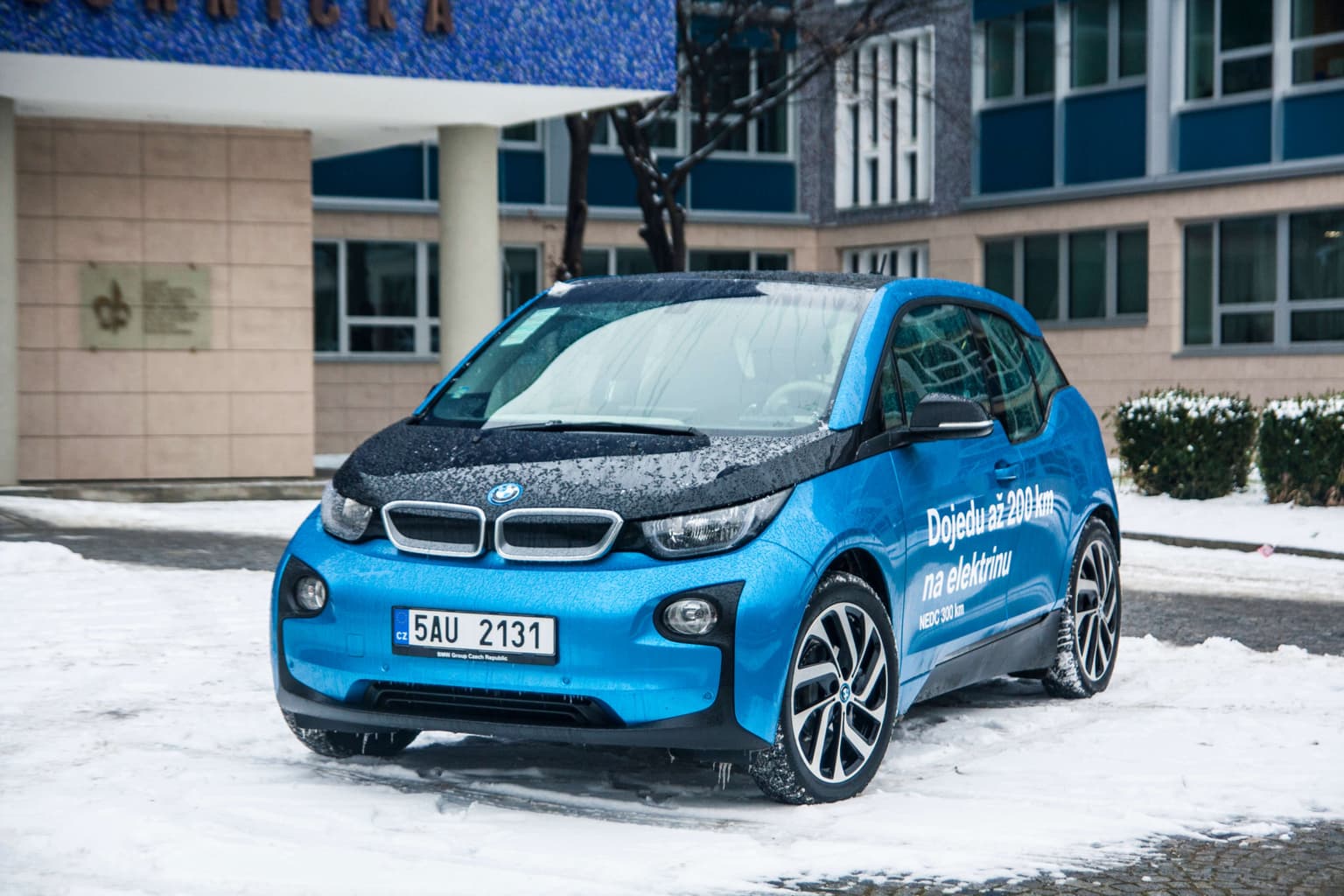
It is a great pity that a vehicle billed as having the “aura of a new age” and an environmental vision comes with conventional halogen headlights as standard rather than LED lighting, especially given a purchase price starting at almost one million Czech crowns.
However, this shortcoming was addressed by the (in my view very successful) facelift in autumn 2017, when the BMW i3 received new bumpers, fog lights, fully LED headlights and new paint finishes (six in total now; the photographs show pre-facelift 2017 Protonic blue).
It also came in the i3s version (135 kW and 270 Nm, enabling it to reach 100 km/h in 6.9 seconds; the electronic speed limiter intervenes 60 km/h higher, at 160 km/h) with chrome trim and a sportier look featuring a gloss-black roof and accents.
There are also several further interior colour combinations named Atelier, Loft, Lodge and Suite.
The most interesting aspect of the vehicle’s construction is its carbon-fibre structure (which is directly visible in several places in the interior), known as the Life Module, and the aluminium Drive Module, which contains the battery and other drivetrain components. With the battery located in the floor, the BMW i3 has a low centre of gravity, while its carbon Life Module also keeps its weight from becoming too high.
Interestingly, BMW produces its carbon fibres in cooperation with SGL Automotive Carbon Fibers: first, woven carbon-fibre mats are made, which are later baked into individual body parts and then bonded together. This strong, rigid structure provides high occupant safety, while being up to 30% lighter than aluminium and as much as 50% lighter than steel.
Carbon fibres are not the only unusual material used for the i3 body. The individual exterior body panels are made of glass-fibre-reinforced thermoplastic and are not damaged in impacts at speeds of up to 6 km/h – they return to their original shape. They are also simply „clipped“ together, making repairs faster and cheaper – that really does sound like the ideal city car!
Rear-wheel drive, so it will slide sideways!
The BMW i3 is sold in two versions – purely electric, or with a range extender (REX). But do not imagine it as a two-engine sports car like the low-slung i8; the 647 cc two-cylinder engine here serves only to drive a generator and replenish energy in the batteries (which are kept by the BMS at an optimal 21 degrees), thus extending range, as its name suggests.
It does not alter performance in any way, despite producing 28 kW. It is not connected to an axle at all; it is located at the rear beneath the luggage compartment, while the nine-litre fuel tank is at the front. According to BMW’s official product information, it gives the driver a total of 330 rather than 200 kilometres without visiting a charging station in the version with the 94Ah battery (33 kWh, 27.2 usable), or 270 rather than 160 with the 60Ah battery (22 kWh, 18.8 usable) (Samsung).
The asynchronous electric motor driving the rear wheels has 125 kW and 250 Nm, giving the relatively light (1195 kg for the 60 Ah, 1315 kg for the 60 Ah REX, 1467 kg for the 94 Ah REX) and small vehicle decent performance, as is always the case with electric cars, especially in urban traffic (it reaches 100 km/h in 7.3 seconds).
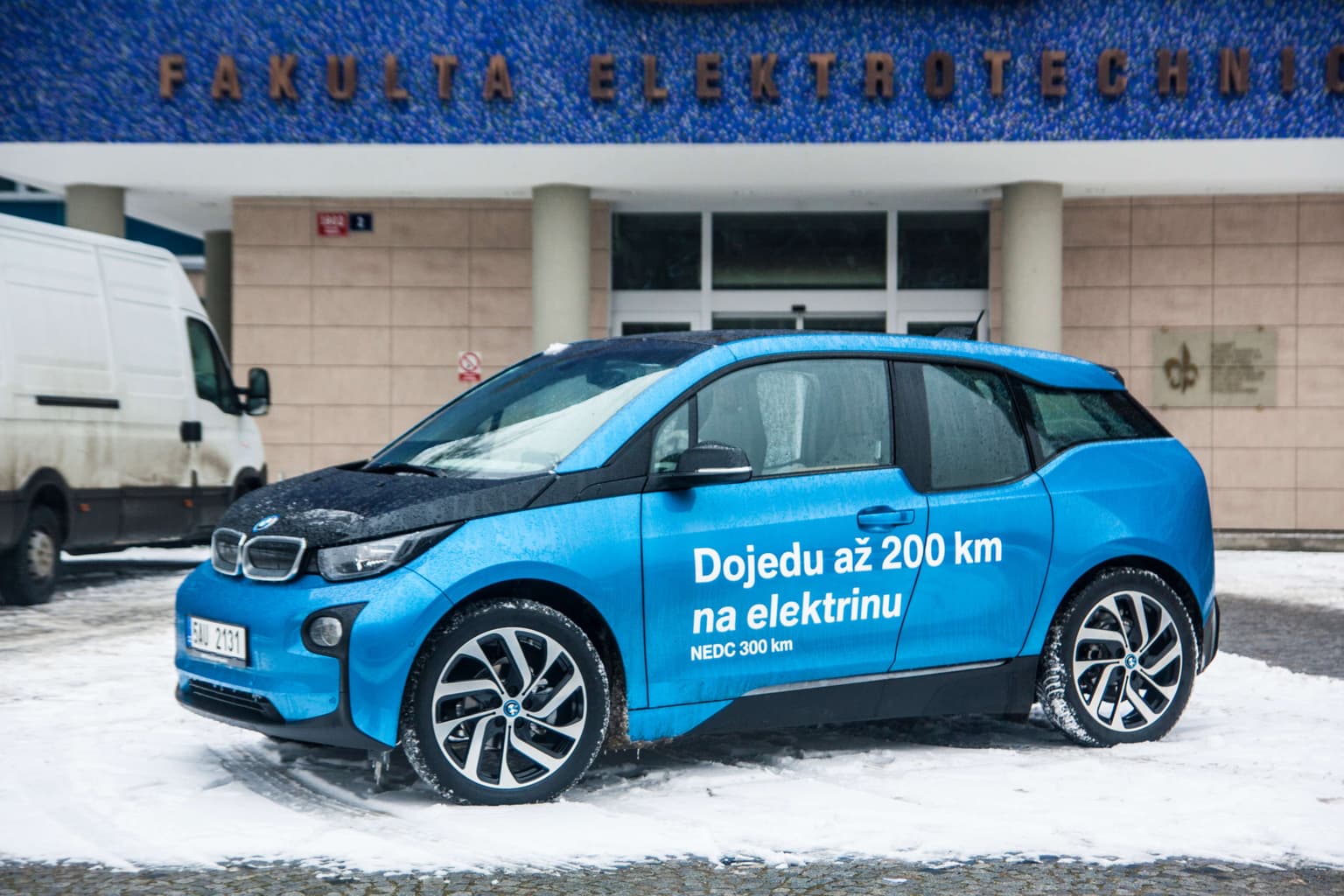
Given the snow cover in Prague at the time of testing, the narrow all-season tyres, my age and the enormous car park at the Strahov dormitories, it will come as no great surprise that I also decided to find out whether the i3 could slide sideways. After all, it is a BMW!
With its wheels at the corners of the body, high torque and low grip in Prague’s wet near-snow, the i3 breaks away easily after traction control is deactivated, accompanied by flying “flakes” reaching two metres above the rear of the car. Overall, its rear-wheel drive and efforts to uphold the “joy of driving” are evident.
However, this is probably not a decision-making criterion at all when buying an electric vehicle, so let us leave it as a light-hearted little episode in an article about BMW in the hands of a young man.
Considerably more important is that in urban driving, you will more or less never feel a shortage of instantly available torque. And that is very pleasant in the urban “jungle” that Prague, with its countless intersections and lanes, is. Some tests have mentioned that the i3 keeps pace up to 100 km/h with sporty versions of conventional vehicles with considerably more powerful turbocharged two-litre engines, and it really is brisk.
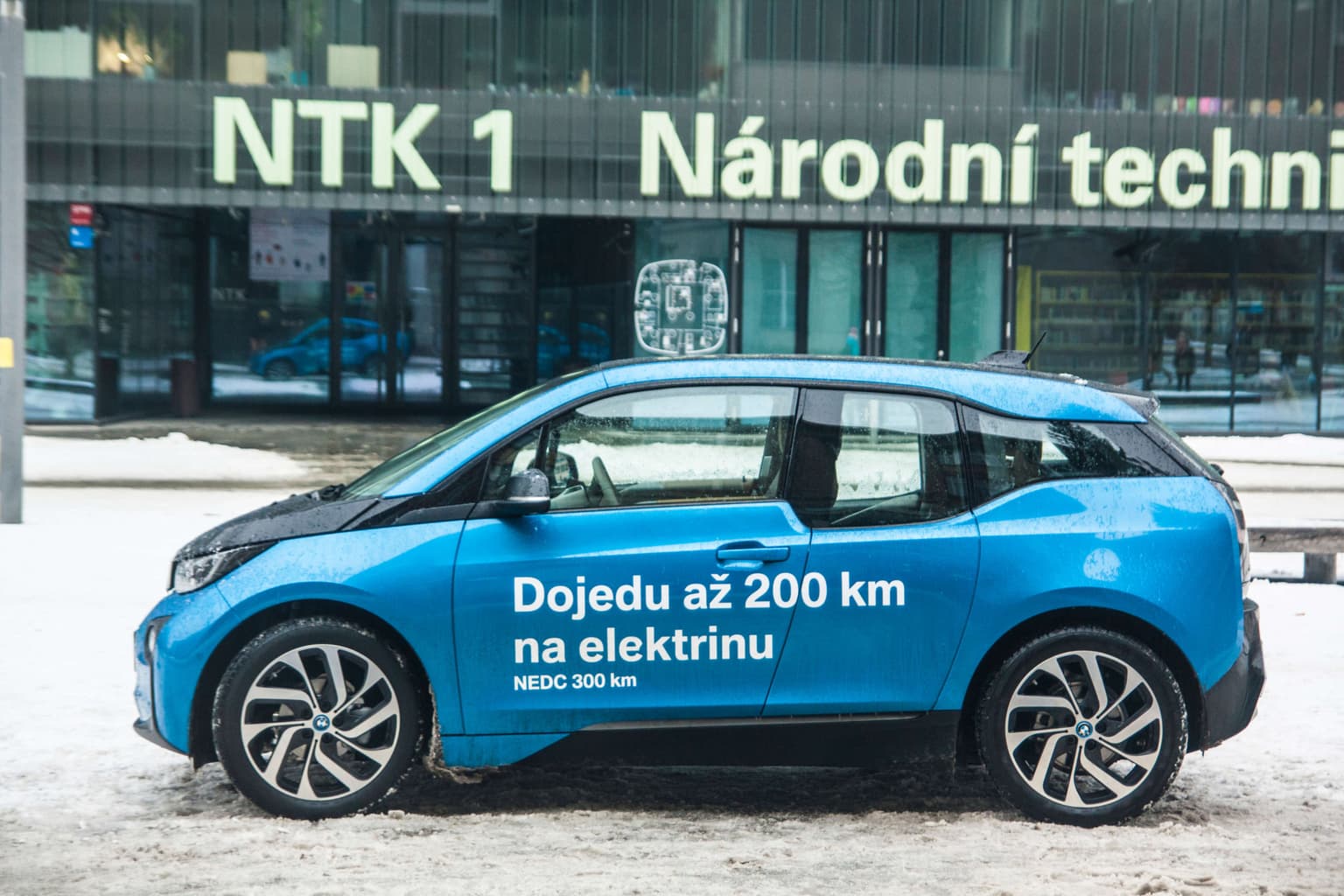
During the test, I did not get outside Prague, so I cannot yet comment on the car’s behaviour on longer journeys or motorways, but as mentioned earlier, the i3’s domain is the city, and there it performs its role very well.
The large-diameter wheels (R19 or R20, though still with a 55/60 mm profile) smooth out road imperfections, particularly sharp ones, which Prague has in abundance, noticeably better than one would expect (and they are not run-flats). Overall, the ride is very refined and, naturally, as quiet as expected.
Given the permanently running heating and driving around the city making use of the car’s dynamic capabilities, I have to report consumption of 25 kWh per 100 kilometres (BMW states just under 13 kWh in its materials; users at spritmonitor.de report 14.89 kWh per 100 km). After all, the main reason for borrowing the car from BMWGroup CZ was a presentation at the Winter and summer school of energy systems, in cooperation between CTU Prague and TU Wien, rather than a conventional test.
Operating the car itself is, as standard with electric vehicles, simple: a rocker control to the right above/behind the steering wheel (somewhat hidden): park, forward, reverse; as well as regenerative braking when lifting off the accelerator. Once you get used to it, you hardly need to use the brake pedal at all.
Optional electronic assistance systems offer automatic parking, warnings of collisions with pedestrians and frontal obstacles including automatic braking, assistance in urban traffic jams along with speed and lane keeping, and traffic-sign recognition.
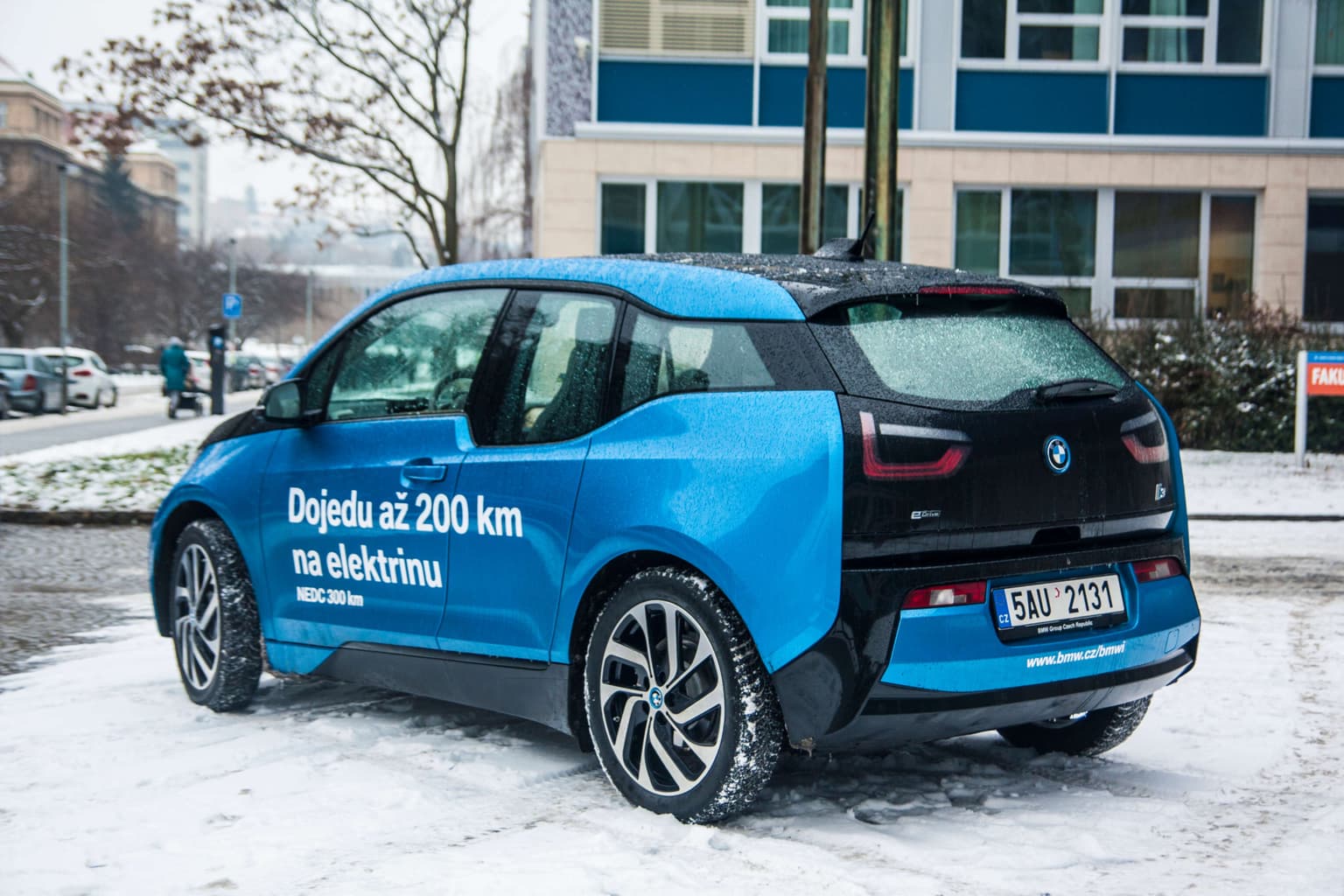
The BMW i3 is a very pleasant electric vehicle with a confident price justified by the technologies used
Despite the short loan period (which is also why charging is not mentioned anywhere in the entire test), I have to say that the urban i3 is a very pleasant and interesting car, using materials and technologies that one does not commonly encounter elsewhere, and with an interior that is truly unique within mainstream car production.
And that is a good thing: of all aspects of the i3, I like its interior and its “green” materials the most. Together with the whole vision of the i division and its production in Leipzig, I consider it an idea genuinely carried through 100%.
Its design may not be to everyone’s taste (the silhouette), but the facelift for 2018 was very successful and, after a drive, many people will warm to it even more. This confirms my view that electric cars are not boring. I would rather have a BMW M2 on a race track, but for everyday use an electric vehicle is simply great.
The range extender also spares owners concerns about range, although a price starting at nearly one million Czech crowns and easily exceeding one and a quarter million will add a few more. Yet when compared with how different and advanced the BMW i3 is technologically, it may well be a justifiable sum for a second or third family car, or for a stylish company vehicle for use around Prague, which can park in all blue zones free of charge.
And I am simply looking forward to BMW implementing similar technologies throughout its model range. And I would not mind at all using the i3 drivetrain instead of the weaker urban three-cylinder engines found in the BMW 1, 2, 3 and X1. Do you want to argue that it would no longer be a BMW? Well, it is 2017, and if this also helps preserve six-cylinder engines in BMW’s sports models, you certainly will not convince me otherwise.
Translation disclaimer
This article is a machine translation of the Czech original and has not yet been fully reviewed. In case of any doubt, please refer to the Czech version.
Sdílejte článek prostřednictvím:
You might also like
20 October 2026, 12:55
20 October 2026, 10:49
20 October 2026, 06:13