
20 October 2026, 15:34
Loading...
Every fourth car will be a plug-in. EV sales set to rise 25% this year

Jan Budín
4 July 2025, 11:24
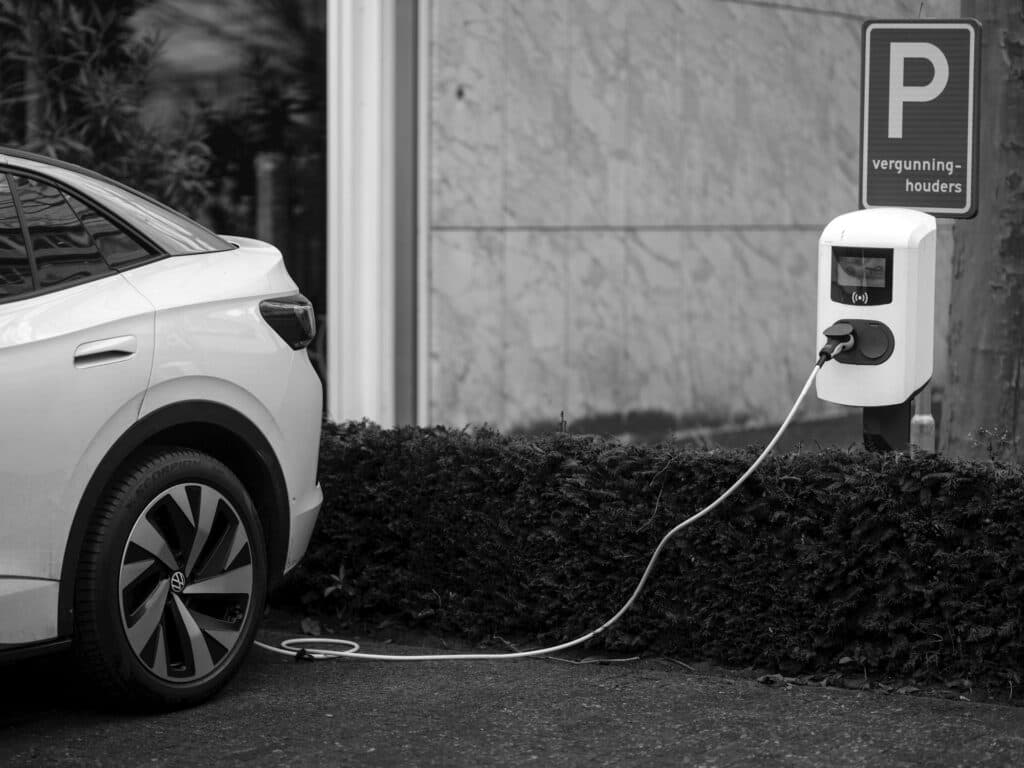
Electric vehicle sales are expected to rise 25% year on year to nearly 22 million units this year, according to the latest outlook from BloombergNEF (BNEF) researchers. China is expected to account for almost two-thirds of sales, Europe for just under a fifth and the United States for 7%.
Sales of battery-electric vehicles and plug-in hybrids are set to rise again this year, driven by falling lithium-ion battery prices and a growing range of more affordable models. They are expected to climb by around a quarter year on year from last year, to 22 million vehicles. That would mean one in every four newly registered vehicles is a plug-in.
China is driving the growth in sales. According to BNEF, it is the only country where electric vehicles are, on average, cheaper than comparable internal combustion engine cars. China’s dominance in electric mobility is further reinforced by the fact that nearly 70% of the electric vehicles sold this year will be made there.
Growth is not fast enough to achieve ‘net zero’
BNEF researchers now expect, in their baseline scenario, electric vehicles to account for 56% of newly registered cars by 2035, rising to 70% by 2040. That is three percentage points lower than in the previous outlook. If the forecast proves accurate, electric vehicles would make up just 40% of the global vehicle fleet in 2040, significantly less than BNEF says would be needed to limit transport greenhouse gas emissions in line with a ‘net zero’ scenario.
“2024 was a significant year for electrified transport, with record sales and rapid growth in emerging markets across Asia and Latin America. Despite these positive signs, we expect growth to slow in both the short and long term, particularly because of the changing landscape in the US. Changes in the global development of electric mobility will have a significant impact on the battery industry and lead to excess manufacturing capacity,” said Colin McKerracher, head of clean transport and energy storage at BNEF.
Although demand for batteries for electric mobility will continue to grow, the increase will be slower than previously expected. Compared with BNEF’s latest outlook, cumulative demand between 2025 and 2035 has fallen by 8% (3.4 TWh). Most of this decline is in the US, at 2.8 TWh.
“This dynamic will lead to continued excess capacity, putting downward pressure on battery prices and intensifying competition in the market. In China, average battery factory utilisation is already below 50%,” BNEF added.
Translation disclaimer
This article is a machine translation of the Czech original and has not yet been fully reviewed. In case of any doubt, please refer to the Czech version.
Sdílejte článek prostřednictvím:
You might also like


20 October 2026, 12:55
20 October 2026, 10:49

20 October 2026, 06:13