
20 October 2026, 15:34
Loading...
Nissan LEAF (Part 2): Battery, charging, range and real-world experience in Czechia
Tomáš Jirka
16 May 2016, 18:07
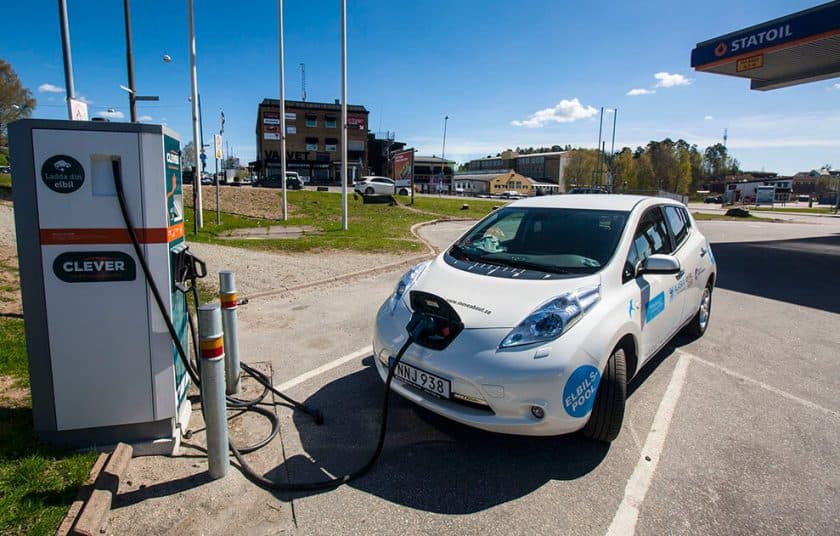
The most frequently cited problems with electric cars are their limited range, charging and the cost of the battery, whose capacity, unlike that of a fuel tank, declines over time. So how far can the Nissan LEAF travel on a single charge depending on driving mode, and what about charging it – is it really a problem?
The Nissan LEAF is currently offered with two battery versions: 24 kWh (Visia version) and 30 kWh (Acenta and Tekna versions from model year 2016). Compared with Tesla or the soon-to-be-launched Chevrolet Bolt and its 60 kWh battery, this is not very much. Another issue is the availability of charging stations and charging time. So let us take a closer look.
Battery: usable capacity, onboard charger and home charging, stated range, warranty
The lithium-ion battery with a stated capacity of 24 kWh (originally stated range of 175 km, later 199 km) has a usable capacity of 21.5 kWh, while the larger 30 kWh battery (stated range of 250 km) has 28.5 kWh. It is located in the floor and centre tunnel, so it does not restrict passengers or luggage space in any way. It also lowers the centre of gravity and increases the car's rigidity. Nissan also states that, as part of efforts to minimise the environmental impact of Nissan vehicles, the battery is 95% recyclable.
Nissan provides a battery warranty of 5 years or 100,000 km, and for the 30 kWh battery even 8 years or 160,000 km, guaranteeing that capacity will not fall below 80% of its original level. If the entire battery needs to be replaced, it costs roughly 100,000 Kč excluding VAT, but normally only faulty cells can be replaced, which almost never happens [1].
The Nissan LEAF comes as standard with a 3.3 kW onboard charger (a rectifier when connected to a single-phase AC supply), with a maximum charging current of 14.5 A, which roughly corresponds to a standard household socket (16 A). The problem is that the supplied basic cable is only rated at 8 to 10 A, so charging with this cable takes up to 12 hours. Buying a better cable capable of operating at 16 A would reduce this to roughly 7.5 hours. It is a slight shame that the manufacturer does not supply a 16A cable as standard; it would certainly be useful, especially for the 30kWh battery.
For 24,800 Kč, a 6.6 kW onboard charger is available, reducing AC charging time to 4 hours. My personal experience is that overnight charging never restricted me (with the 24 kWh battery), even with the standard cable. This is because I almost never charged from a nearly empty battery, and an 8-hour sleep alone gives the car enough energy for almost 100 km.
Potential electric-car buyers often complain that predominantly home charging is a problem: there is nowhere to do it. For detached houses, there is no issue; simply park in the required place and run a cable to a socket (and in the future arrange a wallbox or a better located, weatherproof socket). In housing estates or dense urban development, however, it is somewhat of a problem – parking spaces have no sockets (apart from Scandinavia, which will be covered in the third part of the series).
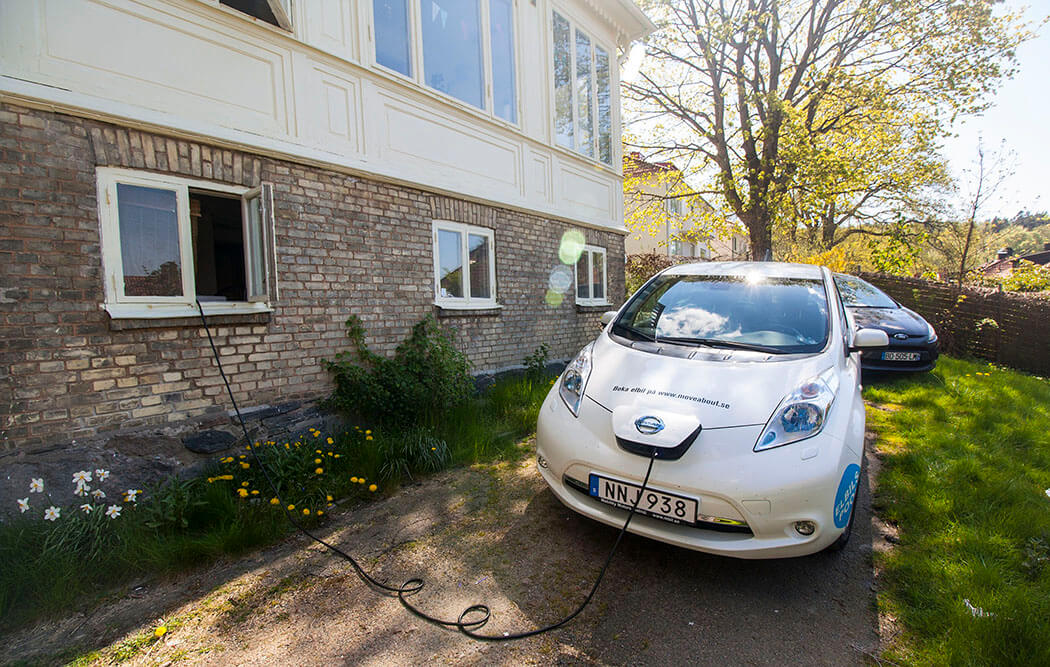
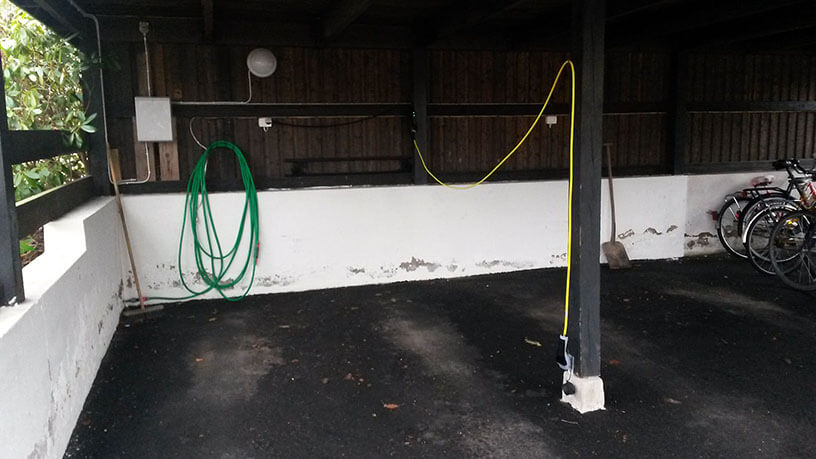
Based on my experience and spritmonitor.de, average consumption ranges between 15 and 20 kWh / 100 km depending on speed and driving style. Actual range and real-world operating experience will be discussed in the final part of this article.
Charging on the road and charging stations
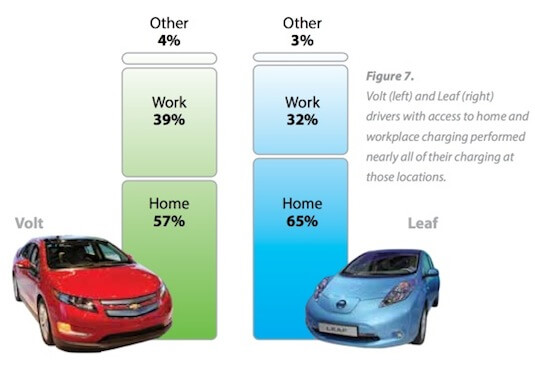
According to the American National Laboratory INL, which surveyed 8,000 electric-car owners over 200 million kilometres between 2011 and 2013, just under 5% of charging for small electric cars (10% for Tesla) takes place at fast-charging stations. One could say this is due to their limited range and their use as urban or suburban vehicles, but let us set that aside for now. [2]
As already mentioned, the LEAF is supplied as standard with a 10A charging cable, which takes 12 hours to fully charge the battery from a regular socket. With the purchase of a 16 A cable, even the basic 3.3 kW onboard charger can recharge the 24 kWh battery from a single-phase socket in 7.5 hours.
However, this does not change the fact that charging stations with single-phase sockets are suitable only for charging at work, in hotel car parks or at tourist attractions. Otherwise, they simply are not.
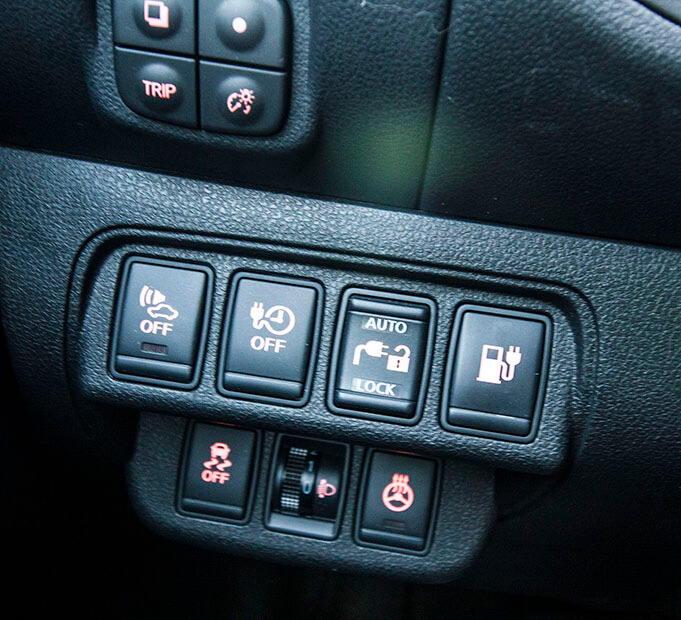
To the left below the steering wheel is a cable-lock button, preventing the cable from being pulled out of the connector at the front of the car. This can prevent the cable from being stolen, but when charging outdoors it cannot stop someone from pulling the other end of the cable out of the socket and interrupting charging.
Charging station maps are full of single-phase chargers, but this simply makes no sense because charging takes too long. They are only for emergency use, when someone gets stuck somewhere. Otherwise, the LEAF is equipped with a CHAdeMO connector and can be charged at fast-charging stations of up to 50kW. This can charge it to 80% capacity in roughly 20 minutes, which does make sense. Charging power then drops sharply, so a full charge takes longer, but 80% is entirely sufficient while travelling.
One way of finding a charging station is the built-in Nissan navigation system. More up-to-date maps of charging stations are available online, however. The ideal situation is when a charging station listing provides not only connectors and its location coordinates, but also photos or directions for getting there, because operators apparently enjoy playing hide-and-seek.
Another important issue is the station operator, as it determines the method of paying to charge the vehicle. Ideally, if one does not have the relevant charging card, it should be possible to use a credit card and pay on site… Hopefully this will come in the future, as it would simplify matters considerably.
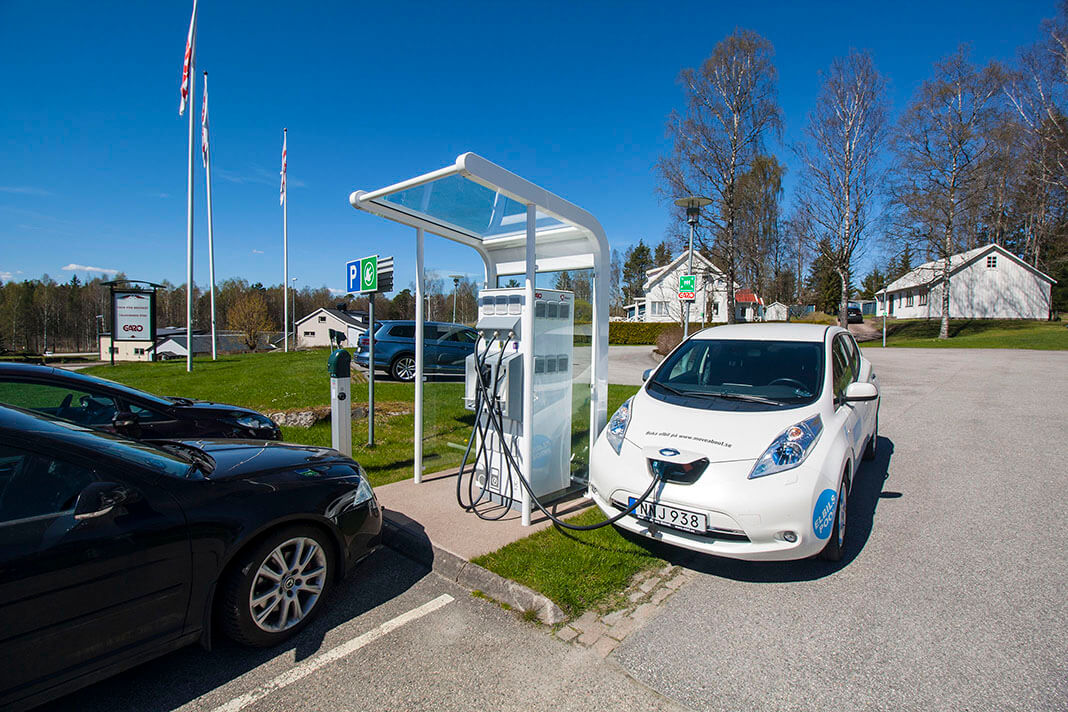
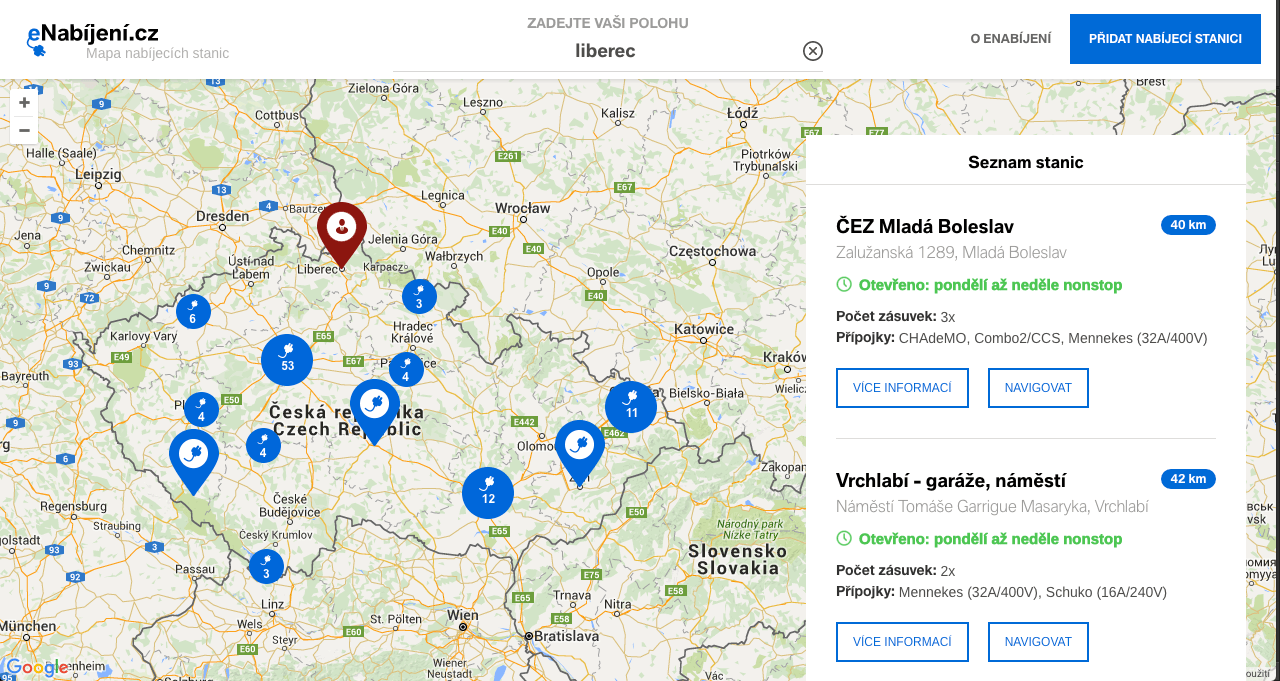
Maps: eNabíjení.cz vs. OpenChargeMap.org
When using a Nissan LEAF on the road, it is not enough to rely on a station being labelled as fast charging (i.e. with output above 20 kW); it is also necessary to know whether it has a CHAdeMO connector.
The largest and most widely used community charging station map is openchargemap.org, which I used while travelling in Sweden. Personally, however, I find it somewhat unclear.
This is why I am also working with Prague-based Apploud Digital on the community charging station map eNabijeni.cz, which offers more advanced features to make life easier for electric-car drivers. For now, it contains only Czech charging stations, but the aim is to expand it both geographically and functionally.
Its main features are the ability to filter stations by operator and connectors, and to add directions and photos showing how to get there. As I found out when trying to locate a ČEZ charging station in Mladá Boleslav, it need not be so easy. Fortunately, the security guard, who was already used to this, came out for me himself in the middle of the night.
What is the actual real-world range?
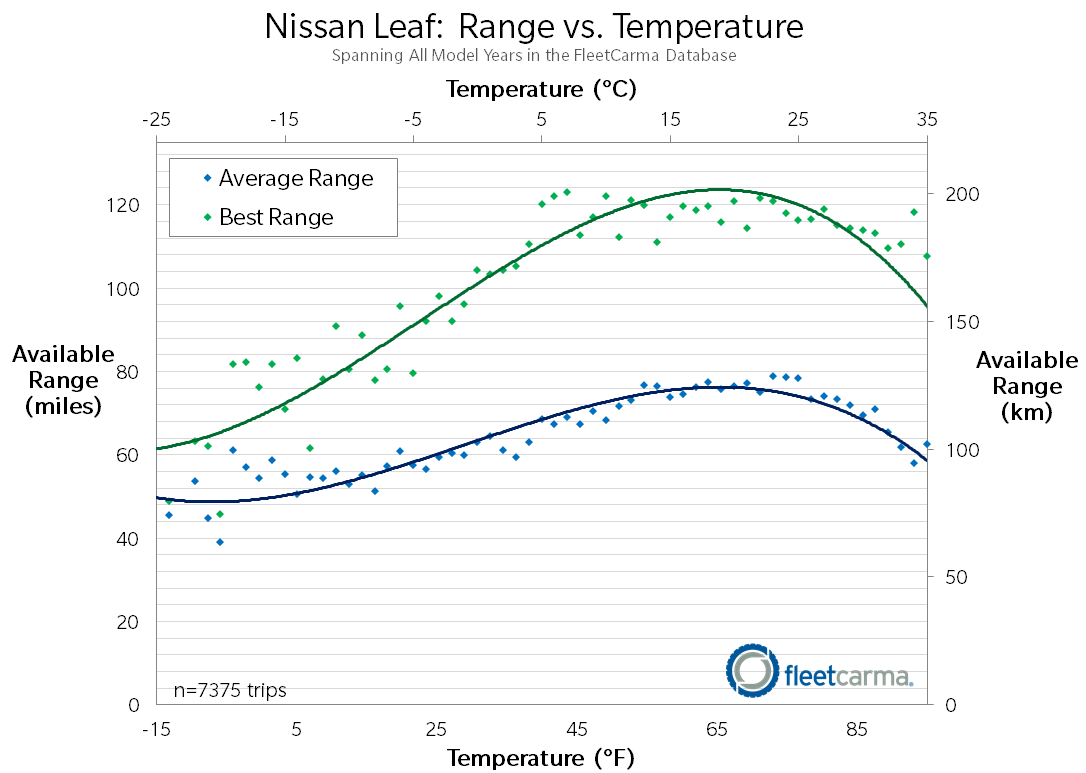
Since both of the previously mentioned ranges relate to a laboratory test cycle, reality, as with combustion-engine cars, differs from these figures. But it need not differ all that much! It depends far more on driving style (and Eco mode) and use of air conditioning or heating.
Can the Nissan LEAF make it from the Krkonoše Mountains to Prague?
During a winter loan from Nissan Czech Republic, I decided to test whether I could get from my Prague university accommodation to my home in the Krkonoše Mountains.
My original plan for the late-evening journey there was thwarted by the weather, as from Jičín around Nová Paka the fog was so thick that even birds were walking. Moreover, out of fear and due to a warning from the dealer that the LEAF would almost certainly not manage 150 km in winter, I decided to stop at a ČEZ charging station in Mladá Boleslav.
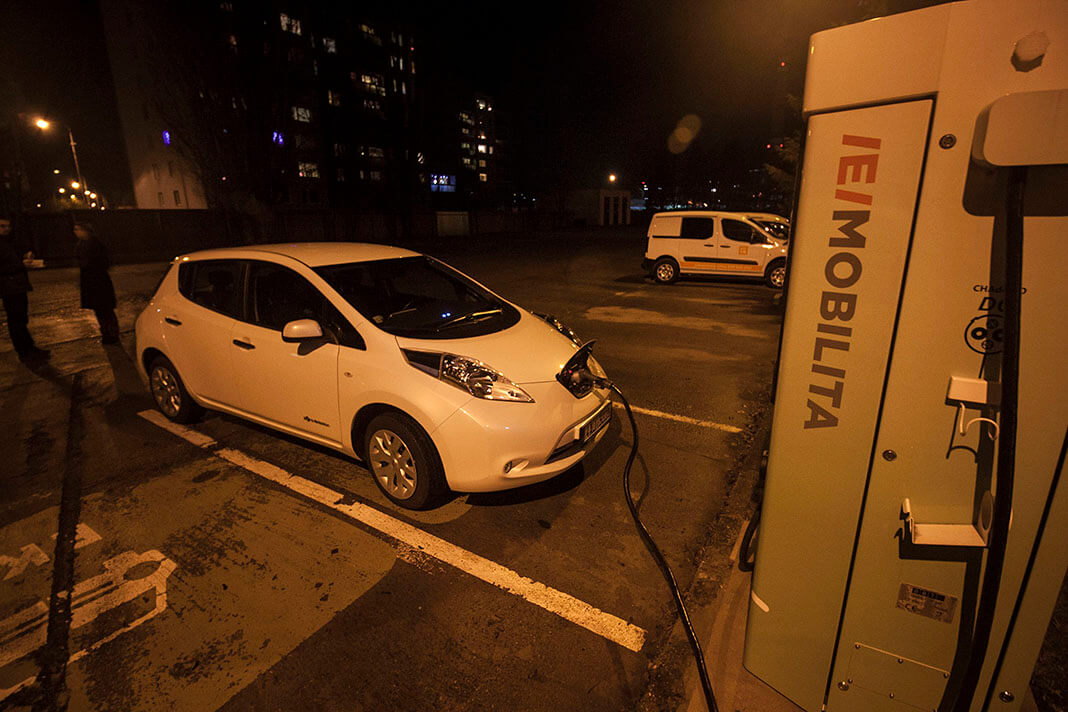
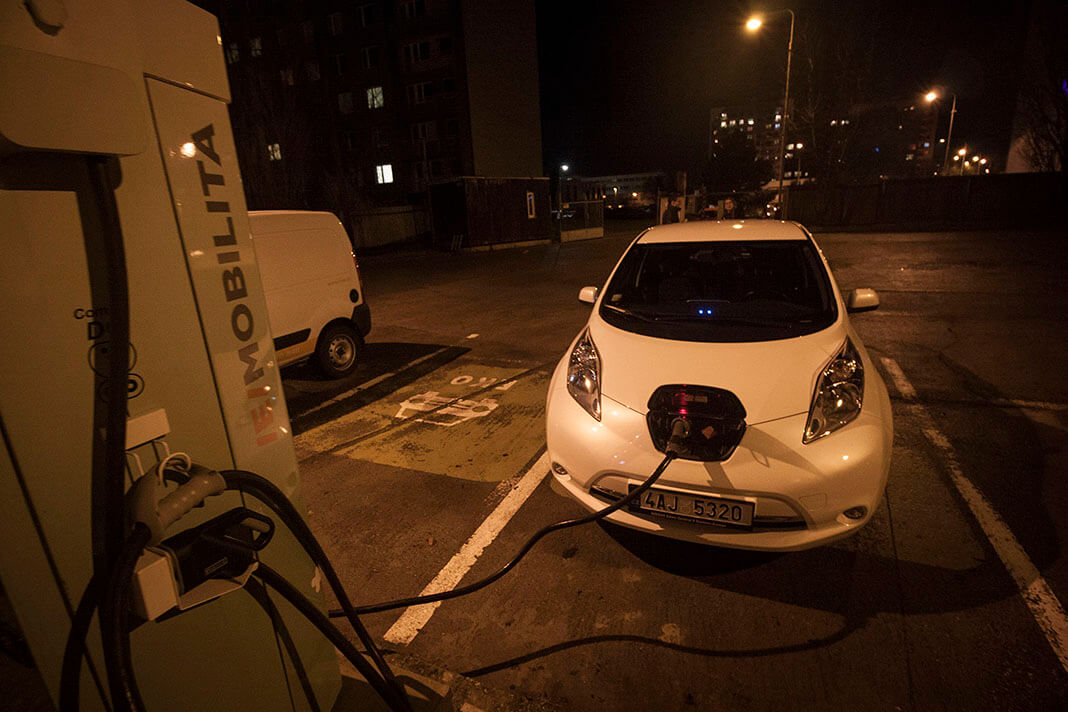
This gave me a geographical advantage for the test journey back. I was driving downhill. Since it was clear to me that consumption would be high on the motorway, I chose the old road via Jičín and Poděbrady, with the option of emergency charging in Poděbrady if it looked as though I would not make it, as it was December.
Mapy.cz shows 140 km and 2 and a half hours, and I estimated that if I did not heat the car unnecessarily and drove in Eco mode, it might work.
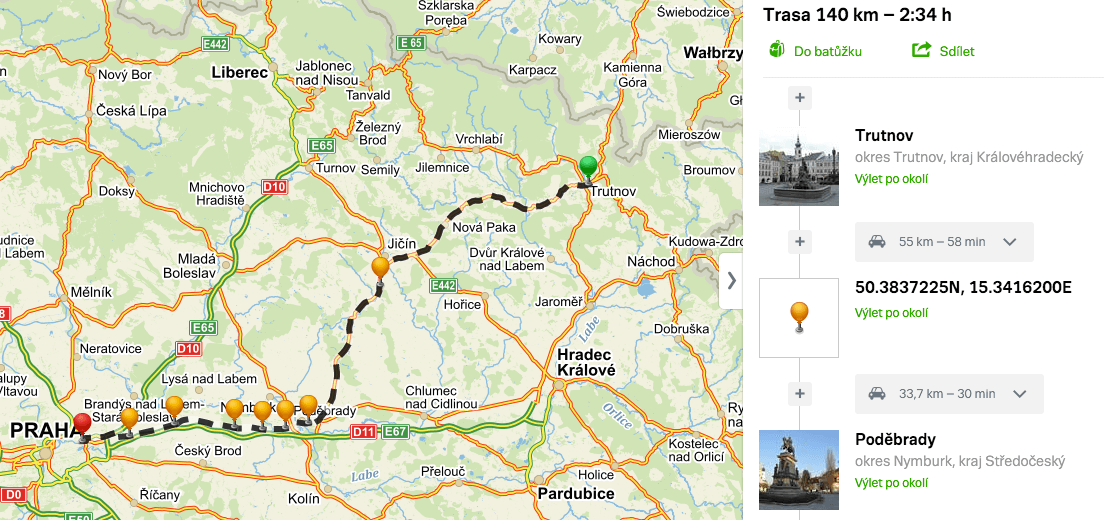
In the preceding days, I had covered quite a lot of kilometres in the LEAF and concluded that driving style can make a huge difference, and that my 300-metre elevation advantage would also help.
In the car, I used only the driver's seat heating and windscreen demister occasionally. Given the outside temperature of around 5 degrees, it was not possible to do entirely without heating.
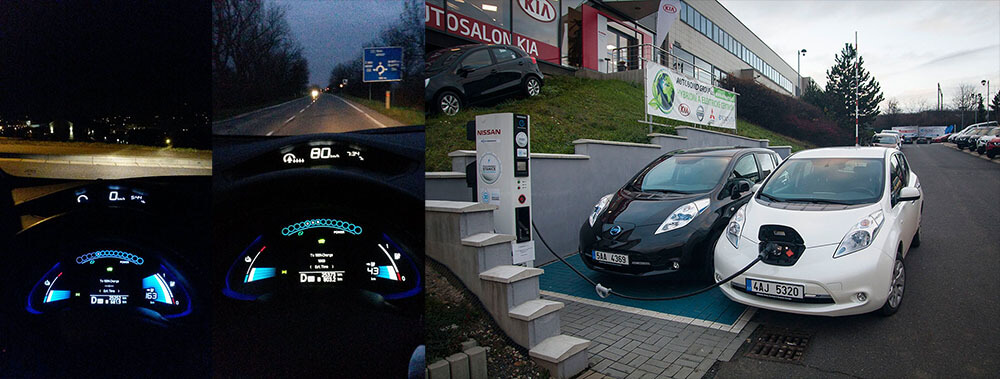
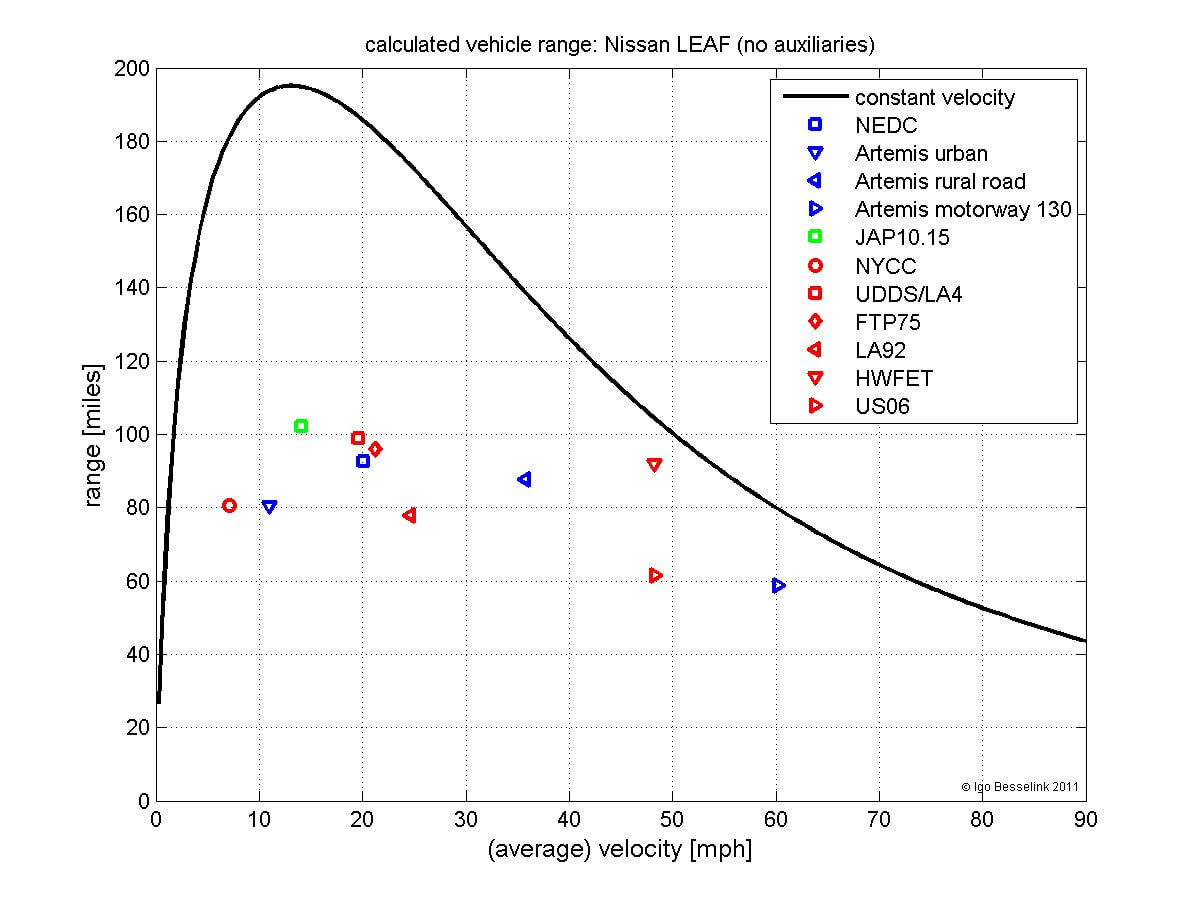
The LEAF managed it with a reserve of almost thirty kilometres left when I reached the Nissan charging station on Kolbenova Street! Journey time was 2 hours and 15 minutes, because I did not want to drive too slowly, so that the test would reflect reality. Nissan and owners' experience state that the LEAF has its longest range at speeds between 60 and 70 kilometres per hour, but this does not make much sense for travelling. The only problem was the familiar issue of parking in a space reserved for a charging station, but more on that in the next part.
During the journey, I grew all five little trees and barely touched the brake, but the internal system reported only around 70% eco-friendliness for my driving, so I would quite like to see what 100% looks like.
Southern Sweden road trip with a full load
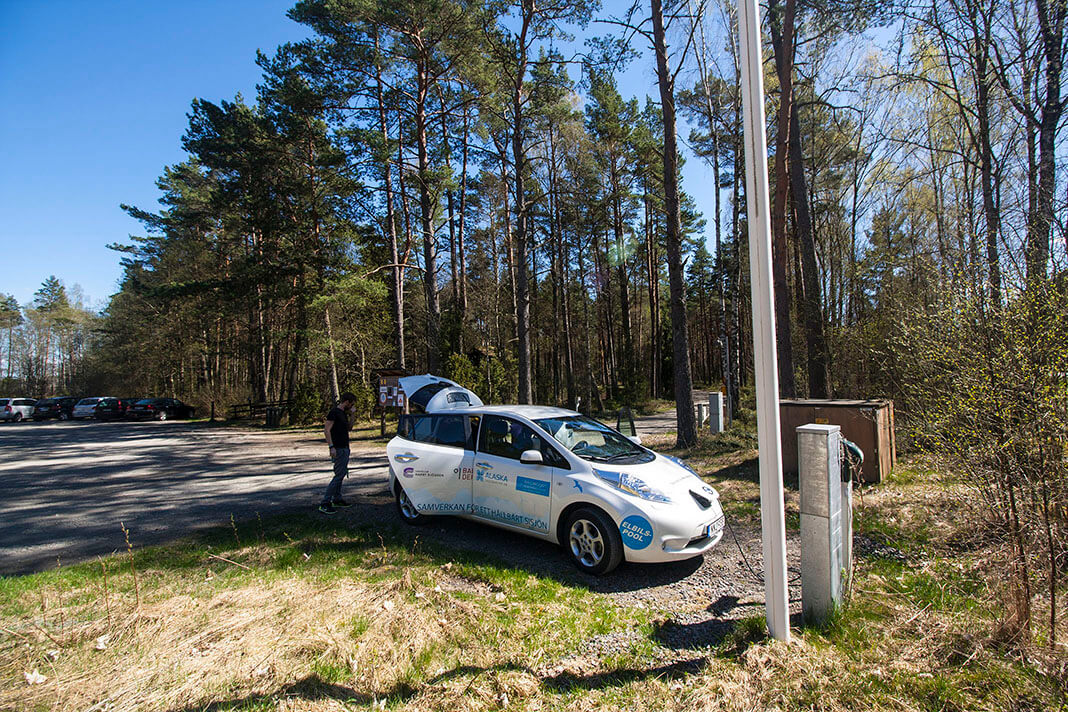
The second test of the LEAF's real-world range took place on a four-day road trip from Gothenburg to Store Mosse National Park and Lake Vättern, followed by Marstrand island. The LEAF carried four people and an almost full boot. Exceptionally warm weather also meant the air conditioning had to run throughout. Again, we made maximum use of cruise control and minimum use of the brakes.
In Sweden, motorway speed limits are 110 km/h to 120 km/h, while on other roads they are 100 km/h. I expected the same range as in the previous test, namely at least 130 km. At motorway speeds, with a full load and travelling east from Gothenburg, where there are plenty of hills, range was only slightly above 100 km. This resulted in frequent stops, because even there the charging station network is not as dense as the petrol station network, so one must stop sooner than necessary because the next one cannot be reached.
The journey to Marstrand island proved more favourable: 50 km there and 55 km back to Gothenburg, with roughly half the route on the motorway and the other half on ordinary roads with a 70 km/h speed limit, although also along hilly coastline. On the return, the LEAF still indicated a range of 45 km, which is a very respectable result given that the air conditioning had to be running.
Perhaps the most interesting thing was that fast-charging stations are located directly by the motorways, and that tourist attractions have electric-car charging sockets, as we used at the Store Mosse National Park car park. This is a fairly interesting model for building charging stations, and at stops designed to last at least half a day, even a regular socket is not a problem. Fortunately, there were not already two cars using it.
Conclusion: 100-150 km range with the 24 kWh battery
After all these experiences, I can say that at Czech motorway speeds, the LEAF's range would be around 100 km, which is fairly low. Ideally, one would stop every 2 hours, for example, but this would require an estimated 60 kWh battery.
However, if one decides to preserve the battery a little and drive more slowly, it is not a problem to achieve a 150 km range in summer even with air conditioning and partly motorway driving, and surprisingly also in winter without heating.
Overnight charging itself does take a long time, although the question is whether that matters at night, but it would be good if Nissan supplied the car with a 16 A charging cable as standard, raising charging power from just 2 to 3.3 kW, especially with the 30 kWh battery.
Charts showing Nissan LEAF range by temperature and speed
References:
[1] http://www.hybrid.cz/baterie-nissanu-leaf-999-z-nich-je-stale-v-provozu
[2] http://www.hybrid.cz/97-nabijeni-elektromobilu-leaf-probiha-doma-nebo-v-praci
List of articles in the series:
- Nissan LEAF (Part 1): Agile and a surprisingly comfortable and pleasant companion
- Nissan LEAF (Part 2): Battery, charging, range and real-world experience
- Nissan LEAF (Part 3): Differences in infrastructure and electric-car use in Czechia and Sweden
- Nissan LEAF (Part 4): When can an expensive electric car pay off for me?
- Nissan LEAF (Part 5): What should be improved in the second generation Nissan LEAF to make it truly great?
Translation disclaimer
This article is a machine translation of the Czech original and has not yet been fully reviewed. In case of any doubt, please refer to the Czech version.
Sdílejte článek prostřednictvím:
You might also like


20 October 2026, 12:55

20 October 2026, 10:49

20 October 2026, 06:13