
20 October 2026, 15:34
Loading...
Nissan LEAF (Part 3): Differences in infrastructure and electric vehicle use in Czechia and Sweden
Tomáš Jirka
25 May 2016, 18:34
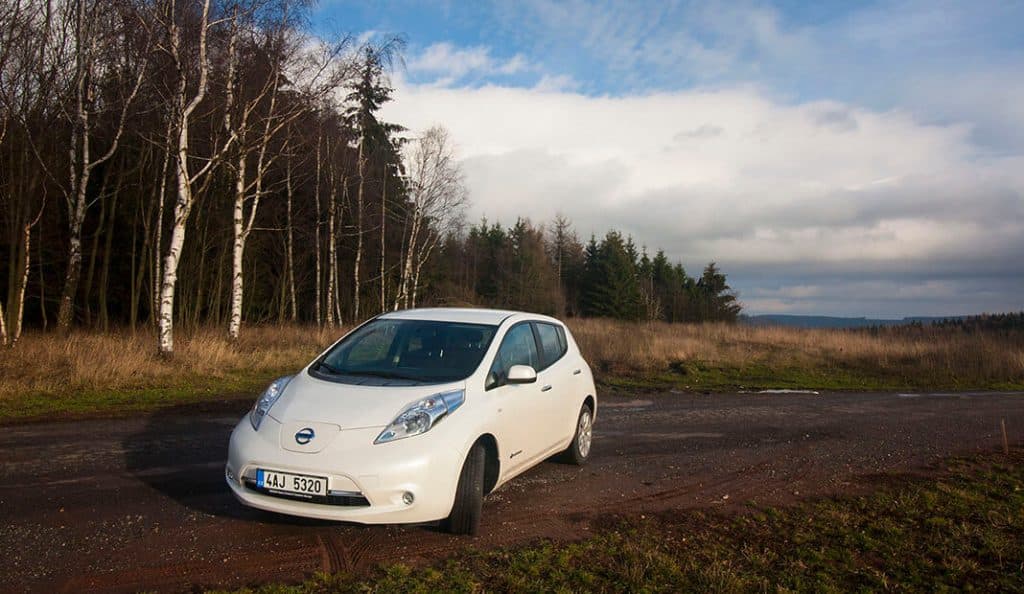
After half a year of experience, Sweden and the Czech Republic are not fundamentally all that different. Culturally, both are simply in Europe, but their approach to the environment is completely different. The worst words in Sweden are probably „unsustainable“ or „inequal“, and their fascination with everything green is generally quite incredible, although I expected Scandinavians to be rather closely connected to nature overall. This is also reflected in transport, which this instalment of the article on life with the LEAF will cover.
Gothenburg is a city built in the 17th century. It is therefore a relatively young city, but mass motoring certainly was not considered when it was built. Yet it does not exist here even today! Gothenburg is regarded as a very pleasant city to live in and a model of sustainability for the future, even in Sweden, and I have to agree.
It seems a little strange to me that shipbuilding and ship repairs are being phased out at the fairly well-known local harbour docks, which are allegedly unsustainable in the future and cannot be done in a green way. But when one asks further, one also learns that they have no chance of competing on price. Instead, there will be „modern, beautiful“ homes, offices, yacht marinas and, overall, Paradise on Earth (when it is not windy, raining, hailing, snowing in May, …) ????
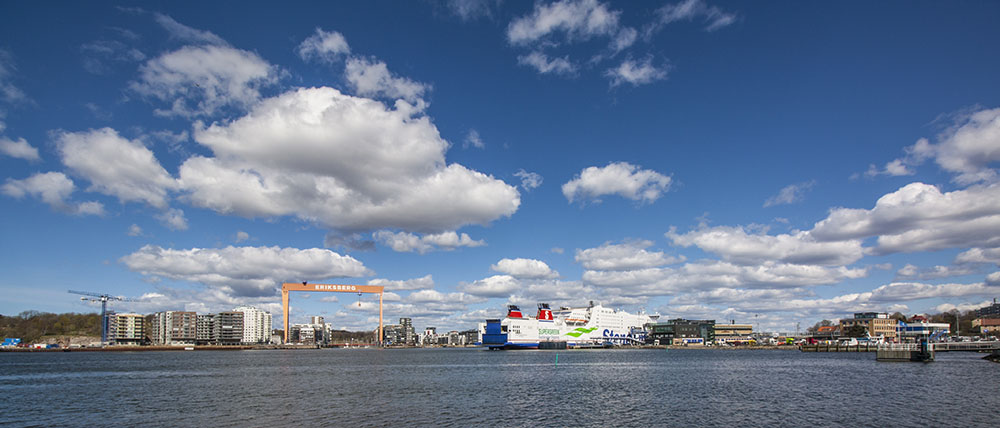
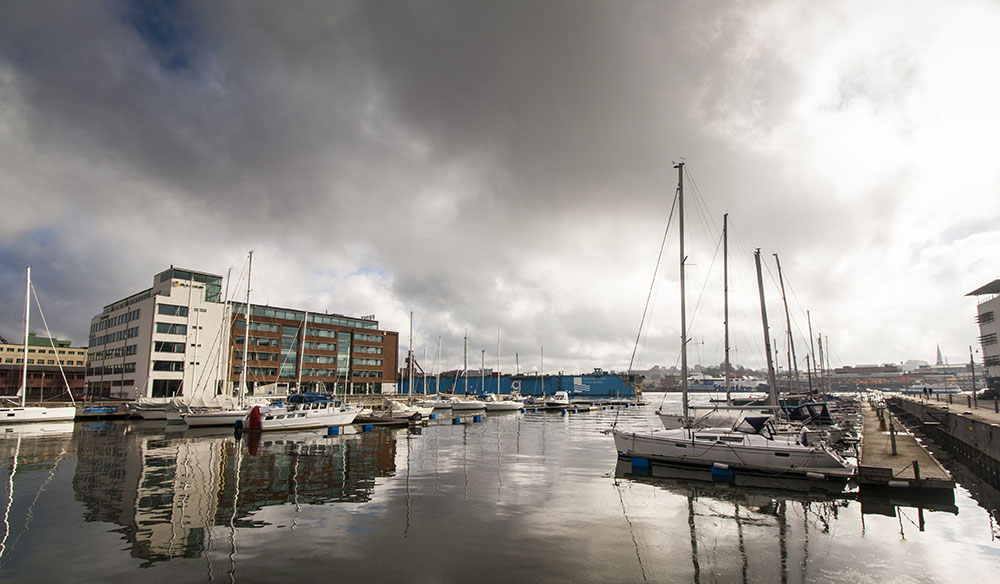
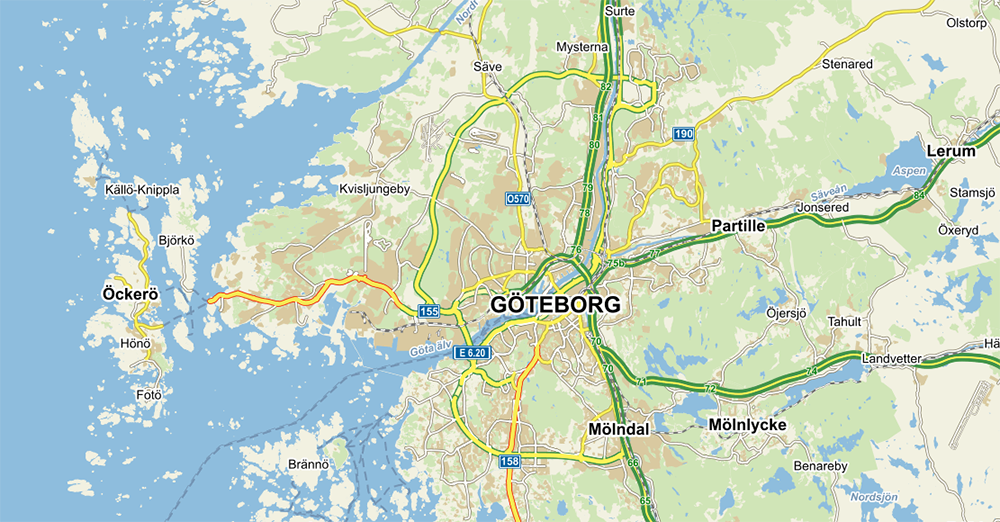
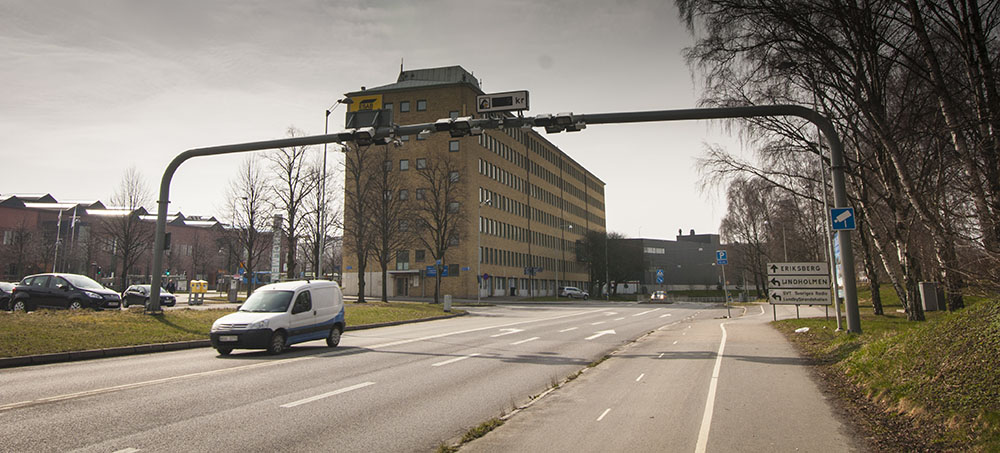
In terms of transport, there is a very well-designed and completed ring-road system here (greetings to Prague ????), with higher speed limits and fewer traffic lights (yes, they focus on traffic flow, which saves more fuel than most regulations), including a tunnel under the entire city centre. The only problem is insufficient bridge capacity connecting the southern bank to the northern bank, which has been growing rapidly in recent years.
Essentially, these roads have multiple lanes, higher limits and no access for cyclists. Meanwhile, other urban streets are significantly narrower, and the less major the street, the greater the priority given to pedestrians and cyclists. Right in the centre, this results in streets that are almost free of cars.
Across Europe, wherever something similar is considered, it is often said that it will „kill“ the city centre. In my experience, the opposite is true! The centre is clearly vibrant and full of pedestrians and cyclists, who have plenty of space.
It must be added, however, that this can work only if the main (ring) roads have sufficient transport capacity and slower modes of transport cannot access them. This means cars do not need to leave them unless it is truly necessary, which is usually only for the actual last mile.
Another measure is a charge for entering the centre, depending on the hour and day of the week. This has spread traffic more evenly over time and prevents traffic jams (electromobility alone will not solve this). Gothenburg has just over half a million inhabitants, but I have never seen heavy traffic here. Even Finns from Helsinki were surprised by the light traffic.
Swedes simply are not at all afraid to use public transport (trams and ferries, while a metro and cable car are being considered to increase capacity), and above all they walk and ride (electric) bikes! Of course, this is because the infrastructure makes it possible: main roads exclusively for cars, while less major roads have wide sections for pedestrians or cyclists, and ordinary streets are shared by cyclists and cars, as they travel at similar speeds.
Number of electric vehicles in use and chargers
If one looks at Tesla’s Supercharger map, the boundary between western and eastern Europe is clearly visible. Although a Supercharger is now also being built near Humpolec in Czechia.
Of course, the number of charging stations grows with the number of electric vehicles, which in turn grows depending on purchase prices, that is, whether residents can afford them. It is therefore no surprise that eastern Europe lags behind somewhat, but in terms of the ratio of vehicles to charging stations, I would not see it as entirely bleak.
However, if we look at the number of fast-charging stations relative to the number of electric vehicles, it is much worse, and in some parts of Czechia it is even fairly impossible to travel by electric vehicle. Sweden certainly leads in this respect. It is not ideal there either, but I would describe the problem more as the insufficient range of the LEAF with a 24kWh battery, as it covers roughly 100 km on the motorway. With double the range, it would be much more relaxed.
According to ASEP, the number of electrically powered vehicles in Czechia stood at 2,440 as of 1 January 2016, including roughly one thousand passenger electric cars, and this is expected to reach 1,500 by the end of the year. By comparison, Sweden, which has a slightly smaller population (9.6 million) than Czechia, is at around 10 thousand. For example, Norway, with only five million inhabitants, is heading towards 90 thousand electric vehicles and will most likely exceed 100 thousand registered electrically powered passenger cars in 2016.
The biggest players among charging stations in Czechia are ČEZ (44 stations, including 8 fast-charging stations), PRE (23 stations) and E.On (4 stations), out of a total of just over 100 locations. However, those mentioned above are planning further expansion; for example, E.On is cooperating on the construction of a charging station near Humpolec. In Sweden, 1,301 charging points are available according to uppladdning.nu.
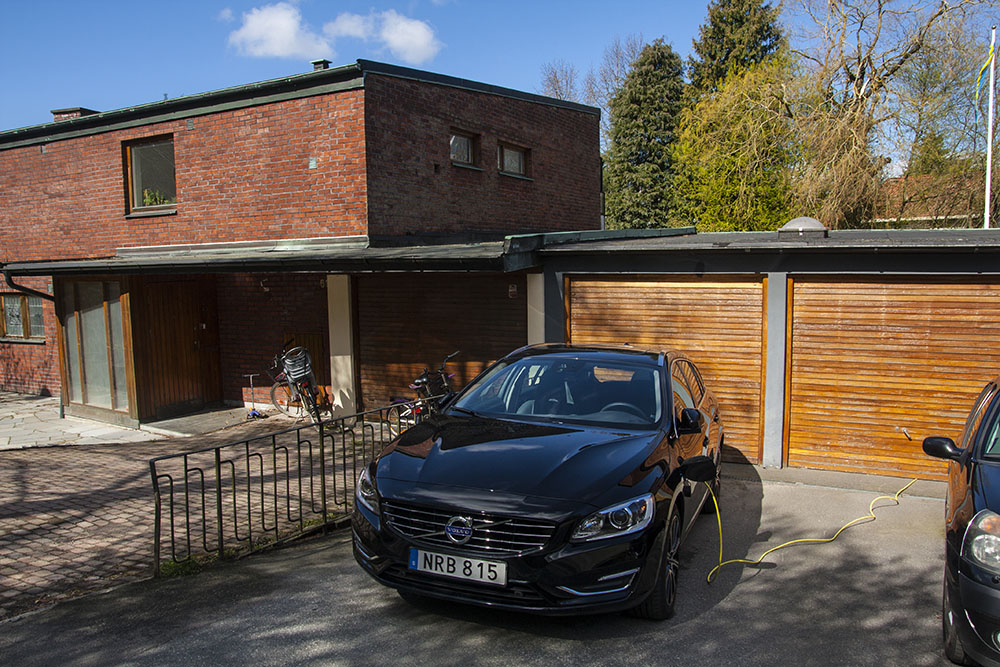
But Swedes also have no reluctance to plug their cars in at home. Like other Scandinavians, they are used to it, and the further north one goes, the more common it is. This is for preheating cold engines during long northern winters so they start at all, and of course because of the unfavourable emissions from a cold engine. In some newer developments, it is fairly common to have such an outlet at every parking space, meaning the overnight charging infrastructure is already in place.
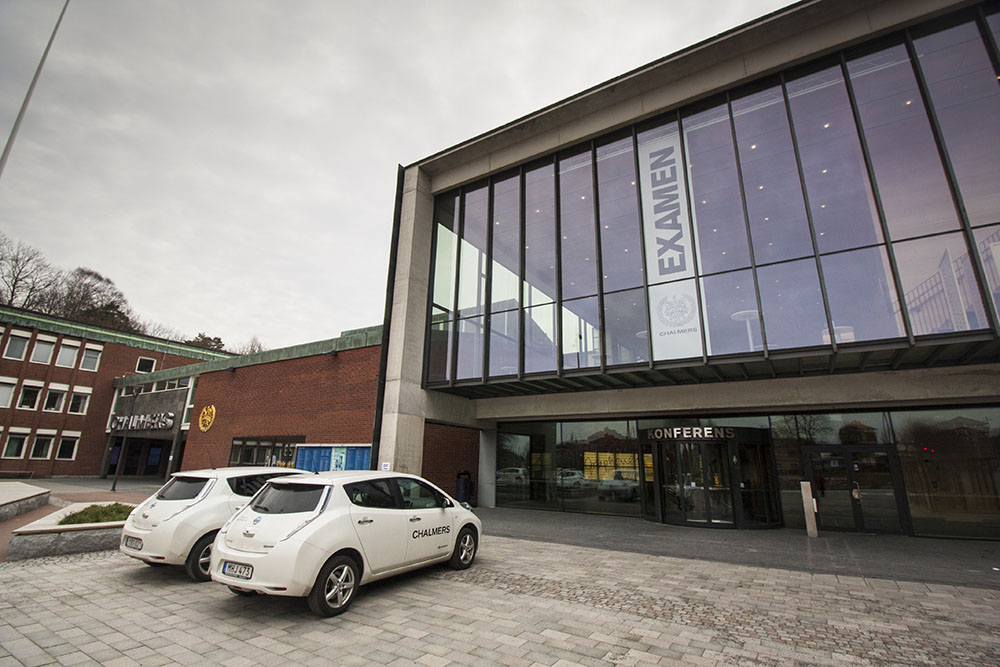
For example, Chalmers University of Technology has several LEAFs for staff to use, and students can also rent them on fairly favourable terms. Since these are almost exclusively urban journeys and there are 8 charging posts in the university car park, why not?
An electric vehicle is well suited to the city thanks to zero local emissions, responsive performance and quiet operation, and its range allows it too. Moreover, it has a considerable advantage in the ability to recuperate energy, so its consumption in the city can be lower than outside it, the opposite of combustion-engine cars.
Just as blood deliveries in Prague use Nissan LEAFs, there are also many corporate urban electric vehicles here, including deliveries in Nissan e-NV200 vans and Tesla taxis.
I can imagine certain purchase incentives for this use of electric vehicles in Czechia; it is where they make genuine sense, and Sweden has relatively many electric vehicles bearing promotional branding (if one deliberately looks for them). In Czechia, unfortunately, they are still mainly owned by individual enthusiasts.
Geographical location of charging stations
Swedish charging stations are located both in city centres and their surroundings, and along main routes. Compared with Czechia, this is not a major difference, except for their frequency. Rather, they are quite often at filling stations, where one can have a snack in peace for 20 minutes and then continue.
A more marked difference is that public or hotel car parks here very often have charging posts. Yes, these are single-phase chargers, so they are slow, but at least it is something. If these were 32 A versions and one had the appropriate charging cable and onboard charger, the charging power would allow roughly 100 km to be added in 3 hours. That would already be useful!
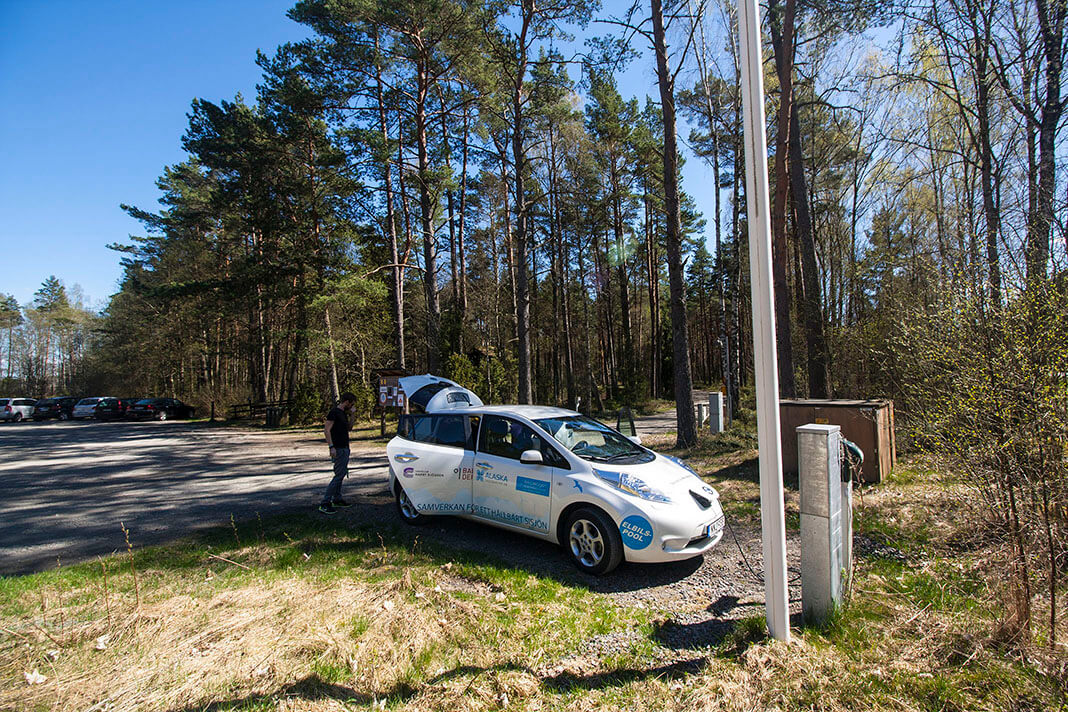
What interested me most, however, was that stations are also often located at places of interest. Whether by lakes along motorways (which may also be because the restaurant is located far from the lake), or near other natural attractions. If one has to wait anyway, at least one need not look at the rear wall of a concrete box. I certainly found this pleasing, and I could definitely imagine chargers being located this way in Czechia too – if one is in a hurry, it makes no difference, but for travelling/a road trip, it is certainly welcome.
Moreover, at attractions where people are expected to spend some time, even a single-phase charger is not a problem. At Store Mosse National Park, this saved us a stop at another charger on the subsequent journey north to Jönköping.
Specific station locations: where have you hidden it this time?
Although I drove to a charger using navigation every time rather than blindly, finding it was often quite a challenge. Charging station operators are fairly inventive in hiding them in both countries.
Whether it is around the corner on the exact opposite side from the entrance, behind a gate where the security guard has to come and get you (ČEZ Mladá Boleslav), or in the entrance to a company’s inner courtyard next to a horse paddock (GARO Gnosjö), I tend simply not to trust the navigation completely until I see the station.
It would certainly help if charging station maps mentioned the access route and the precise location of the station at the site, or included a map. This is something we also want to work on at enabijeni.cz. But it is also because an electric vehicle charging station (one post) does not have the size and huge logo of a filling station. Tesla Superchargers, for example, are more visible thanks to their footprint and logo.
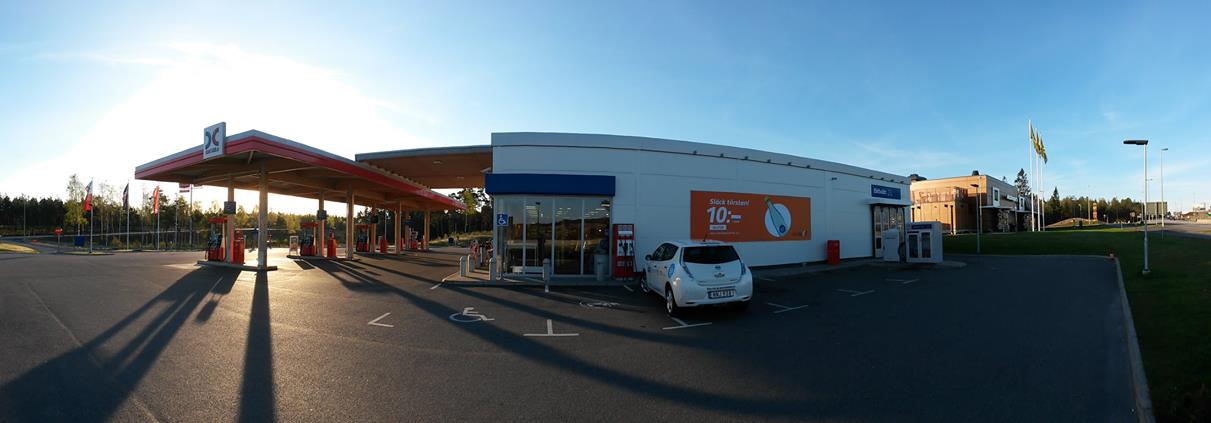
Do you already have our charging card, please?
One thing that irritates me considerably is the absence of an option to simply pay by payment card, as at a filling station, and drive on. It does not depend on the country: they always require one to buy a charging card to unlock the station and charge. If one is lucky, they at least sell the card at the location.
The situation where I arrive at a charging station whose operator was not mentioned on the map and find that I do not have the appropriate card, must order it and delivery takes up to 5 working days, is truly frustrating. It is not even about the fact that some charge a flat fee (ČEZ), some require kWh to be loaded onto the card (Clever), while others are free and merely require the card (GARO), but rather that one has to have that card!
But one card is not enough, so if one wanted to use charging stations while travelling across Europe, one would soon have an entire Cannasta deck in one’s wallet… On the other hand, the only electric vehicle that currently enables travel across Europe is essentially Tesla, which has its Supercharger network.
Nevertheless, I do not see using these cards and chips as the way forward. I am happy to pay for charging, but please do not ask me to carry another wallet just for charging cards that I have no chance of ever understanding anyway.
Amusing charger troubles…
I would really be interested to know who designs the shape of charging stations and their plugs. I never encountered any problem with CHAdeMO stations along motorways, but the problems with small stations containing only single-/three-phase sockets seem more than amusing to me in both countries. In fact, I have never encountered one that was sensibly designed in terms of connecting or subsequently positioning the charging cable.
It must be acknowledged, however, that while these stations are fairly common in number (because of their purchase price), they are not widely used. Single-phase charging makes sense overnight at home or, as mentioned in the second instalment of the series, at tourist destinations. In Sweden, car parks and shopping centres are also added to this list, but people do not stop there that often because they would be waiting for long hours.
In Czechia, I had a problem at a ČEZ charging station in Trutnov, which I went to see out of curiosity. The station is very visible from the roundabout and there is certainly no problem getting to it.
Given the shape of the Nissan LEAF charging connector, I found that I simply could not connect it. I felt as if I were trying to get the last Pringle out of the tube with my XL hand. It simply would not fit because the socket is recessed quite deeply. But on the other hand, it is a very nice green post…
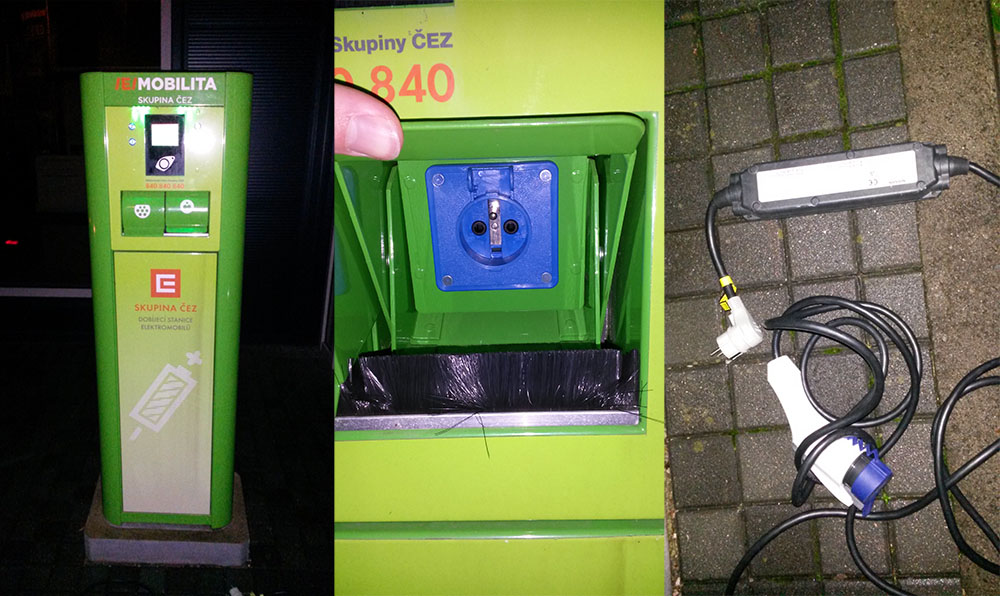
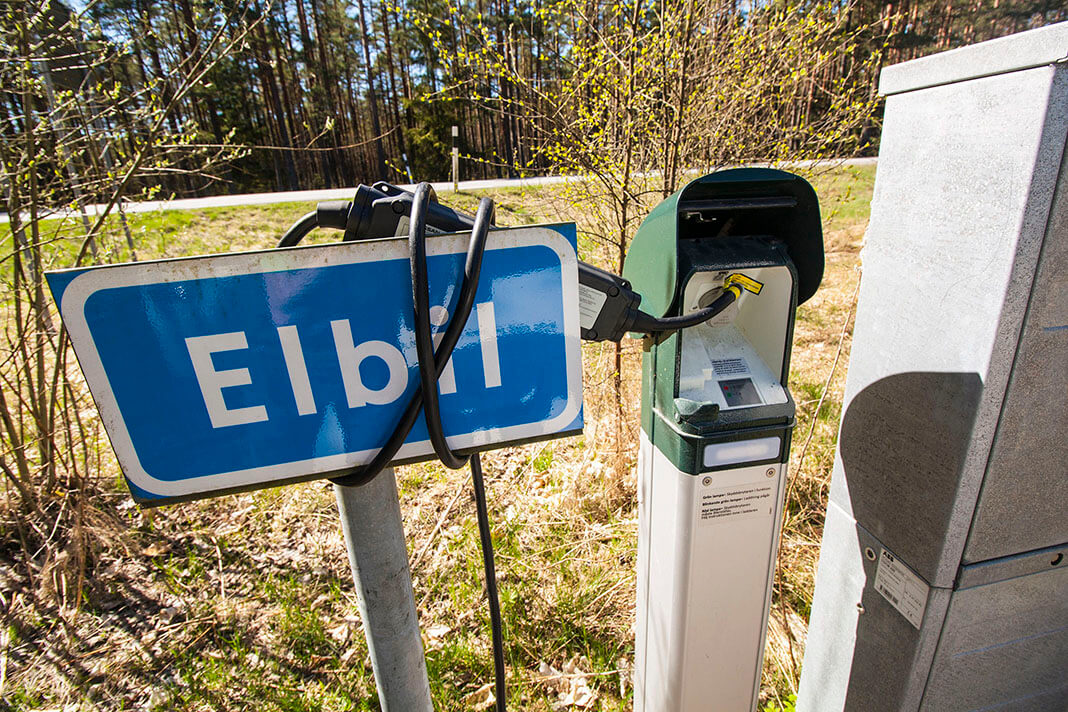
In Sweden, these small charging stations have a different design, though not a much better one. For most of them, the plug must be connected upside down with the cable facing upwards, and the weight of the cable’s control and information unit then pulls it out of the rather delicate plastic socket, so one has to find some way of securing it.
At Store Mosse National Park, they at least placed a sign close enough that this could be solved fairly easily, as the following photograph shows.
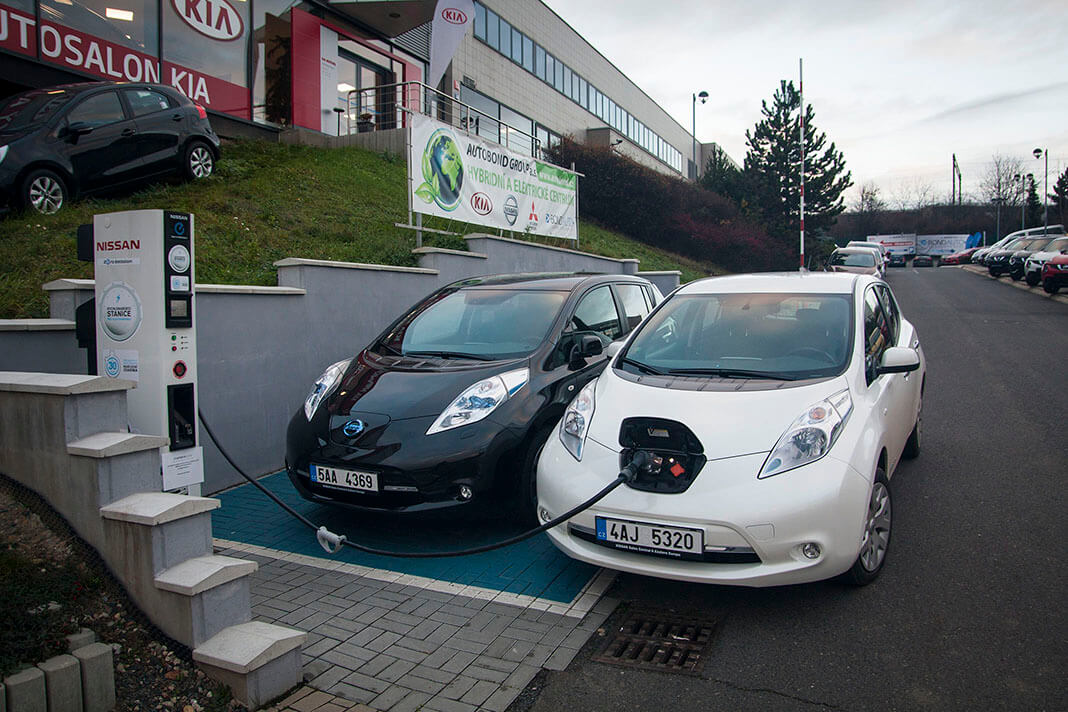
Another entirely common problem in both countries is parking in charging station spaces. This happened to me several times, usually involving a combustion-engine car blocking the space, whose driver probably did not realise it.
It is logical that one sometimes arrives at a charging station that is already occupied. This is linked to the growing number of electric cars, so it currently occurs only on main routes or in large cities. I personally encountered this only in Sweden, but then it depends on an agreement between drivers. Although it would be much better to have intelligent charging stations that reported their occupancy to a server, allowing plans to be made accordingly.
But arriving at a station where something is parked without it being used is simply annoying. In Borås, during the southern Sweden road trip from the second instalment of the series, at a GARO charging station, a car park with capacity for around 50 spaces had 5 occupied, two of them directly in front of the charger, so we parked on the grass. In Czechia, another LEAF was parked at the Nissan dealer on Kolbenova Street, but that could also be resolved.
In conclusion: both countries have considerable flaws…
The number of charging stations in Sweden, and thus their density, is higher, as one would expect. More interesting is that stations along motorways are sensibly fast chargers, while those at urban car parks can simply be standard chargers. It is also nice that stations are located at places of interest, so one can at least see something while waiting.
The other problems are broadly identical: the need to deal with cards/chips to open the station once one has found it, and indeed whether one can connect to it at all.
As for finding stations more easily, we will try to work on that at enabijeni.cz, but how to address station design, their location and simpler payment remains a question…
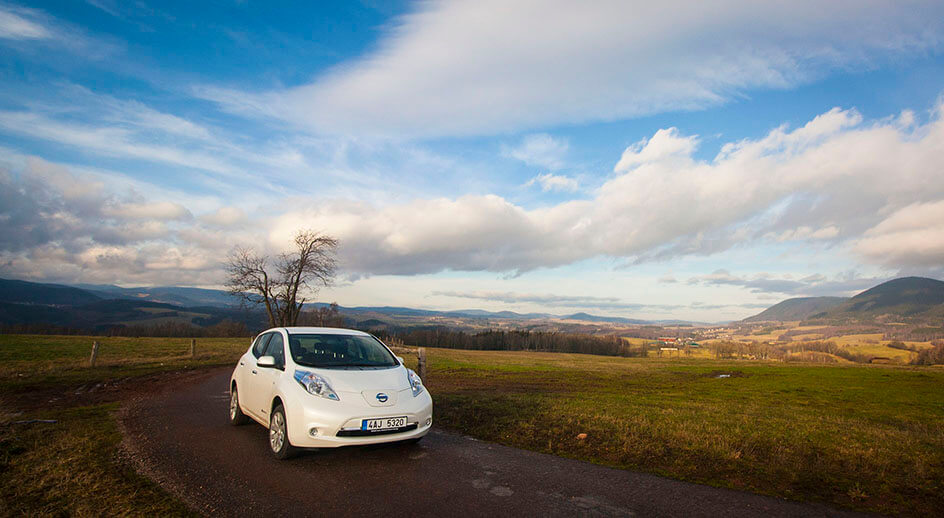
List of series instalments:
- Nissan LEAF (Part 1): A responsive and surprisingly comfortable, pleasant companion
- Nissan LEAF (Part 2): Battery, charging, range and operating experience
- Nissan LEAF (Part 3): Differences in infrastructure and electric vehicle use in Czechia and Sweden
- Nissan LEAF (Part 4): When can an „expensive“ electric vehicle pay off for me?
- Nissan LEAF (Part 5): What should be improved in the second generation Nissan LEAF to make it truly great?
<!--
Translation disclaimer
This article is a machine translation of the Czech original and has not yet been fully reviewed. In case of any doubt, please refer to the Czech version.
Sdílejte článek prostřednictvím:
You might also like
20 October 2026, 12:55
20 October 2026, 10:49
20 October 2026, 06:13